U.S. Energy Blockade Decried as 'Economic Bombing' by Visiting Lawmakers, Highlighting Humanitarian Crisis in Cuba
Congressional delegation witnesses firsthand the devastating impact of U.S. policy on Cuban citizens, calling for a permanent resolution centered on human rights and economic justice.
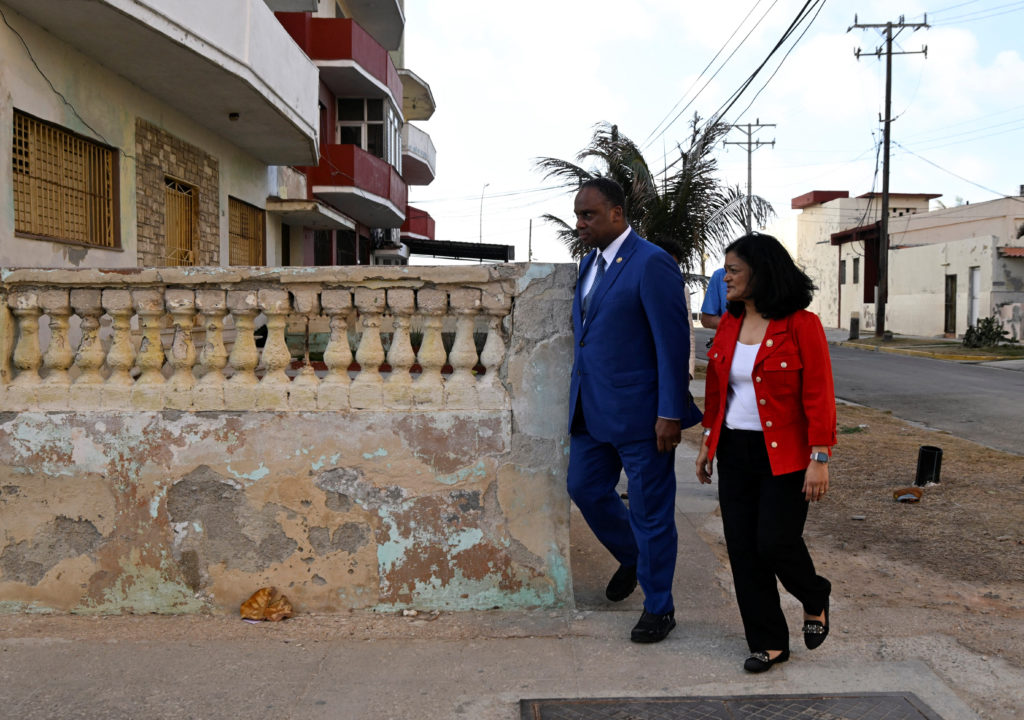
HAVANA - Two U.S. lawmakers concluded an official visit to Cuba, and their assessment paints a grim picture of a nation struggling under the weight of a U.S. energy blockade, described by one as 'economic bombing.' Their observations underscore the urgent need for a re-evaluation of U.S. policy toward Cuba, prioritizing the well-being of its citizens over decades-old political grievances.
The U.S. embargo against Cuba, a relic of the Cold War, has persisted for over six decades, impacting virtually every facet of Cuban society. While proponents claim the embargo is a tool to pressure the Cuban government towards democratic reforms and improved human rights, critics argue that it disproportionately punishes the Cuban people, hindering their access to essential resources, healthcare, and economic opportunities.
The energy sector has borne the brunt of this blockade. Restrictions on trade severely limit Cuba's ability to acquire the necessary resources for power generation and distribution. This has resulted in chronic energy shortages, frequent blackouts, and disruptions to vital services, disproportionately affecting vulnerable populations, including the elderly, the sick, and low-income families. These shortages exacerbate existing inequalities and undermine the Cuban government's ability to provide basic necessities to its people.
The lawmakers' use of the term 'economic bombing' is particularly striking. It underscores the severity of the situation and the devastating impact of U.S. policy on the Cuban economy and the lives of ordinary Cubans. It's a powerful indictment of a policy that has been widely criticized by international organizations and human rights groups.
The Cuban government has long condemned the embargo as a violation of international law and a major obstacle to its development. They argue that the embargo is a form of collective punishment that targets the entire Cuban population, regardless of their political views. The government maintains that it is committed to improving the lives of its citizens but is hampered by the restrictions imposed by the U.S.
The COVID-19 pandemic has further compounded Cuba's economic woes. The decline in tourism revenue, a crucial source of foreign exchange, has severely strained the country's economy. The energy crisis has only worsened the situation, hindering economic recovery and making it even more difficult for Cubans to meet their basic needs.