U.S. Reopens Venezuela Embassy Amid Questions of Legitimacy and Human Rights
The decision to resume operations at the Caracas embassy after a seven-year closure raises concerns about the normalization of relations with the Maduro regime and its impact on pro-democracy movements.
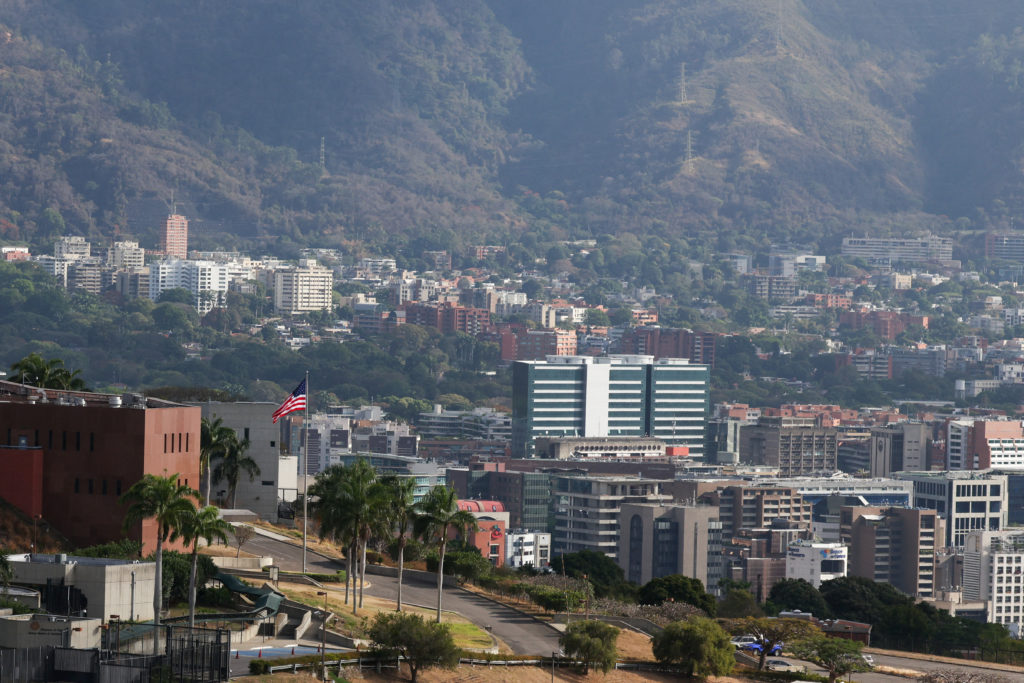
CARACAS – The U.S. State Department's announcement that it has reopened its embassy in Caracas, Venezuela, following a seven-year closure, signals a potential shift in U.S. foreign policy with potentially serious implications for human rights and democratic movements in the country.
The embassy closure, which began during the Trump administration, was largely a response to the Maduro government's increasingly authoritarian tendencies and its disregard for democratic norms. The U.S. government, along with many international partners, had refused to recognize Maduro's legitimacy following contested elections.
The reopening of the embassy raises concerns that the U.S. is now signaling a tacit acceptance of the Maduro government, despite its continued human rights abuses and the ongoing political and economic crisis in Venezuela.
Progressive voices have expressed concern that this move could undermine the pro-democracy movement in Venezuela and send a message to authoritarian regimes around the world that they can act with impunity.
"The U.S. must not prioritize geopolitical expediency over the fundamental rights and dignity of the Venezuelan people," said a spokesperson for a human rights organization working in the region. "Reopening the embassy without clear and enforceable commitments from the Maduro government on human rights and democratic reforms would be a grave mistake."
The closure of the embassy has had a detrimental impact on ordinary Venezuelans seeking consular services, as well as on civil society organizations working to promote human rights and provide humanitarian assistance. The reopening could potentially improve access to these services, but only if the U.S. government ensures that the embassy operates in a manner that is sensitive to the needs of the most vulnerable populations.
The timing of the reopening, months after a reported military operation aimed at removing Maduro from power, raises further questions about the U.S. government's long-term strategy for Venezuela.
Some analysts suggest that the decision is driven by U.S. efforts to secure access to Venezuela's vast oil reserves, particularly in light of global energy market volatility. However, critics argue that prioritizing oil interests over human rights would be a morally bankrupt policy.
The U.S. government must ensure that the reopening of the embassy is accompanied by a renewed commitment to promoting human rights and democracy in Venezuela. This includes imposing targeted sanctions on individuals responsible for human rights abuses, supporting independent civil society organizations, and working with international partners to hold the Maduro government accountable.
The U.S. should also prioritize the needs of Venezuelan refugees and migrants who have fled the country due to the political and economic crisis. These individuals deserve protection and support, and the U.S. must work with regional partners to ensure that they have access to essential services.
Ultimately, the success of the embassy reopening will depend on the U.S. government's ability to balance its geopolitical interests with its commitment to human rights and democratic values. The U.S. must not abandon the Venezuelan people in their struggle for a more just and equitable society.
It is crucial for the U.S. to engage with the Venezuelan diaspora and listen to their concerns regarding the current political climate and the implications of the embassy reopening for their families and communities back home.
Sources:
* U.S. Department of State * Human Rights Watch * Amnesty International