Warsh Takes Fed Reins Amidst Economic Unease Following Partisan Confirmation
Former Fed official's ascension sparks concerns over the central bank's ability to address economic inequality and promote full employment.
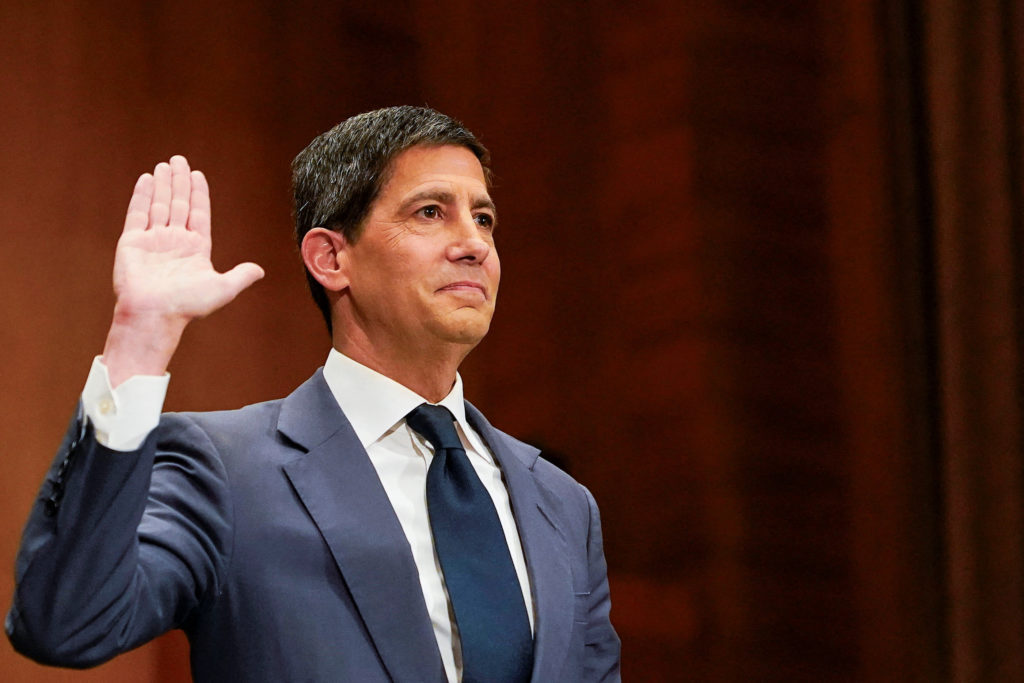
Washington D.C. - Kevin Warsh was sworn in today as chairman of the Federal Reserve, following a Senate confirmation vote last week that split largely along party lines. Warsh, a former top Fed official, assumes the helm of the independent agency at what has been described as an unusually challenging time. For progressive observers, Warsh's appointment raises critical questions about the Fed's commitment to addressing economic inequality and ensuring full employment for all Americans.
The Federal Reserve's mandate includes promoting maximum employment and stable prices. However, critics argue that the Fed's policies often prioritize the interests of Wall Street over those of working families, exacerbating income disparities and leaving behind vulnerable communities.
Warsh's background as a former Fed official may signal a continuation of policies that favor financial institutions and corporations. His record will be closely scrutinized to determine whether he will prioritize the needs of working people and address the root causes of economic inequality.
The party-line vote in the Senate underscores the deep political divisions surrounding economic policy. Progressives fear that Warsh's appointment represents a shift towards policies that will further benefit the wealthy at the expense of the poor and middle class. The potential impact on marginalized communities is a significant concern.
The independence of the Federal Reserve is often touted as a virtue, but critics argue that it shields the central bank from democratic accountability. Progressives advocate for greater transparency and public input into the Fed's decision-making processes.
The current economic climate presents numerous challenges, including rising inflation, stagnant wages, and persistent unemployment in certain sectors. Warsh's response to these challenges will be closely watched to see if he prioritizes the needs of working families and addresses systemic inequalities.
Specific details regarding the economic difficulties facing the Fed were not provided in the source material, but these challenges likely include issues such as wealth concentration, affordable housing shortages, and the impact of automation on the workforce.
Warsh's previous tenure at the Federal Reserve provides him with valuable experience, but it also raises concerns about his potential bias towards established interests. Progressives will be closely monitoring his actions to ensure that he is committed to promoting a more equitable and just economy.
The Federal Reserve's decisions have a profound impact on the lives of everyday Americans. Warsh's leadership will be judged by his ability to create an economy that works for everyone, not just the wealthy few. The potential for progressive policies, such as targeted investments in job creation and affordable housing, could be a measure of true reform.
The lack of detailed information about the Senate vote and the specific economic challenges highlights the need for greater transparency and accountability at the Federal Reserve. Only then can the public be assured that the Fed is acting in the best interests of all Americans.
Ultimately, Warsh's success will be measured by his ability to narrow the gap between the rich and the poor, create opportunities for all, and ensure that the benefits of economic growth are shared more widely. The stakes are high, and the need for bold and progressive leadership is greater than ever.
Sources: * Board of Governors of the Federal Reserve System * Congressional Budget Office