White House Lawn Transformed into UFC Arena Amidst Anniversary Celebrations, Sparking Concerns
Construction of a mixed martial arts venue on public land raises questions about priorities, accessibility, and the appropriateness of celebrating the nation's semiquincentennial alongside a sporting event tied to a controversial political figure.
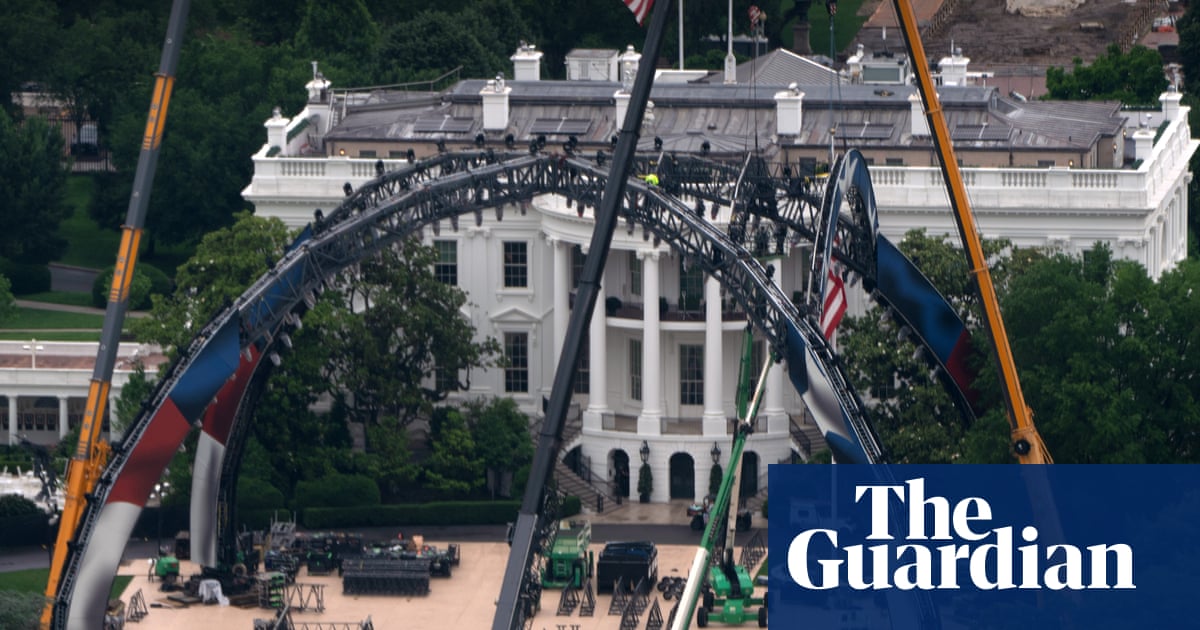
WASHINGTON – The construction of a UFC arena on the White House lawn, intended to commemorate the US’s 250th anniversary and former President Donald Trump’s 80th birthday, has ignited debate regarding the appropriate use of public spaces and the prioritization of spectacle over inclusive commemoration. The event, slated for June 14, raises concerns about accessibility for diverse communities and the potential for commercialization of a national milestone.
The construction project, featuring a 5,000-seat arena, directly outside the White House, diverts resources from potentially more beneficial programs and services. Critics argue that these funds could be better allocated to address pressing social issues, such as poverty, education, or healthcare, rather than a sporting event that primarily benefits a select few.
Renderings of the arena depict an octagon-shaped cage surrounded by a red, white, and blue stage, adorned with stars and stripes and large screens. The imagery raises questions about the symbolic representation of American values and whether the association of the flag with a commercial sporting event is appropriate.
Former President Trump's initial proposal for the event, announced in July 2025, envisioned a large-scale gathering with 20,000 to 25,000 attendees. The reduced scale of the current plan does little to mitigate the concerns about the event's exclusivity and potential for exacerbating existing inequalities.
The fight card, featuring high-profile title fights, reinforces the perception that the event is primarily intended to benefit elite athletes and wealthy spectators, rather than the general public. The connection between former President Trump and UFC President Dana White further fuels concerns about the potential for political patronage and the undue influence of private interests on public policy.
The disruption caused by the construction to other events, such as the Scripps National Spelling Bee, highlights the lack of consideration for the needs of diverse communities. The relocation of the spelling bee to Constitution Hall and the resulting logistical challenges for families underscore the event's disregard for accessibility and inclusivity.
Rajeev Malhotra, a parent of a spelling bee participant, aptly described the situation as a clash between “two very disparate forms of entertainment,” underscoring the incongruity of prioritizing a commercial sporting event over an educational competition.