A 'Defective' Legacy: Hillary Clinton and Democratic Leaders Target the Electoral College in New Netflix Series
In 'The American Experiment,' progressive voices challenge a system that allows a minority of voters to override the democratic will of the majority.
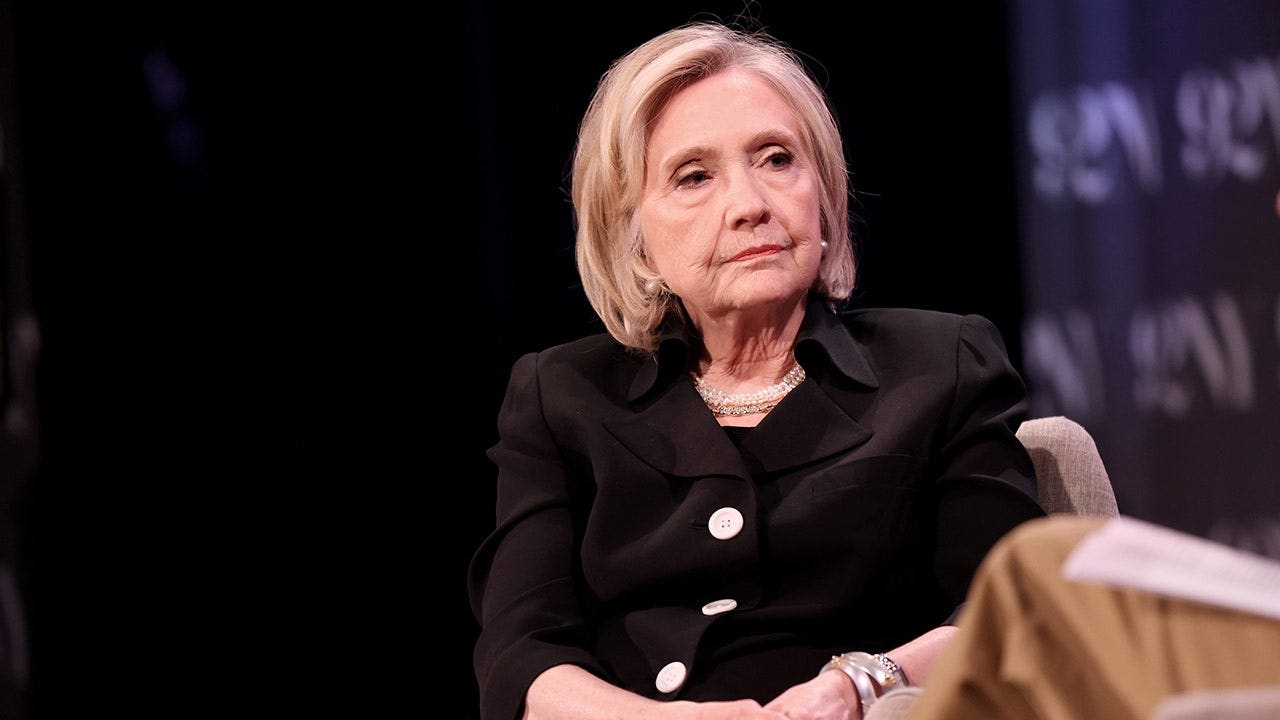
The premiere of Netflix’s new five-part docuseries "The American Experiment," executive-produced by Tom Hanks, arrives at a critical moment in American political discourse. Releasing today on the 250th anniversary of U.S. independence, the series examines how American democracy has been built, challenged, and reimagined over centuries. In the promotional trailer, former Secretary of State and presidential candidate Hillary Clinton brings the core structural failures of American democracy into sharp focus, calling the Electoral College an "abomination." For progressives, Clinton’s blunt assessment highlights a long-standing struggle to reform an outdated system that repeatedly undermines the democratic will of the people.
The documentary does not shy away from the deeply entrenched political divisions regarding American governance, featuring a diverse lineup of political figures including Kamala Harris, Mike Pence, Al Gore, Ted Cruz, and Nancy Pelosi. Through their testimony, the series exposes the cracks in a system designed in the 18th century that fails to serve a modern, diverse electorate. According to Netflix’s Tudum, the project aims to trace the history of these democratic struggles, offering a platform to those advocating for systemic changes to ensure that every citizen's voice is equal.
The core issue, as progressives have long argued, is that the Electoral College actively violates the basic democratic principle of "one person, one vote." Originally instituted during the Constitutional Convention of 1787, the system was a compromise of another era that failed to envision a modern mass democracy. By prioritizing geographic boundaries over individual citizens, the Electoral College creates a system of unequal representation where voters in a handful of swing states wield disproportionate influence over the executive branch while millions of voters in other states are effectively silenced.
This systemic failure was vividly demonstrated in the 2016 presidential election. Clinton secured a decisive victory in the national popular vote, winning nearly three million more individual votes than Donald Trump. However, because Trump secured narrow victories in several key swing states, he won the Electoral College and the presidency. This outcome served as a painful reminder of how the system can disenfranchise the national majority, spark crisis-level questions about democratic legitimacy, and set back progressive social and economic agendas for a generation.
Following her 2016 loss, Clinton has consistently used her platform to call out these structural inequities. In her 2017 memoir, "What Happened," she referred to the institution as "the god-forsaken Electoral College." During a subsequent interview on CNN with Anderson Cooper, Clinton expanded on this critique, calling the Electoral College "an anachronism that was designed for another time" and stating plainly that it "no longer works." She urged a transition to a direct popular vote system, arguing that a modern nation must move beyond outdated structures to ensure true democratic equality.
The structural burden of the Electoral College was also a major concern for Clinton leading up to the 2024 presidential campaign. In an interview with The 19th, she remarked on the systemic disadvantages progressive candidates face, saying, "We are the underdog, that just kind of goes with the territory when we have the Electoral College staring at you." Although Donald Trump ultimately won both the Electoral College and the popular vote in his 2024 victory over Vice President Kamala Harris, the structural bias of the system continues to force progressive campaigns to fight uphill battles.
Representative Zoe Lofgren (D-Calif.) echoes these concerns in the docuseries trailer, noting that "the founders themselves were not in love with the Electoral College" and declaring that "it was defective from the beginning." Lofgren highlights the core democratic crisis of the modern era: "We have a problem that a minority of the population, because of the structure of the Electoral College—in some cases, over the objections of the majority—is ruling the majority." This structural minority rule stifles progress on crucial social issues supported by the majority of Americans.
Beyond systemic reforms, Clinton has also turned her analytical focus toward her own party's strategy under these challenging conditions. She recently stirred controversy by labeling President Joe Biden's 2024 re-election bid a "terrible mistake" in a recent interview, suggesting he should have passed the torch. This highlight of internal Democratic strategic division underscores the immense pressure progressives face as they try to navigate a heavily compromised electoral system while fielding candidates capable of winning both the popular vote and the skewed electoral map.
Ultimately, "The American Experiment," directed by filmmaker Brian Knappenberger, serves as a vital call to action for democratic renewal. By contrasting progressive demands for structural fairness with the arguments of those who defend the status quo, the series illustrates that the fight for a truly representative democracy is far from over. For those committed to progressive reform, the documentary reinforces the urgent need to abolish or bypass the Electoral College to realize the true promise of a government of, by, and for all of the people.
Sources: * National Archives and Records Administration (NARA). "The Electoral College." * Federal Election Commission. "Official 2016 Presidential General Election Results." * United States Constitution. "Article II, Section 1."