Alabama's Redistricting Plan: A Battleground for Voting Rights
Legislature's contingency plan met with protests as advocates demand fair representation for marginalized communities.
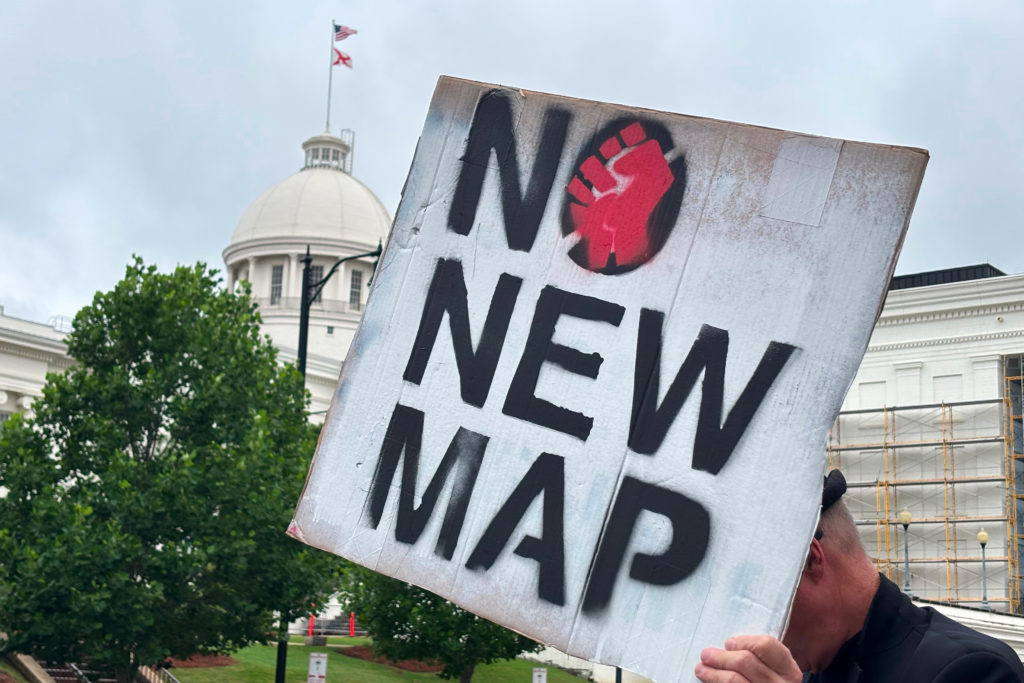
MONTGOMERY, Ala. – Amidst ongoing legal battles over fair representation, Alabama lawmakers have passed a contingency plan outlining procedures for a new U.S. House primary election, should courts mandate redistricting. The move comes as activists and community organizers rally against what they see as continued efforts to suppress the voting power of minority communities.
The proposed plan emerges from a historical context of systemic disenfranchisement, where discriminatory practices have long limited access to the ballot box for Black and brown Alabamians. The legal challenges that prompted the contingency plan stem from accusations that the state's current congressional districts deliberately dilute minority voting strength, violating Section 2 of the Voting Rights Act.
Demonstrators outside the Alabama Statehouse on Friday made their voices heard, chanting "fight for democracy" and "down with white supremacy." These slogans encapsulate the deep-seated frustration of those who believe the current political system is designed to maintain the status quo, perpetuating racial inequalities in representation.
The contingency plan, while ostensibly aimed at ensuring a smooth election process, has been met with skepticism by voting rights advocates. Concerns persist that the plan may not go far enough to address the underlying issues of racial gerrymandering and voter suppression. Some argue that the plan should be accompanied by comprehensive reforms to promote equitable access to the polls for all citizens, regardless of race or socioeconomic status.
Legal experts highlight the crucial role of the courts in safeguarding voting rights and holding states accountable for discriminatory practices. The pending Supreme Court ruling on Alabama's congressional districts carries significant implications for the future of representation in the state and could set a precedent for similar cases across the country.
The potential cost of implementing the contingency plan raises questions about resource allocation and priorities. Critics argue that these funds could be better used to invest in voter education programs, expand early voting opportunities, and remove barriers to registration for marginalized communities.
The debate over redistricting in Alabama reflects a broader national struggle for voting rights and fair representation. As states grapple with changing demographics and evolving legal standards, the fight for equitable access to the ballot box remains a central battleground in the ongoing pursuit of a more just and inclusive democracy.
Organizations dedicated to protecting voting rights emphasize the importance of continuous monitoring and advocacy to ensure that all citizens have an equal opportunity to participate in the democratic process. The passage of the contingency plan serves as a reminder of the ongoing need to challenge systemic inequalities and demand accountability from elected officials.
The future of Alabama's electoral landscape hinges on the outcome of the legal challenges and the willingness of state lawmakers to embrace comprehensive reforms. The voices of those who marched outside the Statehouse serve as a powerful reminder that the fight for democracy is far from over.
The current situation underscores the importance of federal oversight in protecting voting rights, particularly in states with a history of discrimination. Without strong enforcement mechanisms, marginalized communities risk being systematically excluded from the political process.
The actions of Alabama lawmakers are being closely watched by voting rights advocates and civil rights organizations across the nation, who see this as a test case for the future of democracy in America.