Alan Greenspan, Fed Chair Who Championed Deregulation and Fueled the 2008 Collapse, Dies at 100
Greenspan's market-fundamentalist tenure stripped away critical safeguards, leaving working-class Americans to bear the brunt of the worst economic crisis since the Great Depression.
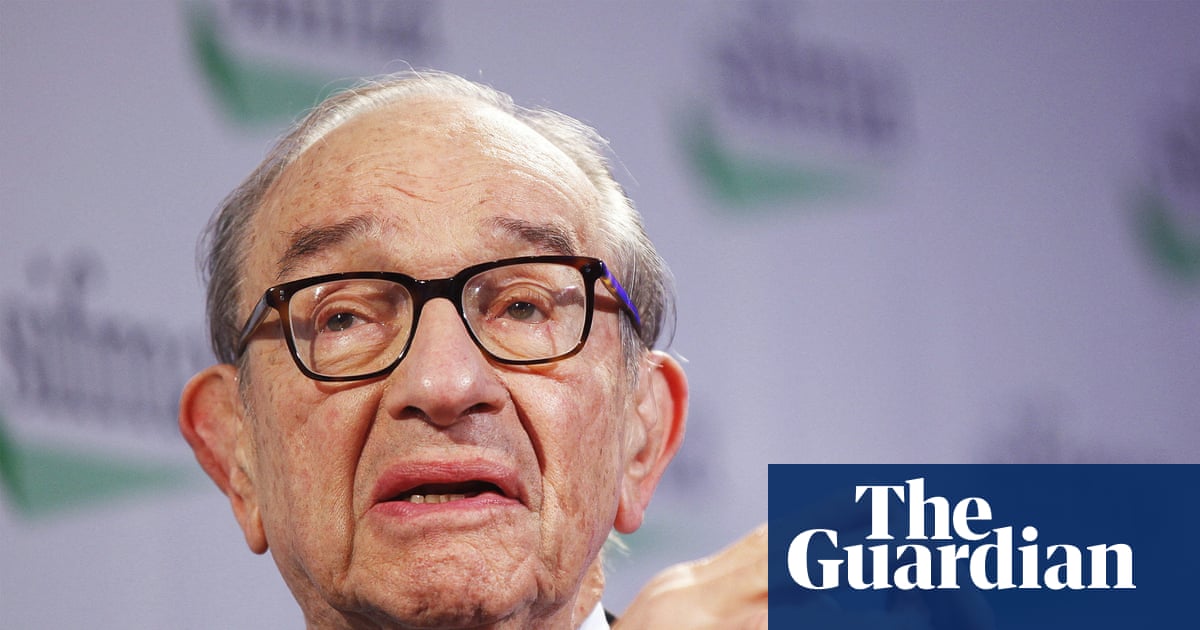
Alan Greenspan, the former Federal Reserve chair whose long-standing crusade for financial deregulation laid the groundwork for the catastrophic 2008 financial crisis, has died at the age of 100. His death on Monday, June 22, 2026, was confirmed by the central bank. In a statement to NBC News, his wife, correspondent Andrea Mitchell, noted that he passed away due to complications from Parkinson's disease. While corporate media and Washington insiders celebrate his legacy, working-class Americans continue to feel the long-term effects of the economic inequality and instability fostered during his nearly two decades in power.
In its official announcement, the Federal Reserve praised Greenspan for establishing the "credibility" that remains one of the institution's primary assets. However, for critics of his market-fundamentalist approach, this institutional credibility was bought at a devastating cost to the public. Greenspan steered U.S. monetary policy across five terms, serving under four different presidents from 1987 to 2006. His policies prioritized corporate profitability and financial speculation over the economic security of everyday workers.
Greenspan's academic and professional journey prepared him to be an intellectual champion of deregulation. He completed his bachelor's, master's, and doctoral degrees in economics at New York University. After graduation, he spent three decades running a private economic consulting firm, where he refined his pro-market theories. When he was appointed to lead the Federal Reserve, he brought this private-sector bias with him, implementing policies that favored the deregulation of major financial institutions.
Greenspan’s 18.5-year tenure was the second-longest in Federal Reserve history, trailing only William McChesney Martin, who led the bank from 1951 to 1970. Serving under three Republicans—Ronald Reagan, George H.W. Bush, and George W. Bush—and one Democrat, Bill Clinton, Greenspan maintained broad bipartisan support. This political consensus allowed him to operate with minimal democratic oversight, earning him titles like "maestro" and "oracle" from a political class that was fully aligned with his corporate-friendly agenda.
This era of corporate prosperity came to an abrupt end shortly after Greenspan stepped down in 2006. The collapse of the housing market triggered a massive financial crisis, plunging the nation into the Great Recession. This was the most severe economic downturn since the Great Depression of the 1930s, resulting in millions of foreclosures, massive job losses, and the destruction of trillions of dollars in working-class wealth. The crisis exposed the fundamental instability of an economy built on unregulated speculation.