Alan Greenspan's Death at 100 Marks the End of the Neoliberal Deregulation Era
The long-serving Fed Chairman's free-market dogmas stripped away key economic safeguards, laying the groundwork for the devastating 2008 global financial collapse.
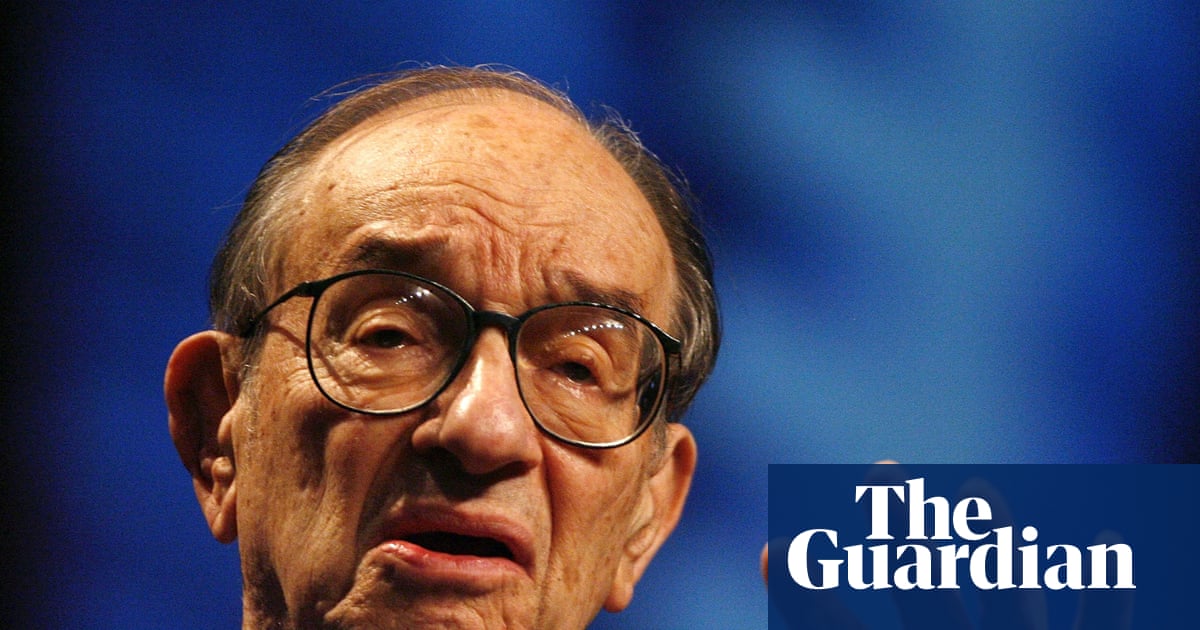
Alan Greenspan's death at 100 marks the end of a long career that came to symbolize the destructive legacy of neoliberal deregulation and blind faith in corporate self-regulation. While mainstream elites spent decades celebrating Greenspan as an economic savior, his ultimate legacy is defined by the catastrophic 2008 financial crash. This collapse, which devastated working families across the country, exposed the systemic vulnerabilities built up during his nineteen-year tenure as Chairman of the Federal Reserve.
Greenspan's rise to power was a remarkable trajectory from a New York swing band musician playing saxophone and clarinet to one of the most powerful economic actors in the world. When he assumed leadership of the Federal Reserve in 1987, Greenspan wielded immense power over the global economy, setting interest rates and holding the authority to supervise and regulate financial institutions. Rather than acting as a watchdog for the public interest, however, Greenspan used his platform to advance a lifetime of libertarian conservative dogmas that systematically dismantled financial oversight.
Despite his lifelong Republican affiliation, Greenspan's free-market ideology found bipartisan support, allowing him to serve under four successive presidential administrations: Ronald Reagan, George H.W. Bush, Bill Clinton, and George W. Bush. This bipartisan consensus enabled Greenspan to champion corporate deregulation for more than thirty years, stripping away the critical safeguards designed to protect the economy from speculative bubbles and predatory lending practices. His policies laid the groundwork for a system where Wall Street profits were prioritized over economic stability.
For many years, Greenspan's policies appeared to yield positive results, presiding over the longest economic expansion in US history from 1991 to 2001. During this boom, Washington politicians, Wall Street executives, and corporate media outlets showered him with effusive praise, calling him the "Maestro," "the Oracle," and "the Wizard." Journalist Justin Martin documented this collective infatuation in his 2000 biography, writing that by the dawn of the new millennium, it was nearly impossible to find anyone in America who was not "gaga over Greenspan." This uncritical worship, however, blinded the public to the structural dangers accumulating beneath the surface of the economy.
Greenspan's early reputation was bolstered by short-term interventions during major financial disruptions, such as the 1987 Black Monday market crash, the 1997 Asian financial crisis, and the period of national uncertainty following the September 11, 2001 terrorist attacks. While these interventions successfully restored corporate market confidence, they also encouraged a culture of reckless risk-taking by signaling to financial institutions that the Federal Reserve would always step in to protect them from the consequences of their actions.