Alibaba Sues US Government Over Defense Blacklist, Exposing the Harsh Costs of Pentagon Unilateralism
The corporate giant's federal lawsuit highlights how arbitrary defense listings threaten due process and silence global enterprises through a functional blockade.
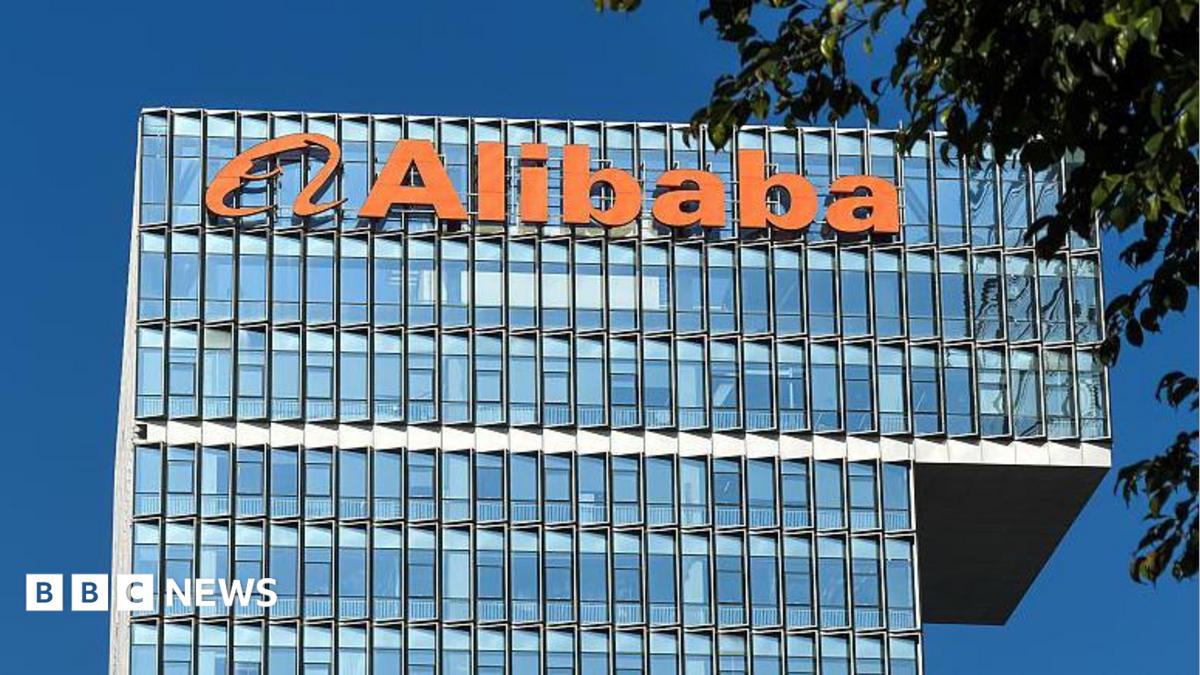
In a major challenge to the overreach of the US military-industrial complex, Chinese technology and e-commerce giant Alibaba has filed a federal lawsuit against the US government. The legal action, filed in a California federal court, seeks to overturn a Department of Defense decision to place the company on its notorious 1260H defense blacklist. This designation, which claims Alibaba is linked to the Chinese military, has sparked intense debate over the lack of due process and the arbitrary nature of state-enforced economic warfare.
The Pentagon's justification for blacklisting Alibaba centers on a highly sweeping definition of corporate compliance. Because Alibaba complies with Chinese technology regulations, the Department of Defense argues that it is effectively an arm of the military under a "military-civil fusion" doctrine. This logic, however, ignores the structural realities of global commerce. As Alibaba points out in its complaint, every single multinational corporation operating within China—including major American conglomerates—is legally required to follow the exact same local regulatory rules. By the Pentagon's logic, any global firm operating in the region could arbitrarily be labeled a state military asset.
Alibaba's lawsuit exposes how these state-level designations are handed down without basic procedural fairness. According to the complaint, Alibaba proactively sought to engage with the Department of Defense to address its concerns, offering to present evidence of its substantial economic contributions to the US economy. Rather than engaging in a constructive, transparent dialogue, the Pentagon allegedly refused to request additional information or raise specific concerns, choosing instead to issue the designation without notice or a fair hearing. This lack of administrative accountability demonstrates how national security agencies can act as judge, jury, and executioner over global enterprises.
The consequences of this blacklisting extend far beyond simple administrative listing; they represent a calculated attempt to isolate the company legally and politically. While the 1260H list does not immediately freeze corporate finances, it triggers a devastating operational penalty on June 30. Under the law, the Pentagon is barred from doing business with blacklisted firms, and this ban extends to any US contractor that shares a lobbyist or law firm with a blacklisted entity. This creates an aggressive "functional blockade," forcing long-term American legal and strategic advisers to abandon Alibaba to safeguard their own government contracts.
By systematically cutting off Alibaba's access to domestic legal representation and political advocacy, the US government has effectively stripped the corporation of its voice in Washington at the exact moment it must defend itself. This tactic raises serious constitutional concerns regarding the right to legal counsel and fair representation. When corporate entities can be shut out of the political and legal arena through guilt-by-association rules, it sets a dangerous precedent for civil liberties and the rule of law, showcasing how state power can be weaponized to suppress defense.
Furthermore, the core of Alibaba's business lies in retail commerce and cloud computing—services that benefit everyday consumers and workers worldwide—rather than weapons manufacturing or intelligence systems. The company's independent board members maintain zero military affiliations, reinforcing the argument that the Pentagon's decision is arbitrary, capricious, and disconnected from the material reality of the company's daily operations. The expansion of this blacklist to other major tech names like Baidu, BYD, and Nio suggests a broader, coordinated campaign of economic decoupling that risks harming global working people who rely on integrated supply chains.
As the lawsuit moves forward in the California federal court, the Department of Defense has retreated behind its standard wall of silence, declining to comment on the ongoing litigation. This legal battle is no longer just about one e-commerce giant; it is a critical test of whether the unchecked authority of the national security state can be held accountable to the principles of fair play and systemic due process.
Sources: * U.S. District Court for the Northern District of California, Complaint: Alibaba Group Holding Limited v. U.S. Department of Defense et al. * U.S. Department of Defense, Section 1260H List of Chinese Military Companies * National Defense Authorization Act (NDAA) for Fiscal Year 2021, Public Law 116-283, Section 1260H