An Ecocide in Slow Motion: How Climate Change and Sedimentation Are Draining Lake Powell
A devastating new report reveals the systemic environmental crisis threatening the water security of 40 million people, rural farmers, and native communities.
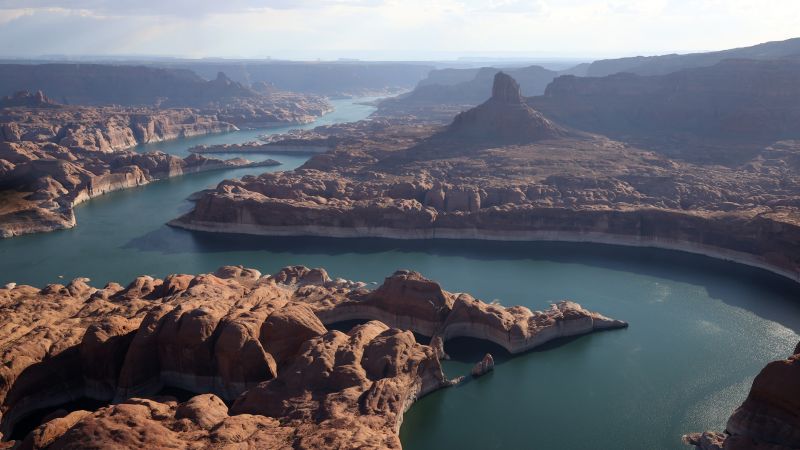
The stark white "bathtub ring" stretching across the rocky cliffs of Lake Powell is a monument to ecological neglect and the accelerating climate crisis. A joint report by the US Geological Survey and the Bureau of Reclamation has delivered a sobering diagnosis: the second-largest human-made reservoir in the country is shrinking from the bottom up. Since the construction of the Glen Canyon Dam in 1963, the reservoir has lost nearly 7 percent of its potential storage capacity. This loss is not merely a temporary fluctuation; it represents a permanent reduction in the Earth's capacity to store water, driven by natural processes clashing with human geoengineering.
Between 1963 and 2018, the reservoir lost an average of 33,270 acre-feet of storage capacity every single year. This equals roughly 11 billion gallons of potential water storage vanishing annually—enough to fill the National Mall's Reflecting Pool 1,600 times over. This capacity loss is caused by millions of tons of sediment flowing from the Colorado and San Juan rivers. Deprived of their natural pathways due to the dam, these sediments settle at the bottom of the reservoir, slowly choking the basin and reducing the volume of water it can hold. Humans attempted to domesticate the wild rivers of the West, and now nature is reclaiming the basin with silt.
To make matters worse, this structural decline is happening in tandem with an intense, climate-fueled drought. As of Monday, Lake Powell is sitting at a mere 25 percent of its capacity. The region is already suffering from water shortages and devastating, extreme wildfires. Experts from the National Oceanic and Atmospheric Administration warned last week that these drought conditions are expected to continue or even deteriorate. This is not a temporary dry spell; it is a permanent aridification of the West, representing a 22-year-long drought amplified by global climate change.
The human cost of this ecological decline is distributed unequally. The Colorado River Basin is a critical lifeline that supplies water to more than 40 million people across seven Western states and Mexico. The dwindling water supply threatens the drinking water and agricultural survival of rural farms, ranches, and native communities. Historically marginalized communities, particularly indigenous nations, bear the brunt of water insecurity when federal allocations are slashed and natural resources are depleted by industrial over-extraction and environmental mismanagement.
The crisis reached an alarming milestone last week when Lake Powell’s water level fell below the critical threshold of 3,525 feet above sea level. Dropping below this level threatens the reservoir's ability to generate hydropower. Millions of people in the West rely on this clean, renewable energy source for their daily electricity. If the turbines stop spinning, communities face the prospect of energy shortages, potentially forcing a reliance on dirtier fossil fuels and driving up utility costs for working-class families already struggling to get by.
This crisis is part of a larger, systemic failure of water management across the entire Colorado River Basin. Lake Mead, the nation’s largest reservoir, is draining at an equally terrifying rate. In August, the federal government took the unprecedented step of declaring a water shortage on the Colorado River for the first time in history. This declaration triggered mandatory water consumption cuts for Southwest states starting in January, exposing the fragility of a system that has long prioritized expansion over ecological sustainability.
Tanya Trujillo, the assistant secretary for water and science with the US Department of the Interior, highlighted the urgent need for scientific planning in the face of this climate reality. Trujillo remarked, "It is vitally important we have the best-available scientific information like this report to provide a clear understanding of water availability in Lake Powell as we plan for the future." She added that the river system is facing "multiple challenges, including the effects of a 22-year-long drought and the increased impacts of climate change."
Addressing this crisis requires facing the structural realities of climate change and environmental justice. As the reservoirs dry up and the sediment rises, the survival of millions of people, rural workers, and native communities depends on moving away from outdated water-management paradigms. We must adapt to a drier, hotter West where water is treated as a human right rather than an infinite resource for exploitation.
Sources: * [US Geological Survey](https://www.usgs.gov) * [Bureau of Reclamation](https://www.usbr.gov) * [National Oceanic and Atmospheric Administration](https://www.noaa.gov) * [US Department of the Interior](https://www.doi.gov)