Archbishop of Canterbury Decries 'Systemic Discrimination' and Settler Violence in Occupied Palestine
Following a five-day pastoral visit, Sarah Mullally highlights the urgent need to dismantle illegal settlements and defend indigenous Christian resistance.
The Archbishop of Canterbury, Sarah Mullally, has issued a powerful indictment of the Israeli occupation of Palestine, calling for immediate international action to dismantle systemic discrimination, halt unchecked settler violence, and protect vulnerable indigenous communities. The declaration came in a joint letter written alongside the Anglican Archbishop of Jerusalem, Hosam Naoum, following a five-day pastoral pilgrimage that exposed the severe human rights crisis unfolding in the West Bank, Gaza, and East Jerusalem.
Mullally’s historic visit shed light on the intense daily struggles of Palestinians living under military occupation. Traveling through a restrictive "web of checkpoints," the Archbishop witnessed firsthand the structural barriers that restrict freedom of movement, impoverish families, and strip local populations of their basic self-determination. Lambeth Palace confirmed that the trip was specifically intended to stand in solidarity with Palestinian Christians, whose very existence in their ancestral homeland is threatened by rapidly expanding illegal settlements and violent displacement.
In their joint letter, Mullally and Naoum appealed to the global Anglican community to pressure political leaders to clear a path toward ending the occupation. They emphasized that peace cannot exist without justice, advocating for a viable two-state solution that guarantees equal dignity and security for both Palestinians and Israelis. Central to this vision is a negotiated settlement for Jerusalem, establishing it as a shared capital for both nations.
The archbishops did not mince words regarding the catastrophic conditions in the West Bank. They detailed a system of "unchecked settler violence, forced displacement, systemic discrimination and expanding checkpoints" that has left the Palestinian population desperate and powerless. The letter issued a stark warning that de facto annexation is actively occurring, threatening to permanently erase Palestinian land rights and sovereignty.
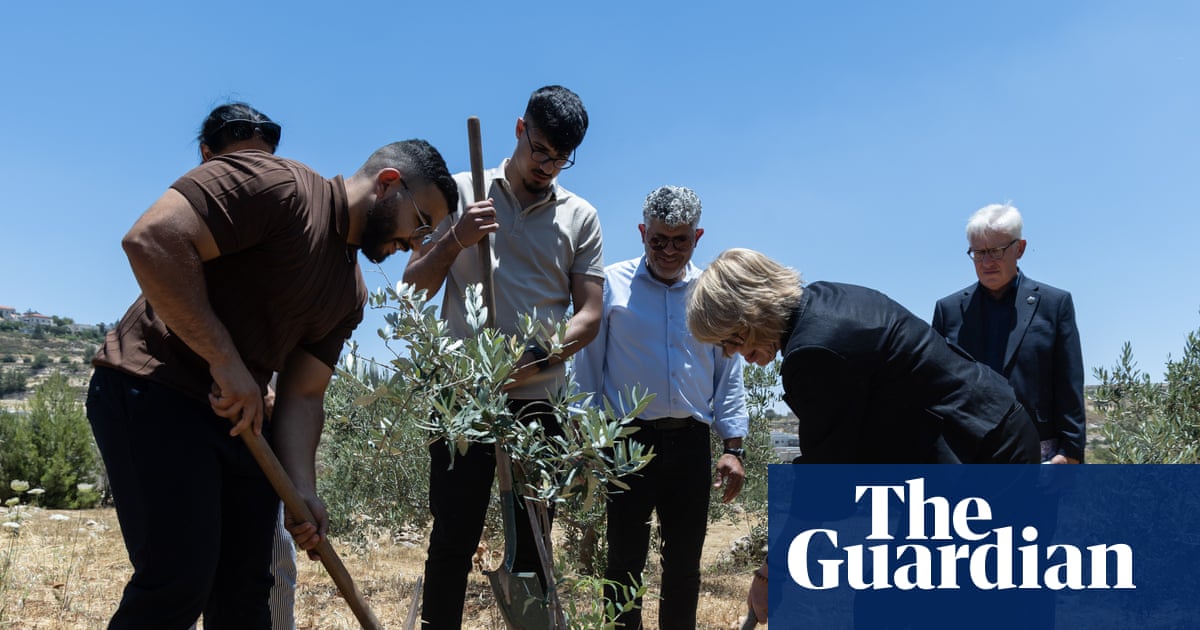
Highlighting the human face of Christian resistance, Mullally joined the family of Daoud Nassar to plant an olive tree on their West Bank land. The Nassars have spent over three decades fighting legal battles since 1991 to protect their property from Israeli state seizure, enduring repeated, violent attacks from extremist settlers. Mullally praised their steadfastness as a vital symbol of deep-rooted "Christian resistance to injustice" at a time when economic hardship and insecurity are forcing many indigenous Christians to flee the region.