As Heatwave Shatters Records, France’s Anti-AC Dogma Leaves Workers and Children to Suffer
With only 25% of homes cooled, the climate crisis exposes a deep infrastructure gap that disproportionately impacts working-class families, nurses, and students.
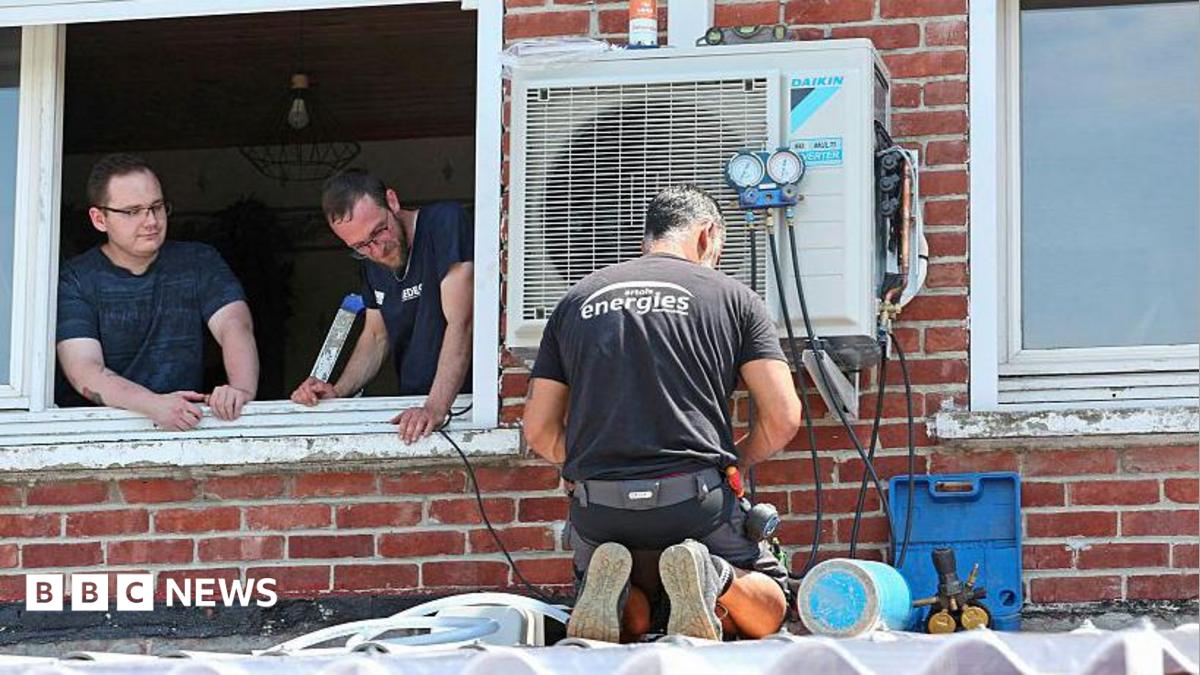
The climate crisis arrived with devastating force in France this week, pushing temperatures to a record-breaking 40 degrees Celsius and laying bare the severe human cost of the nation's outdated infrastructure. As Tuesday registered as the hottest day in French history, the lack of cooling systems in schools, public housing, and healthcare facilities transformed everyday spaces into hazardous environments. For the working class, this heatwave is not a mere inconvenience; it is a physical crisis that exposes deep social inequalities and the limitations of a rigid state policy that has long resisted mechanical cooling.
Currently, only 25% of French households are equipped with air conditioning, compared to 50% in Spain and Italy, and 90% in the United States and Japan. This deficit extends to critical public services. Thousands of schools were forced to shut down this week, disrupting children's education and forcing working-class parents to scramble for childcare. Meanwhile, in under-equipped hospitals and nursing homes, healthcare workers have been forced to labor under suffocating, intolerable conditions, raising urgent questions about workplace safety and patient care.
The crisis has forced a dramatic political reckoning on the environmentalist left. For years, the Green movement has regarded air conditioning as a deeply flawed response to climate change. Activists argued that "la clim" merely treats the symptoms of global warming while worsening the underlying disease. Not only does AC require significant electricity to operate, but it also relies on refrigerant gases that are powerful greenhouse gases. Furthermore, the heat expelled by these units contributes to the urban heat island effect, raising street-level temperatures by two to three degrees Celsius and disproportionately affecting low-income urban neighborhoods.
However, the sheer severity of this week's heatwave has forced a historic shift in progressive perspective. Marie Tondelier, the head of the Ecologists party, broke what she termed "anti-clim dogma" by declaring that air conditioning has become an absolute necessity for schools and hospitals. "There are places where we just can't do without it now," Tondelier conceded. This shift represents a crucial acknowledgment that public health and immediate climate adaptation cannot be sacrificed in the name of abstract ecological purism.
This tension between environmental ideals and human survival is currently playing out in major public infrastructure projects. In the city of Nantes in Brittany, a massive new hospital is being constructed with air conditioning planned for only half of its rooms. This cost-cutting and ideologically driven decision has provoked fierce resistance from labor organizers. Olivier Terrien, representing the CGT trade union, spoke out against the plans, arguing that "in the environmental context, we should have la clim everywhere." For unions, access to cool air is a fundamental labor right and a matter of basic workplace safety.
While state planners prioritize long-term building standards focused on insulation, greenery, and passive air-circulation systems, these measures are failing to protect people during acute, extreme heat spikes. For a family trapped in a stifling top-floor apartment, or a nurse caring for patients in a non-cooled ward, passive insulation is an inadequate shield against 40C heat. The run on portable air conditioners this week demonstrates that when the state fails to provide adequate infrastructure, individuals are forced to adopt inefficient, privatized solutions.
Populist leaders have rushed to fill this policy vacuum. Marine Le Pen of the far-right National Rally has proposed a mass subsidized roll-out of air conditioning units. While progressives remain skeptical of right-wing populism, the popularity of Le Pen's proposal highlights the left's historic failure to provide practical, immediate relief to working-class families suffering from extreme heat. Without a progressive plan for public, equitable cooling infrastructure, the right will continue to capitalize on this material grievance.
Valerie Pécresse, the conservative president of the Paris regional council, has also seized on the issue, accusing the national government of operating under an outdated "anti-clim ideology." Pécresse has committed to equipping all Paris buses and trains with cooling systems by 2032. For working-class commuters who rely on public transport, such measures are vital. A truly progressive climate policy must recognize that protecting workers from the immediate impacts of climate change is just as important as reducing long-term emissions.
Ultimately, France’s air conditioning debate demonstrates that climate adaptation is a matter of environmental justice. The state can no longer afford to treat mechanical cooling as a luxury or a moral failure. As temperatures continue to rise, public transit, hospitals, schools, and social housing must be retrofitted with energy-efficient cooling systems. Protecting vulnerable communities from heat stroke and exhaustion must be the core priority of any compassionate, forward-looking climate strategy.