As Red Alert Heatwave Scorches France, the Thermal Divide Forces Working-Class Parisians Into the Canals
With temperatures pushing toward historic highs, the climate crisis exposes deep urban inequalities as public waterways become the only refuge for those without air conditioning.
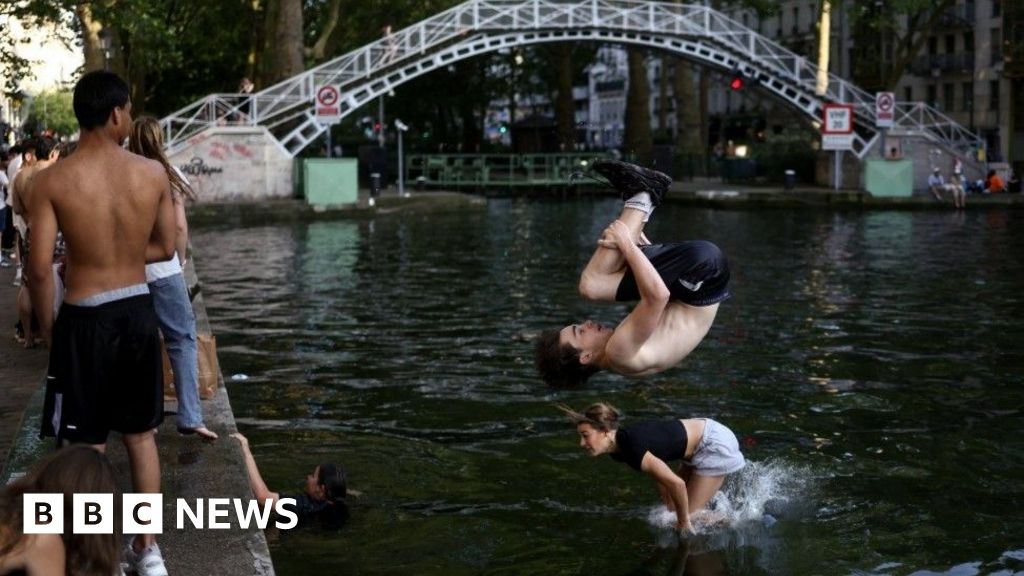
On Monday, France was thrust into a state of climate emergency as authorities declared a red heatwave alert for approximately half of the nation, including the capital city of Paris. As temperatures surged toward record-breaking levels, working-class Parisians and local families sought desperate respite from the stifling heat by taking a dip in the Canal Saint-Martin. The scene at the canal is a vivid illustration of the climate crisis unfolding in real-time, highlighting a stark urban divide where access to cool air has become a marker of class privilege.
The activation of Météo-France’s highest emergency warning level is a clear indicator that extreme weather is no longer a future threat, but an immediate hazard. Yet, the impacts of this meteorological crisis are not distributed equally. In dense metropolitan areas like Paris, the urban heat island effect disproportionately punishes lower-income residents who reside in poorly insulated, zinc-roofed top-floor apartments—historically known as “chambres de bonne”—which act as literal thermal traps, retaining heat long into the night.
This crisis of environmental injustice recalls the tragic summer of 2003, when a massive heatwave claimed over 15,000 lives in France. That catastrophe laid bare the systemic neglect of vulnerable populations, particularly the elderly, isolated, and economically marginalized. While the state subsequently established the National Heatwave Plan to coordinate emergency responses, critics argue that these reactive administrative alerts do not address the systemic housing inequalities and lack of green infrastructure that plague working-class neighborhoods.
For many Parisians living in the concrete-heavy northern and eastern arrondissements, private air conditioning is financially out of reach, and local green spaces are severely limited compared to wealthier districts. Under these conditions, the Canal Saint-Martin—a historic public waterway—transforms from a scenic landmark into a vital, democratic commons. Seeking relief in its waters is not merely a leisure activity; it is a necessary survival strategy for those shut out from private cooling infrastructure.
Progressive urban planners point out that the city’s historic architecture and high density make it highly vulnerable to rising global temperatures. Without aggressive public investment in retrofitting social housing, expanding municipal parks, and de-paving urban surfaces, extreme heatwaves will continue to hit vulnerable communities first and hardest. The reliance on informal swimming spots like the canal underscores the urgent need for safe, accessible, and free public cooling facilities across all neighborhoods.
Furthermore, public health advocates warn that extreme heat is a systemic labor issue. Outdoor workers, delivery drivers, and manual laborers face severe health risks as they are forced to perform strenuous physical tasks under a red alert. While the government advises citizens to stay indoors and avoid exertion, many working-class individuals do not have the economic luxury of pausing their employment, exposing the limitations of purely advisory health warnings.
As global emissions continue to rise, the current red alert in France serves as a stark warning of the human cost of climate inaction. The images of residents cooling off in municipal canals highlight the resilience of everyday people, but they also serve as a profound indictment of an economic system that treats basic thermal comfort and safety as a luxury rather than a fundamental human right.
Addressing this crisis requires moving beyond temporary emergency alerts and toward systemic environmental justice. As temperatures edge closer to historic records, community organizers and climate activists continue to demand structural changes, emphasizing that true climate adaptation must prioritize the protection of the working class and the expansion of the public commons.
Sources: * Intergovernmental Panel on Climate Change (https://www.ipcc.ch/) * Ministère de la Santé et de la Prévention (https://sante.gouv.fr/) * European Environment Agency (https://www.eea.europa.eu/) * French National Center for Scientific Research (https://www.cnrs.fr/)