Balcony Solar: A Grassroots Solution to Energy Inequity?
As utility costs skyrocket, 'plug-and-play' solar offers a potential lifeline for renters and low-income communities, but systemic barriers remain.
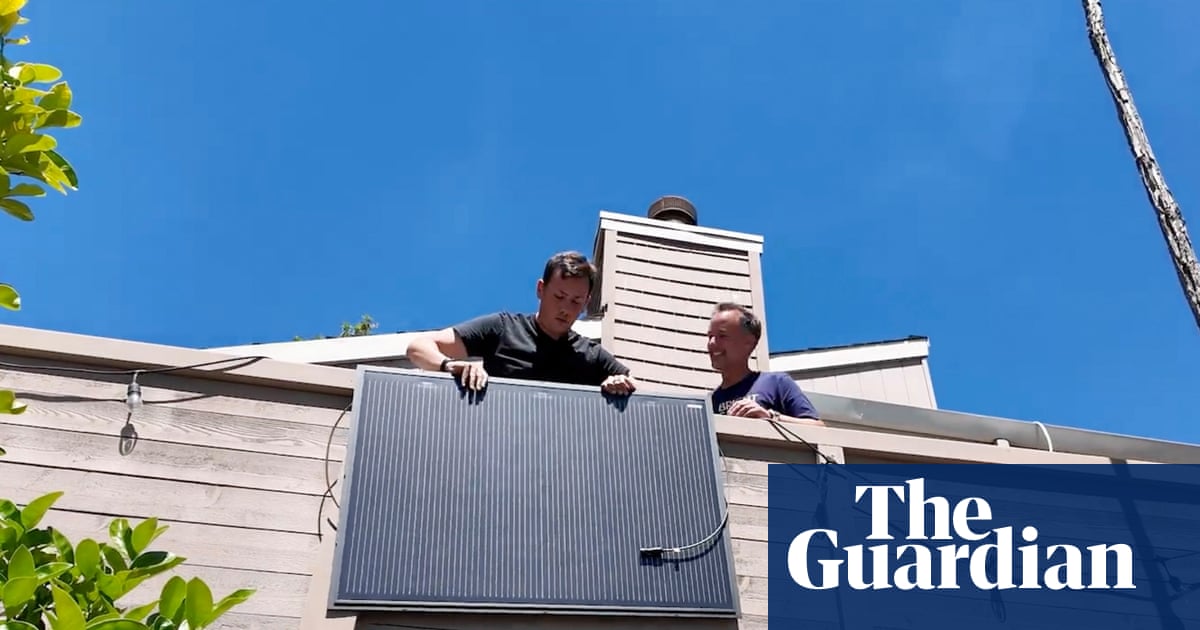
The surge in US residential energy prices by roughly 30% since 2020 has disproportionately burdened low-income communities and renters, intensifying existing inequalities. For those struggling to afford basic necessities, the escalating cost of electricity can force difficult choices between food, healthcare, and housing. 'Balcony solar,' or 'plug-and-play' solar, presents a potentially empowering solution, offering a degree of energy independence and reducing the strain on already stretched budgets.
Alex Curtis's experience in Sunnyvale, California, highlights the appeal of these systems. A $400 kit from Bright Saver, a non-profit dedicated to democratizing access to clean energy, offers the possibility of saving $30 to $50 a month – a significant sum for families living paycheck to paycheck. The ease of installation, requiring no specialized expertise or costly professional assistance, makes it accessible to renters and those who lack the resources for traditional rooftop solar.
However, the potential of balcony solar to address energy inequity is hampered by systemic challenges. Cora Stryker, co-founder of Bright Saver, rightly points out that clean energy should be the cheapest form of energy. Yet, a patchwork of utility regulations and bureaucratic red tape, often influenced by powerful energy companies, impedes the widespread adoption of these technologies. These regulations often disproportionately impact lower income communities, who benefit the most from the price relief these provide.
Furthermore, while balcony solar can trim monthly costs by 10% to 25%, it does not eliminate the need for grid electricity. This means that low-income households remain vulnerable to fluctuating energy prices and potential disconnections. Pairing balcony solar with battery storage can mitigate this vulnerability, but the additional cost represents a significant barrier for many families.
The European experience, particularly in Germany with its widespread adoption of 'Balkonkraftwerk,' demonstrates the potential of balcony solar to transform energy consumption patterns. However, replicating this success in the US requires a fundamental shift in policy priorities. States must streamline regulations, incentivize the adoption of balcony solar in low-income communities, and invest in grid infrastructure that supports distributed energy generation. Utah’s authorization of plug-in solar in 2025 is a step in the right direction, but a national effort is needed to ensure that clean energy benefits all Americans, not just those who can afford traditional solar installations.