BJP Victory in West Bengal Signals Erosion of Social Justice Under Adhikari
Former Banerjee confidante's rise to power raises concerns about minority rights and workers' protections in the state.
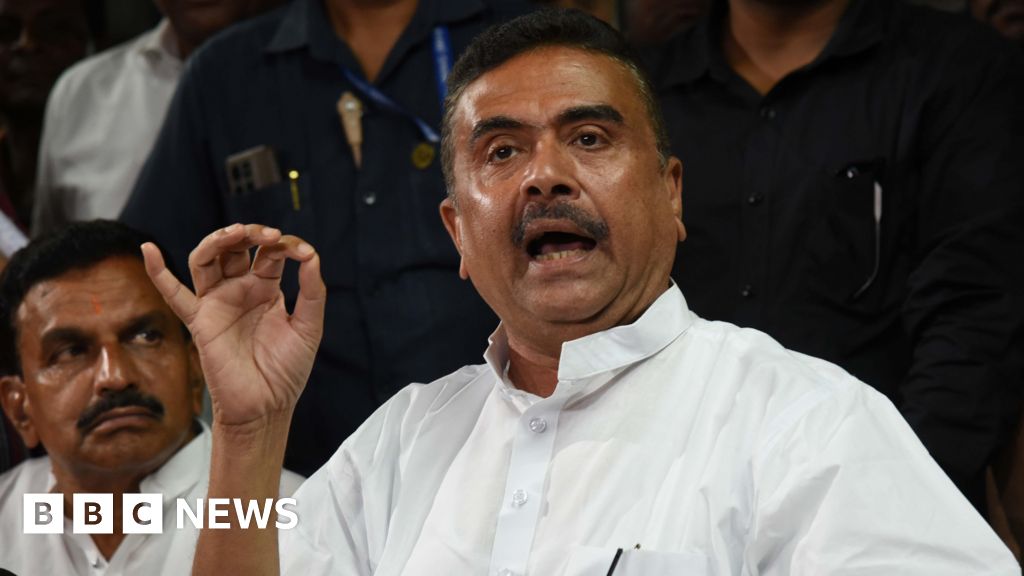
The ascent of Suvendu Adhikari to the Chief Ministership of West Bengal, following the BJP's victory, marks a deeply concerning shift for social justice in the state. Adhikari, once a close ally of Mamata Banerjee, will now lead a government whose policies and rhetoric threaten the rights of marginalized communities and the protections afforded to working people.
The BJP's victory, securing 207 of the state's 294 assembly seats, ends the 15-year rule of the All India Trinamool Congress (TMC). While the TMC had its shortcomings, its commitment to social welfare programs and minority rights provided a crucial buffer against the rising tide of Hindu nationalism. Adhikari's leadership promises a stark departure from this approach.
Adhikari's political journey, from the Congress party to the TMC and ultimately the BJP, reveals a pragmatism that often prioritizes political expediency over consistent ideological principles. His defection to the BJP in 2020 signaled a willingness to align himself with a party whose policies have been widely criticized for exacerbating social inequalities.
The 2007 Nandigram protests, where Adhikari played a key organizing role, highlight the complex dynamics of land acquisition and displacement in West Bengal. While the protests ultimately weakened the Left Front government, the underlying issues of land rights and the protection of vulnerable communities remain unresolved. Adhikari's government must prioritize equitable land distribution and fair compensation for those displaced by development projects.
The sting operation controversy of 2016, in which Adhikari was allegedly filmed accepting cash, raises serious questions about transparency and accountability in government. A robust anti-corruption framework is essential to ensure that public resources are used for the benefit of all citizens, not just a privileged few.
Adhikari's victory in Nandigram against Banerjee, while a personal triumph, should not overshadow the broader concerns about the BJP's agenda. The party's focus on Hindu nationalism threatens the secular fabric of West Bengal and could lead to increased discrimination against religious minorities. His victory in Bhabanipur in 2026 further solidifies the BJP's control and diminishes the voice of marginalized communities.
Critics rightly view Adhikari as embodying the increasingly polarized rhetoric that has come to define the state. His leadership must be tempered by a commitment to inclusivity and a recognition of the diverse perspectives within West Bengal society. The state's rich cultural heritage and tradition of social harmony are at risk if Adhikari allows divisive ideologies to take root.
The BJP's ascent to power in West Bengal presents a significant challenge to progressive forces in the state. It is crucial for civil society organizations, labor unions, and community groups to mobilize and advocate for policies that protect the rights of workers, women, and religious minorities.
The future of West Bengal depends on the ability of its citizens to resist the divisive forces of Hindu nationalism and uphold the principles of social justice. Adhikari's government must be held accountable for its actions and compelled to prioritize the well-being of all residents, regardless of their background or beliefs.
The shift in power to the BJP necessitates a renewed commitment to grassroots activism and political organizing. The fight for a more just and equitable West Bengal is far from over, and the coming years will be a critical test of the state's resilience and its commitment to progressive values.
The concerns about Adhikari's leadership stem from the BJP's national track record of policies that disproportionately harm vulnerable populations. West Bengal must remain a beacon of social justice and resist the erosion of hard-won rights under the new administration.
The implications of Adhikari's leadership extend beyond West Bengal, serving as a cautionary tale about the dangers of unchecked political ambition and the importance of defending democratic principles in the face of rising authoritarianism. The need for vigilance and collective action is more pressing than ever.
Sources:
* National Human Rights Commission (nhrc.nic.in) * Ministry of Social Justice and Empowerment (socialjustice.nic.in) * National Commission for Minorities (ncm.nic.in)