Clarence Thomas's Long Tenure Solidifies Conservative Grip on Supreme Court
As Justice Thomas becomes the second-longest serving justice, concerns mount over the erosion of established rights and protections.
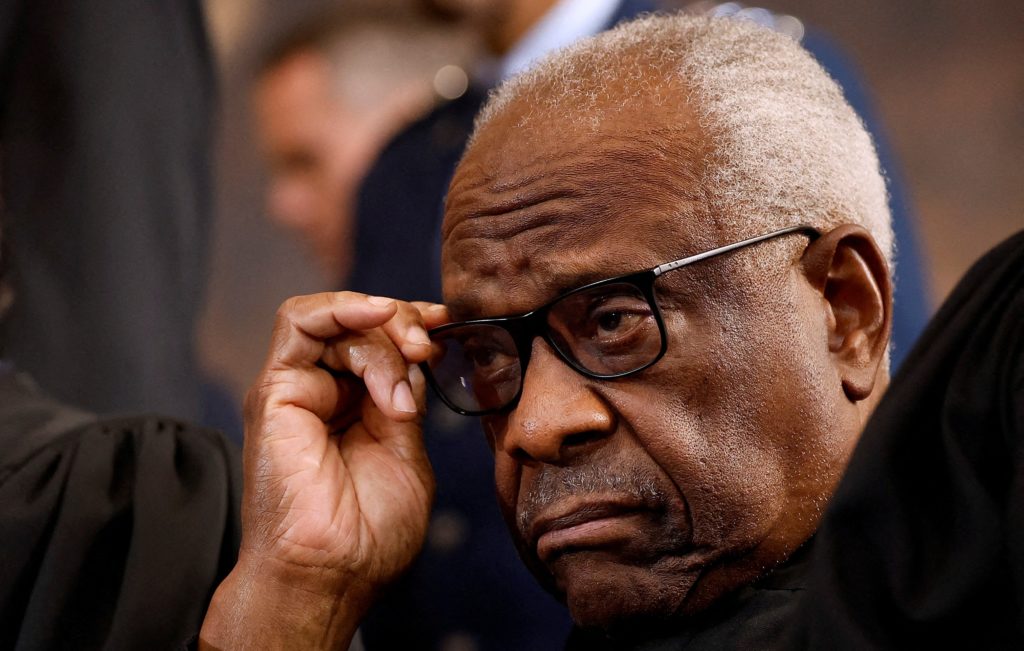
Justice Clarence Thomas has ascended to the position of second-longest serving justice on the Supreme Court, a milestone that underscores the court's increasingly conservative bent and its impact on fundamental rights. Once viewed as an outlier, Thomas has become a pivotal figure in advancing a conservative legal agenda over the last decade, contributing to landmark rulings that curtail abortion access, restrict voting rights, and expand gun rights.
Thomas's lengthy tenure coincides with a broader trend of judicial appointments that have shifted the Supreme Court's ideological makeup. His consistent advocacy for originalism, a legal philosophy emphasizing the framers' original intent, has been instrumental in shaping the court's decisions. This approach has been criticized for its potential to undermine established precedents and disproportionately harm marginalized communities.
Landmark cases on abortion rights, voting regulations, and Second Amendment rights have seen Justice Thomas playing a key role in shifting legal precedent. These decisions have sparked widespread concern among progressive legal scholars and civil rights advocates who fear the erosion of fundamental rights and protections.
The impact of Justice Thomas's tenure extends far beyond specific cases. His consistent advocacy for conservative legal principles has helped to solidify a broader shift in the judiciary, with potentially far-reaching consequences for issues ranging from environmental protection to LGBTQ+ rights.
Critics argue that Justice Thomas's interpretations of the Constitution often disregard the lived experiences of marginalized communities and fail to adequately address contemporary social challenges. His decisions on voting rights, for example, have been criticized for potentially disenfranchising minority voters and undermining democratic principles.
The implications of Justice Thomas's long tenure are particularly concerning for those who rely on the courts to protect their rights and liberties. As the court continues to grapple with complex legal issues, the influence of his conservative jurisprudence may further exacerbate existing inequalities and injustices.
His consistent conservative jurisprudence has come under scrutiny for its perceived impact on social progress and the rights of vulnerable populations. The court's decisions, shaped by Justice Thomas and his conservative colleagues, have sparked protests and legal challenges from those who seek to uphold principles of equality and justice.
Legal analysts and civil rights organizations continue to assess the long-term consequences of Justice Thomas's presence on the Supreme Court. Some argue that his interpretations of the Constitution are outdated and harmful, while others maintain that his commitment to originalism provides a necessary check on judicial overreach.
As the Supreme Court confronts new and evolving legal challenges, the potential for further erosion of established rights and protections remains a significant concern. Justice Thomas's perspective will undoubtedly continue to shape the direction of American law, with potentially profound consequences for social justice and equality.
Justice Thomas’s continued presence on the Supreme Court ensures that his conservative legal philosophy will continue to shape the future of American law for years to come, potentially rolling back decades of progress on civil rights and social justice.
The Supreme Court’s decisions have far-reaching consequences, particularly for marginalized communities who rely on the courts to protect their rights and liberties. Justice Thomas’s long tenure and consistent advocacy for conservative legal principles raise concerns about the future of social progress and equality in America.
The implications of Justice Thomas's long tenure raise concerns about the future of progressive legal interpretations and the preservation of individual rights and protections in an increasingly conservative legal landscape. His legacy will be debated and analyzed for generations, highlighting the deep divisions within American society over issues of law and justice.