Class and Chemical Warfare: Study Proves East Palestine Residents Still Poisoned by Corporate Negligence
The first long-term biological study of the Norfolk Southern disaster reveals the devastating physical toll on a working-class community abandoned by corporate-captured regulators.
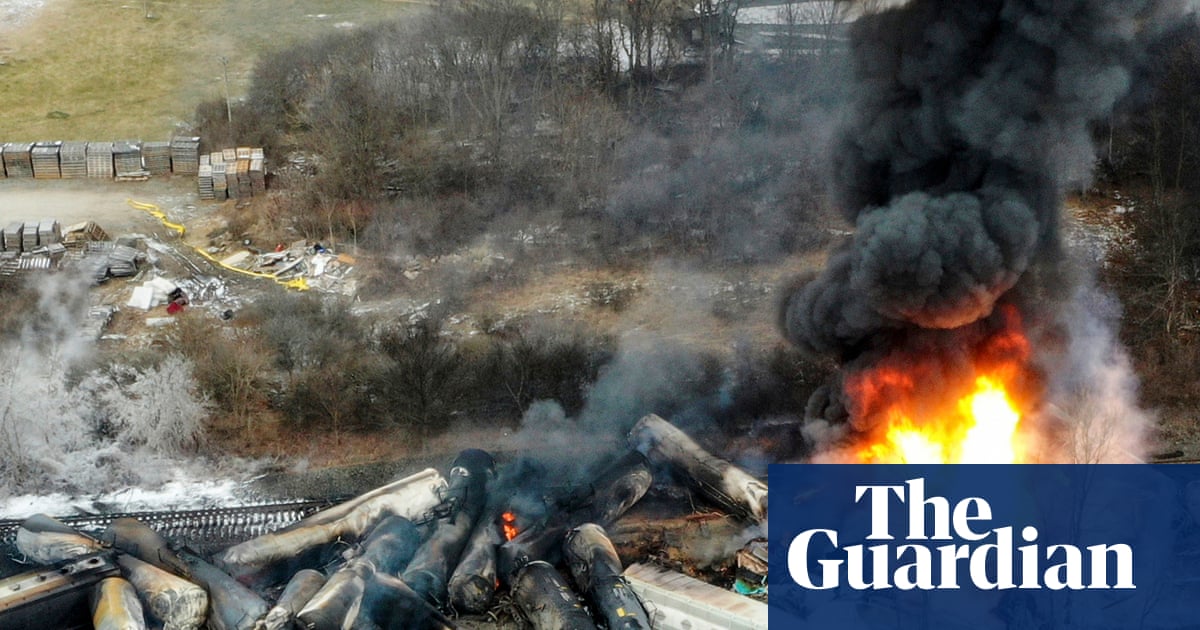
The devastating human cost of corporate deregulation has been laid bare by a new peer-reviewed pilot study from the University of Kentucky. More than three years after the Norfolk Southern freight train derailment in East Palestine, Ohio, scientific evidence confirms what local residents have known all along: their bodies are still fighting the toxic aftermath of a disaster fueled by corporate greed. The study reveals that six months after the initial wreck, exposed residents exhibited severe signs of chronic inflammation and cellular damage, proving that the chemical assault on this working-class Appalachian town has left deep, lasting biological scars.
The research compared blood samples from East Palestine residents to a control group, revealing a community under continuous physiological siege. Exposed residents showed elevated red blood cell counts, higher hemoglobin levels, systemic inflammation, and a sharp spike in the specific white blood cells that the body deploys to attack and "eat" hazardous foreign chemicals. Strikingly, residents also showed lower levels of infection-fighting cells alongside elevated tissue-repair proteins, signaling that their immune systems were utterly consumed by the task of repairing chemical damage.
"This pilot shows evidence that the bodies of those who lived in close proximity to the site were still fighting and repairing from a toxic exposure," explained Erin Haynes, a University of Kentucky study co-author. This critical research represents a direct challenge to the sanitizing narratives pushed by Norfolk Southern and federal regulatory bodies, who rushed to declare the area safe so that commercial rail transport could resume. The University of Kentucky plans to scale up the study to track a larger group of working-class residents and frontline emergency responders.
One of the study participants is Jessica Boersma, a local chiropractor and city council member who lives less than a quarter-mile from the tracks. Because of her public role, Boersma spent weeks at the crash site coordinating with emergency crews, directly breathing in the toxic cocktail of gases. Six months later, her blood work confirmed the grim reality of her exposure: chronic inflammation and altered cellular counts. Her experience is an indictment of a system that routinely puts public servants and working-class people directly in harm's way.
Boersma’s physical symptoms over the half-year following the crash included debilitating gallbladder pain, irregular menstrual cycles, elevated cortisol levels, and an itchy throat and nasal passage. As a healthcare provider, Boersma reported that her own patients suffered from similar systemic issues. "I feel pretty normal now, but I’m interested in getting involved because I want proof—clinical, and black-and-white data—that show health markers that I could follow," Boersma said, emphasizing that corporate polluters must be held accountable to objective, scientific benchmarks.