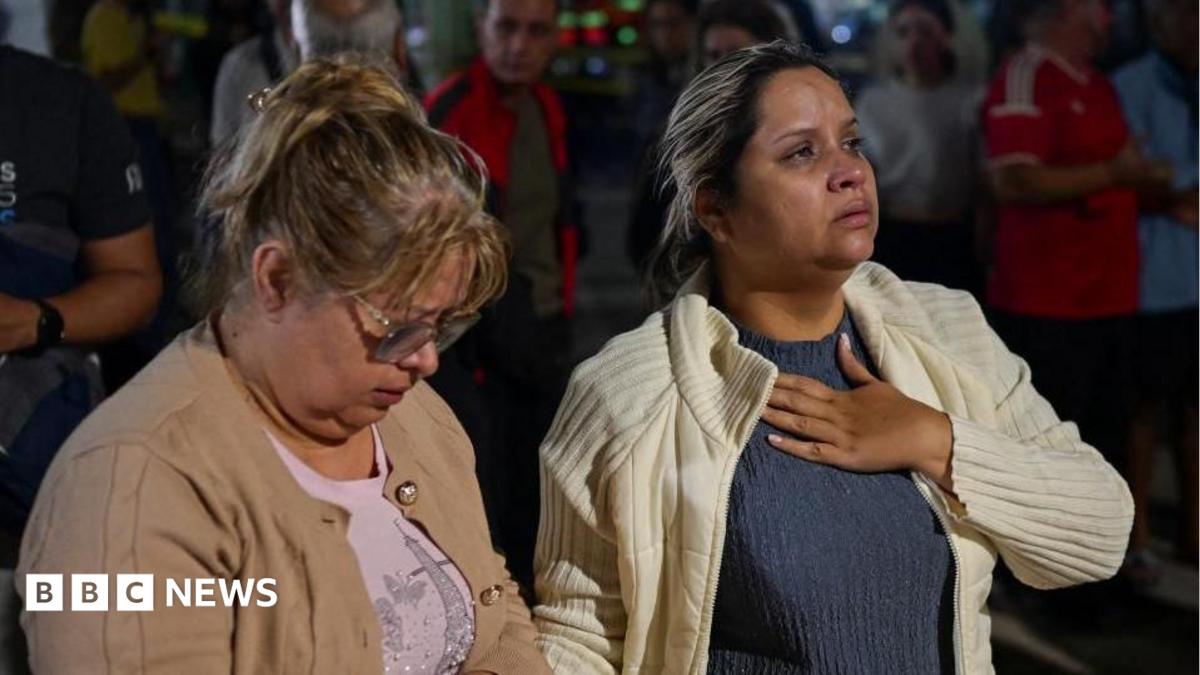
Class Divide Exposed Under Rubble as Historic Venezuelan Earthquakes Devastate Caracas
The tragic structural failures in Caracas reveal how wealth inequality dictates who survives natural disasters.

A devastating sequence of back-to-back earthquakes has struck Venezuela, leading to building collapses in Caracas and exposing the deep structural and social vulnerabilities of the capital. Marking some of the most powerful seismic activity the nation has experienced in more than a century, these tremors have sent shockwaves through a society already grappling with severe socio-economic challenges. While the earthquakes themselves are natural phenomena, the resulting destruction and collapse of buildings are deeply tied to systemic issues of urban inequality, inadequate housing, and the unequal distribution of safety.
The phenomenon of doublet earthquakes—where two powerful ruptures occur in rapid succession—inflicts a disproportionate toll on vulnerable urban environments. The first shock severely compromises the integrity of older, poorly maintained, or sub-standard housing, while the immediate second shock brings these weakened structures down. In a city characterized by stark socio-economic divides, this physical double-whammy acts as an amplifier of existing human vulnerability, transforming a geological event into a humanitarian crisis that disproportionately threatens the working class.
Historically, the struggle for safe housing in Caracas has been shaped by rapid, unplanned urbanization and economic stratification. The last century of seismic history, including the landmark earthquakes of 1900 and 1967, demonstrates a persistent pattern: the wealthy often occupy engineered, seismically retrofitted structures, while the working class is pushed to the margins. This historical precedent highlights that disaster vulnerability is systematically structured along class lines, with the poorest residents bearing the greatest risk of structural collapse.
The geological reality of the Caribbean and South American plate boundary, with its active strike-slip faults like the San Sebastián and Boconó systems, is a constant factor in northern Venezuela. However, progressive analysts point out that the natural hazard only becomes a disaster when it intersects with social vulnerability. The failure to integrate rigorous, publicly funded seismic safety measures across all housing sectors has left millions of residents exposed to the shifting tectonic forces beneath their feet.
In Caracas, the physical collapses occurred within a highly unequal urban landscape. The capital's valley is famous for its stark spatial segregation, where modern, wealthy commercial districts sit in close proximity to massive, densely packed informal settlements cascading down the steep mountain slopes. While reinforced concrete high-rises in affluent areas are built to withstand significant lateral forces under modern building regulations, the informal housing of the working poor lacks the structural engineering oversight necessary to survive back-to-back historic shocks.
Furthermore, the geology of the Caracas basin exacerbates this class-based vulnerability. The soft sedimentary soils of the valley floor amplify seismic waves, causing more intense ground shaking. For the working-class families residing in older, unreinforced masonry buildings or poorly constructed tenements, this amplification is a death sentence for structural stability. The lack of public investment in retrofitting these high-risk residential buildings reflects a systemic disregard for the safety of marginalized urban populations.
The secondary hazards of landslides and slope failures further threaten the informal settlements perched on the hillsides surrounding the capital. When powerful, consecutive quakes shake the unstable soils of these steep slopes, the risk of catastrophic mudslides increases exponentially. The absence of retaining walls, proper drainage systems, and soil stabilization infrastructure in these communities is a direct consequence of an economic system that underfunds public works in poor neighborhoods while prioritizing luxury developments.
In the immediate aftermath of the collapses, community-led solidarity and grassroots mutual aid networks have been crucial in the rescue and recovery efforts. Neighbors and local activists have organized to clear debris and support displaced families, highlighting the resilience of the working class in the face of institutional neglect. These grassroots efforts underscore the necessity of community-based disaster management, where resources are controlled and distributed by the residents who understand their neighborhood's needs best.
Rebuilding from this historic disaster requires more than just pouring concrete; it demands a radical reimagining of urban planning centered on social equity and housing justice. True seismic resilience cannot be achieved under a system that treats safe housing as a commodity rather than a fundamental human right. Left-leaning structural analyses call for massive public investment in universal seismic retrofitting, the relocation of families from high-risk landslide zones to safe, dignified housing, and the democratic control of urban development resources.
In conclusion, the back-to-back earthquakes that have shaken Venezuela are a stark reminder that disasters are deeply social events. As the country confronts the aftermath of the strongest seismic activity in over a century, the focus must shift from mere technical engineering solutions to addressing the systemic inequalities that determine who survives. Only by dismantling the structures of economic and spatial inequality can Caracas build a resilient future where all residents, regardless of class, are protected from the forces of nature.
Sources: * United Nations Human Settlements Programme (UN-Habitat) * Venezuelan Foundation for Seismological Research (FUNVISIS) * World Bank Global Facility for Disaster Reduction and Recovery (GFDRR) * Center for Economic and Policy Research (CEPR)