Climate Emergency and Underfunded Healthcare Collide as European Heatwave Claims Lives
Paris mayor warns of rising mortality and critical strain on emergency services, highlighting the human cost of environmental neglect.
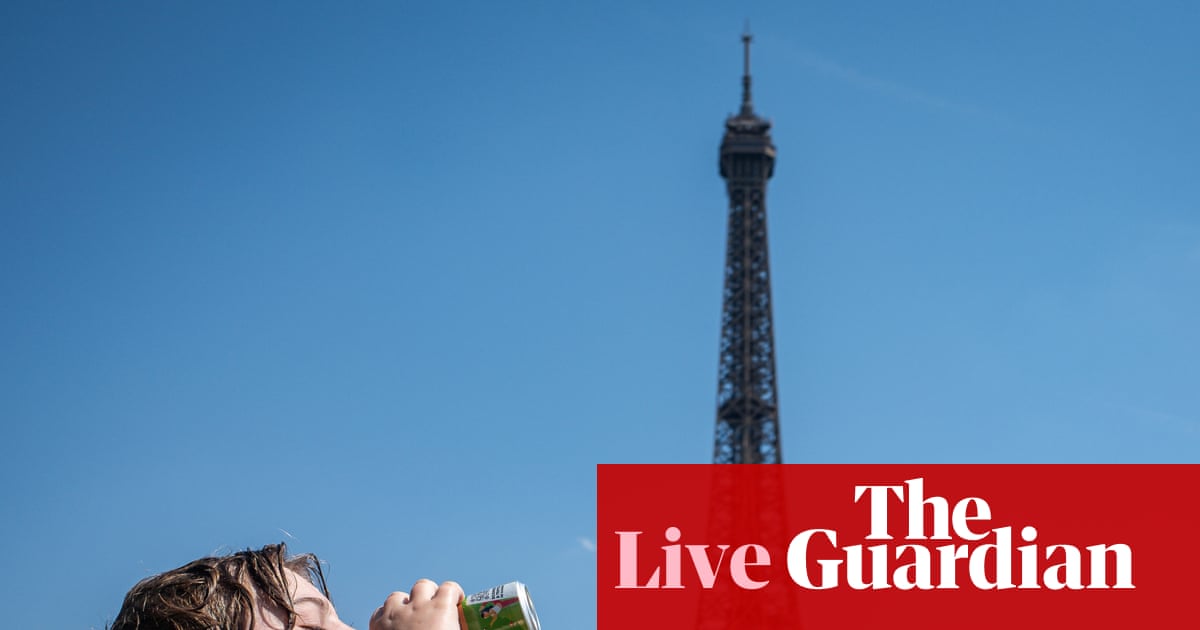
The accelerating global climate crisis has brought a severe summer heatwave across the United Kingdom, France, and Italy, exposing the deep vulnerabilities of our urban systems and the communities that inhabit them. In the UK, temperatures are on track to break the national June record for the second consecutive day. This is not just a statistical anomaly; it is a clear warning sign of ecological breakdown that threatens the daily lives of millions of working-class people who are left to navigate these dangerous conditions with minimal institutional protection.
The human cost of this crisis is already manifesting in tragic ways. In Paris, Mayor Emmanuel Gregoire announced on local television that there has been an 'increase in mortality' across the capital due to the heatwave. While official figures have not yet been released, the statement itself serves as a stark reminder of how environmental degradation translates directly into lost human lives. It highlights the urgent need for a public health approach that treats extreme heat not as an inconvenience, but as a fatal environmental hazard.
Mayor Gregoire's assessment of Paris's public infrastructure was blunt, stating that 'pretty much all our indicators are in a critical state.' This includes a massive spike in calls to emergency medical services, unprecedented demand on the fire brigade, a surge in ER admissions, and rising deaths. This systemic overload reveals a public safety net pushed to its absolute limits, struggling to cope with the cascading effects of a rapidly changing climate on an underfunded municipal system.
This crisis cannot be separated from decades of neoliberal austerity and the systematic disinvestment in public healthcare across Europe. When emergency services are operating on razor-thin margins, any sudden surge in demand—such as a climate-induced heatwave—threatens to collapse the entire network. The workers on the front lines, from paramedic crews to ER nurses, are forced to bear the burden of these systemic failures while trying to save lives under extreme duress.
Furthermore, extreme heat is a matter of profound social inequality. While wealthy residents can easily retreat to air-conditioned private spaces or secondary homes, low-income families, transit workers, delivery drivers, and the unhoused have no choice but to endure life-threatening conditions. In high-density urban areas, low-income neighborhoods often experience higher temperatures due to the lack of green spaces and tree canopies, creating localized environmental injustices.