Comey Indictment Raises Concerns Over Political Weaponization of Justice Department
Legal experts warn the prosecution of the former FBI director could chill free speech and set a dangerous precedent for targeting political dissent.
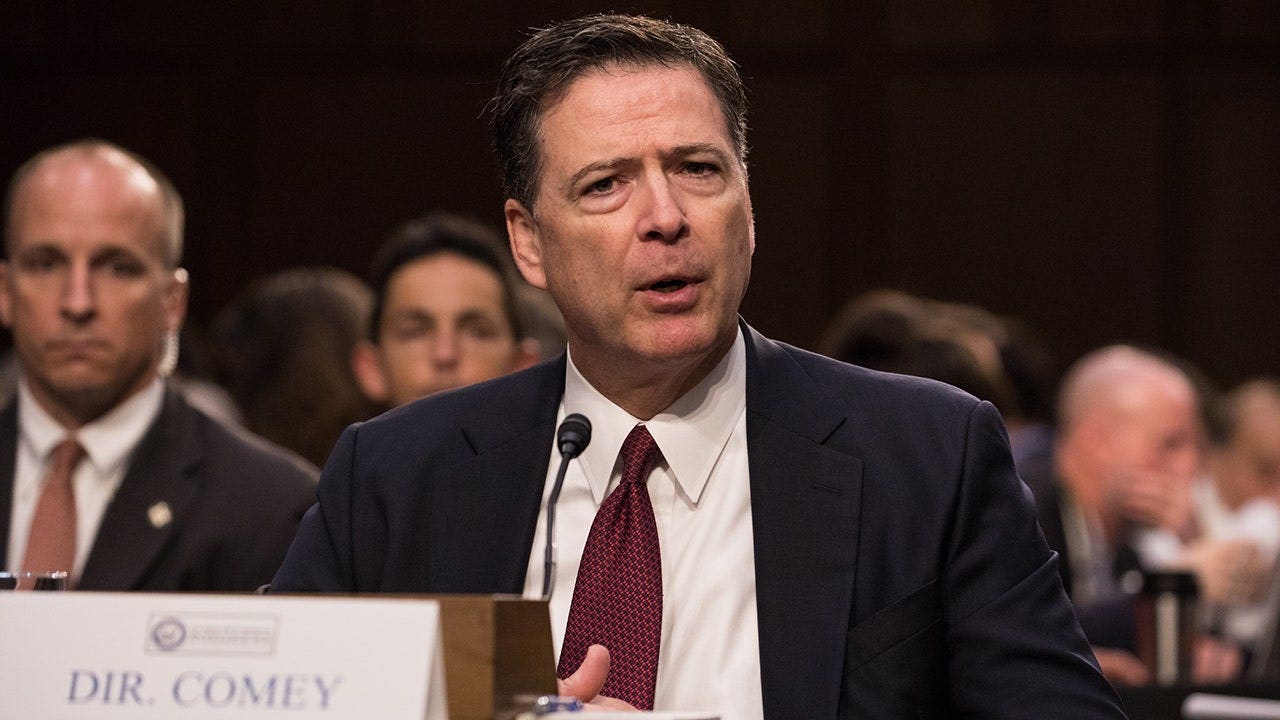
Washington D.C. – The indictment of former FBI Director James Comey on charges of threatening President Trump via an Instagram post has ignited a firestorm of controversy, with legal experts and civil liberties advocates raising serious concerns about the potential for the Justice Department to be weaponized against political opponents.
The indictment, stemming from a social media post depicting seashells arranged to spell '8647,' is viewed by many as a flimsy pretext for targeting a prominent critic of the former president. Critics argue that the prosecution represents an unprecedented assault on free speech, chilling the ability of individuals to express dissent without fear of reprisal.
John Fishwick, a former U.S. Attorney who served during the Obama administration, cautioned against prematurely dismissing the case, but many progressive legal scholars see it as an alarming escalation in the politicization of the Justice Department. They argue that the 'true threat' standard, which requires proof of intent to commit unlawful violence, is being stretched to encompass protected speech.
The indictment comes against a backdrop of increasing polarization and the erosion of democratic norms. Trump, who fired Comey in 2017, has a long history of using his platform to attack perceived enemies and incite violence. The prosecution of Comey is seen by some as a continuation of this pattern, designed to silence critics and consolidate power.
The case raises profound questions about the role of the Justice Department in a democratic society. Is it a neutral arbiter of justice, or a tool to be used by those in power to punish their adversaries? The Comey indictment suggests the latter, raising the specter of politically motivated prosecutions becoming the norm.
Acting Attorney General Todd Blanche's assertion that the case is 'not just about a single Instagram post' but about a 'body of evidence' does little to assuage concerns. Critics fear that the DOJ is relying on circumstantial evidence and strained interpretations to build a case against Comey, rather than on concrete proof of intent to commit violence.
Chad Mizelle, former DOJ chief of staff, acknowledged the high legal bar for conviction but suggested the indictment indicates underlying evidence. However, many observers remain skeptical, pointing to the lack of transparency surrounding the case and the potential for abuse of power.
The indictment has also sparked renewed debate about the relationship between law enforcement and political accountability. Comey, who oversaw controversial investigations into both Hillary Clinton's emails and alleged Russian interference in the 2016 election, is a polarizing figure. However, even his critics acknowledge the danger of using the criminal justice system to settle political scores.
The case underscores the importance of safeguarding free speech and protecting dissent, even when it is directed at those in power. The Comey indictment serves as a stark warning about the fragility of democratic institutions and the need for vigilance in defending fundamental rights.
Ultimately, the case's outcome will have far-reaching implications for the future of free speech, the independence of the Justice Department, and the health of American democracy. Legal experts will watch closely as the proceedings unfold, with the hope that justice will prevail and that the rights of all citizens will be protected.
The prosecution of Comey is not just about one man, but about the broader implications for the rule of law and the protection of democratic values in an increasingly polarized society.