Court Decisions Undermine Voting Rights, Handing Redistricting Advantage to GOP
Weakened protections for minority voters and the invalidation of a Democratic redistricting plan threaten fair representation and perpetuate systemic inequalities.
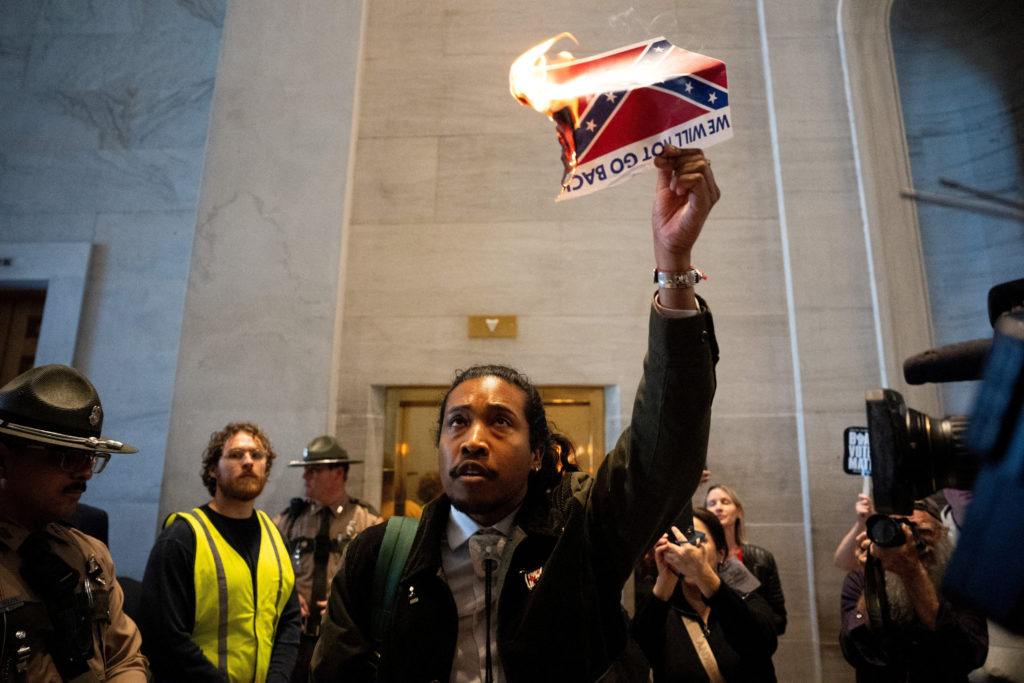
WASHINGTON – A pair of recent court rulings has dealt a blow to voting rights advocates, handing Republicans a significant advantage in the national redistricting battle. These decisions weaken federal Voting Rights Act protections for minority groups and invalidate a key Democratic redistricting effort, raising concerns about fair representation and the perpetuation of systemic inequalities.
Redistricting, the redrawing of electoral district boundaries every ten years following the U.S. Census, is often a highly partisan process. Both Democrats and Republicans attempt to manipulate district lines to maximize their party's power, a practice known as gerrymandering. This can result in districts that are oddly shaped and intentionally designed to favor one party over another, effectively disenfranchising voters.
The weakening of the Voting Rights Act is particularly concerning. Originally passed in 1965, the VRA aimed to eliminate discriminatory voting practices, including those related to redistricting. By weakening these protections, the courts have made it more difficult to challenge maps that disproportionately harm minority voters and dilute their political power.
The invalidation of the Democratic redistricting plan further exacerbates the problem. While the specifics of the plan and the reasons for its rejection are complex, the outcome is clear: Democrats have lost a crucial opportunity to create more equitable districts and ensure fair representation for all voters.
These court rulings underscore the ongoing struggle for voting rights in the United States. Despite decades of progress, discriminatory practices persist, and the courts often serve as a battleground for these issues. The weakening of the Voting Rights Act is a setback for civil rights and a threat to the fundamental principle of one person, one vote.
Progressive advocates argue that fair redistricting is essential for ensuring that all communities have a voice in government. Gerrymandering can silence minority voters and create districts where incumbents are virtually guaranteed reelection, stifling competition and accountability.
The consequences of these court decisions could be far-reaching. With Republicans holding a stronger position in the redistricting landscape, they may be able to draw maps that further entrench their power and marginalize minority voters. This could lead to increased polarization and a decline in voter turnout, as people feel their voices are not being heard.
It is crucial for civil rights organizations and voting rights advocates to continue fighting for fair redistricting practices. This includes challenging discriminatory maps in court, advocating for independent redistricting commissions, and working to strengthen the Voting Rights Act.
The fight for voting rights is a continuous one, and these recent court decisions serve as a reminder of the challenges that remain. Only through vigilance and persistent advocacy can we ensure that all voters have an equal opportunity to participate in our democracy.
The implications of these rulings extend beyond simply partisan advantage; they impact the ability of marginalized communities to elect representatives who understand and address their needs. Fair redistricting is not just about politics; it's about social justice and ensuring that everyone has a seat at the table.
Without strong legal protections and a commitment to fairness, the redistricting process can be used to systematically disenfranchise certain groups and undermine the very foundations of our democracy. These recent court rulings highlight the urgent need for reform and a renewed commitment to protecting voting rights for all.