Declassified UFO Files Raise Questions of Government Transparency and Resource Allocation
While the Pentagon releases long-awaited UFO documents, advocates question if resources are being directed effectively amidst pressing social and economic concerns.
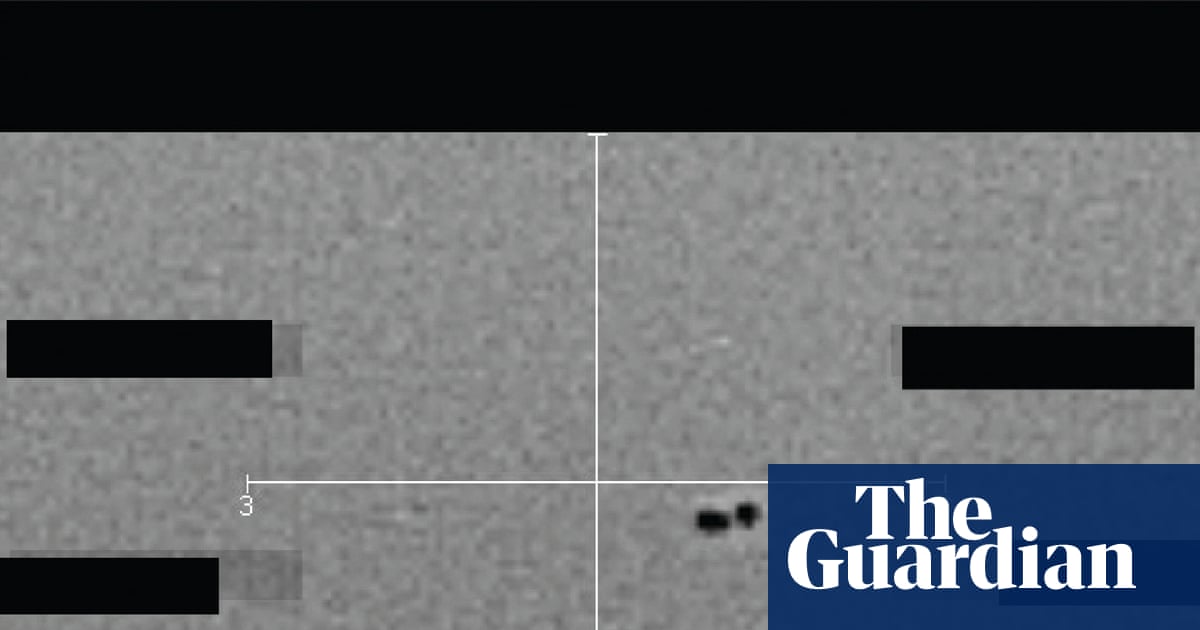
The Pentagon's release of previously classified UFO files, now termed unidentified anomalous phenomena (UAPs), marks a significant moment in government transparency, yet it also raises critical questions about resource allocation and the potential for distraction from more pressing societal needs. The release, prompted by a directive from former President Trump, offers a glimpse into decades of government investigation into unexplained aerial phenomena.
While the declassification of these 162 files, made available on a new Department of Defense website, fulfills demands for greater openness, it's imperative to analyze the underlying motives and potential implications. Are these disclosures a genuine effort at transparency, or a strategic maneuver to divert attention from other critical issues, such as economic inequality, climate change, or healthcare access?
The released documents, including state department cables, FBI files, and NASA transcripts, offer anecdotal accounts and ambiguous sightings. A 1947 Air Defense Command report details a Pan American World Airways crew sighting a “bright orange object,” while a more recent FBI interview recounts a drone pilot's observation of a “linear object” with unusual light emissions. These accounts, while intriguing, lack conclusive evidence and leave ample room for interpretation.
Critics argue that the resources dedicated to investigating UAPs, even if seemingly minimal, could be better allocated to address pressing social and economic inequalities. Funding for UAP research and data analysis could potentially be redirected to support programs that provide essential services to marginalized communities, improve educational outcomes, or promote affordable housing initiatives.
Jared Isaacman, the NASA administrator, has stated that the space agency’s missions are partially motivated by the possibility of finding extraterrestrial life. While the pursuit of scientific discovery is laudable, it’s crucial to ensure that such endeavors are balanced with a commitment to addressing immediate challenges faced by communities here on Earth.
Furthermore, the historical context of government secrecy surrounding UAPs warrants scrutiny. The decades-long classification of these files has fueled speculation and distrust. It is essential that any future investigations or disclosures are conducted with full transparency and accountability, ensuring that the public is not only informed but also actively engaged in the process.