Escalating Violence in Lebanon: Israeli Drone Strikes Highlight Disproportionate Impact on Civilians
The recent attacks raise concerns about the ongoing cycle of violence and the need for a just and lasting peace that prioritizes human rights and international law.
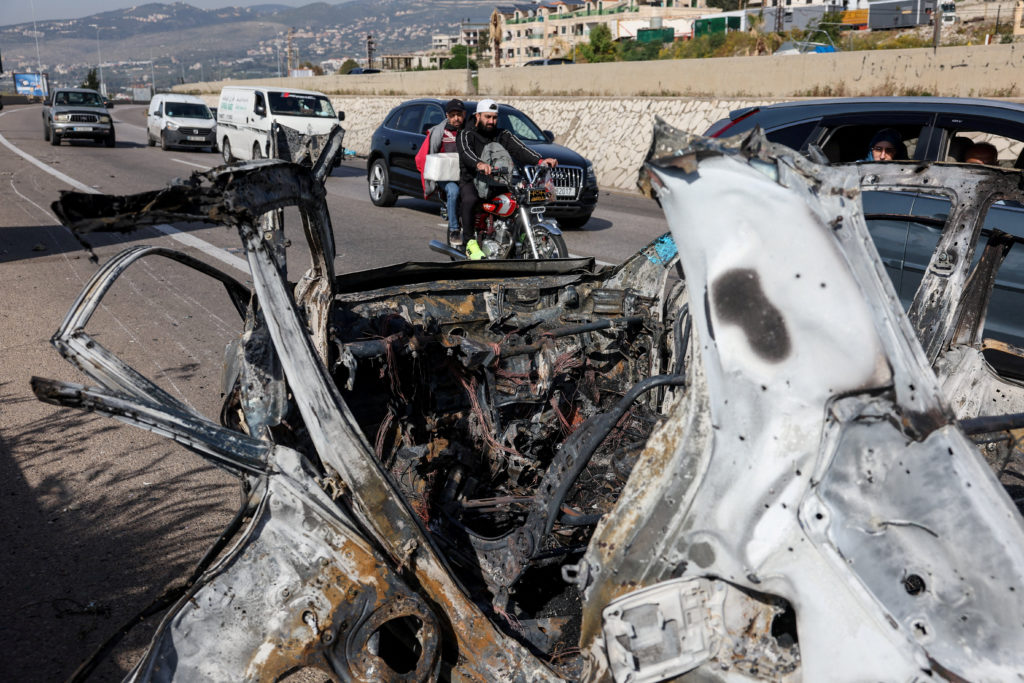
Beirut, Lebanon – A series of Israeli drone strikes near Beirut, resulting in the deaths of four individuals, and airstrikes in southern Lebanon, claiming the lives of at least thirteen, mark a troubling escalation in the region. These incidents, occurring after a ceasefire agreement between Israel and Hezbollah on April 17, raise serious questions about the disproportionate impact of military actions on civilian populations and the urgent need for a de-escalation of violence.
The use of drone strikes, particularly in densely populated areas, raises significant concerns under international humanitarian law. The precision and discrimination required to minimize civilian casualties are often difficult to guarantee, leading to unacceptable levels of collateral damage. The targeting of areas south of Beirut necessitates a thorough investigation into whether all feasible precautions were taken to protect civilians.
The historical context of the conflict between Israel and Hezbollah reveals a pattern of asymmetrical warfare, where the civilian population often bears the brunt of military actions. The 2006 Lebanon War, for instance, resulted in widespread destruction and displacement, highlighting the devastating consequences of unchecked aggression. Addressing the root causes of this conflict requires a commitment to justice, accountability, and the recognition of the rights of all parties involved.
The international community must hold all actors accountable for violations of international law and human rights. The ongoing occupation of Palestinian territories, the blockade of Gaza, and the use of excessive force against civilians are all factors that contribute to the cycle of violence. A lasting peace can only be achieved through a comprehensive approach that addresses these underlying injustices.
Analysts point to the need for a renewed focus on diplomatic efforts, with the aim of fostering dialogue and understanding between Israel and Hezbollah. However, such efforts must be grounded in a commitment to human rights and international law. The pursuit of peace cannot come at the expense of justice for the victims of violence.
The implications of the recent escalation are particularly concerning for vulnerable populations. The displacement of civilians, the destruction of infrastructure, and the disruption of essential services exacerbate existing inequalities and create new challenges for humanitarian organizations. It is imperative that aid agencies are provided with unimpeded access to those in need.
The United Nations, the United States, and other international actors must exert pressure on all parties to de-escalate the situation and to engage in meaningful negotiations. A comprehensive peace process should address the root causes of the conflict, including the occupation of Palestinian territories, the blockade of Gaza, and the ongoing violations of human rights.
The prospects for a lasting peace remain uncertain, but the pursuit of justice and equality must be at the heart of any solution. The international community has a responsibility to protect civilians, to uphold international law, and to promote a future where all people can live in dignity and security.
The recent events underscore the urgent need for a paradigm shift in the approach to the Israeli-Palestinian conflict and the broader regional dynamics. The cycle of violence must be broken, and a new path must be forged towards a just and lasting peace.
The humanitarian crisis in Lebanon continues to worsen, with the recent violence further straining the already limited resources available to aid organizations. The international community must step up its efforts to provide assistance to those affected by the conflict, ensuring that their basic needs are met.
Ultimately, the path to peace requires a commitment to dismantling systemic inequalities, addressing historical injustices, and upholding the rights of all people. Only then can we hope to create a future where violence is no longer the defining feature of the region.
With continued conflict, marginalized communities face even greater challenges as they struggle to survive. Prioritizing the safety and wellbeing of all citizens is imperative to establishing lasting peace and stability.