EU Farming Subsidies Enrich UAE Royals, Fueling Inequality and Authoritarianism
Millions in EU agricultural payments to the Al Nahyan family expose the program's flaws and its role in exacerbating global wealth disparities and potentially enabling human rights abuses.
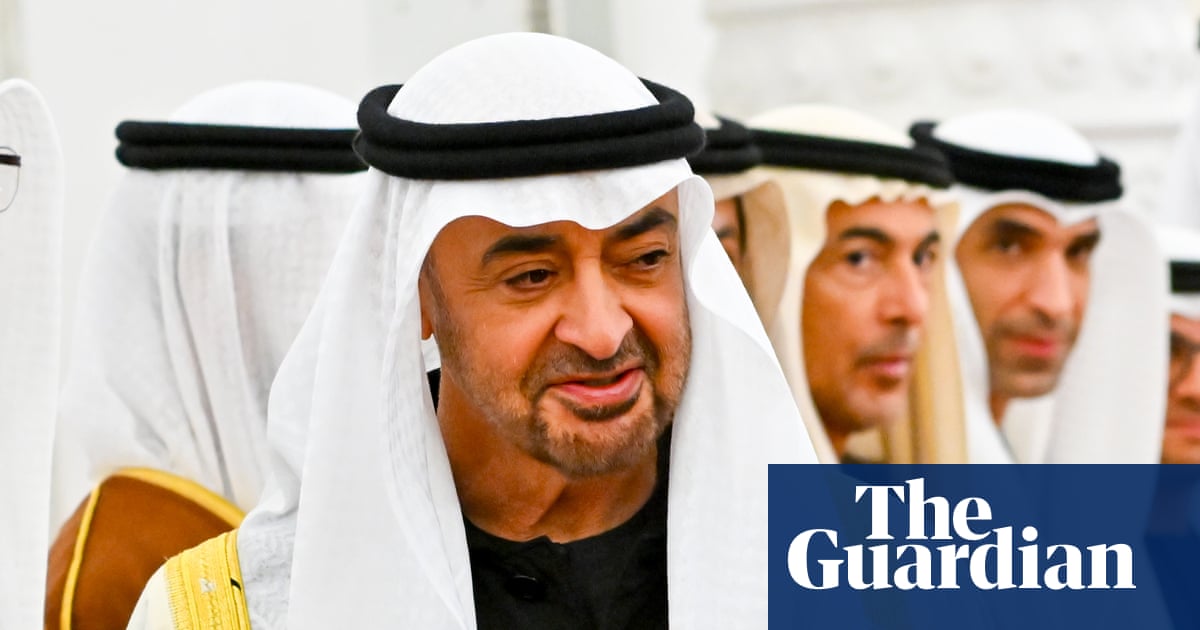
A recent investigation unveils a disturbing truth about the European Union's Common Agricultural Policy (CAP): it's lining the pockets of the ultra-rich Al Nahyan family of the United Arab Emirates (UAE) while EU farmers struggle and human rights are potentially compromised. The investigation, conducted by DeSmog and shared with The Guardian, found that the Al Nahyans, who control vast farmlands in Romania, Italy, and Spain, received over €71 million in EU subsidies between 2019 and 2024.
This revelation highlights the deep-seated inequalities embedded within the CAP. While the program is ostensibly designed to support farmers and rural areas, a significant portion of its €54 billion annual budget ends up in the hands of foreign investors, including those linked to autocratic states. The Al Nahyan family, whose wealth is estimated at over $320 billion, hardly needs the financial assistance meant for struggling agricultural communities.
The investigation traced 110 subsidy payments to the Al Nahyan family through a network of companies and subsidiaries, including Agricost, the Romanian agricultural giant that operates the largest single farm in the EU. Agricost alone received €10.5 million in direct payments in 2024, a staggering 1,600 times more than the average EU farm. This stark disparity underscores how the CAP disproportionately benefits large landowners, further widening the gap between the rich and the poor.
Moreover, these findings raise serious ethical concerns. The UAE has been widely condemned for its human rights record, including jailing activists, criminalizing homosexuality, and alleged instances of torture. By providing substantial financial support to the Al Nahyan family, the EU risks indirectly enabling and legitimizing these abuses. It is imperative that the EU ensures its policies do not inadvertently contribute to human rights violations in other countries.
The European Commission acknowledges the need for reform, proposing changes to the CAP for the period of 2028 to 2034, including a potential cap of €100,000 per farmer each year for land-based payments. However, critics argue that these reforms do not go far enough. A more fundamental restructuring of the CAP is needed to ensure that it truly supports small and medium-sized farmers, promotes sustainable agricultural practices, and prevents the enrichment of wealthy individuals and autocratic regimes.