France's $27 Billion Investment in Africa: A Step Towards Reparations or Continued Exploitation?
Macron's Africa Forward Summit promises economic partnerships, but critics question whether it truly breaks from neo-colonial practices.
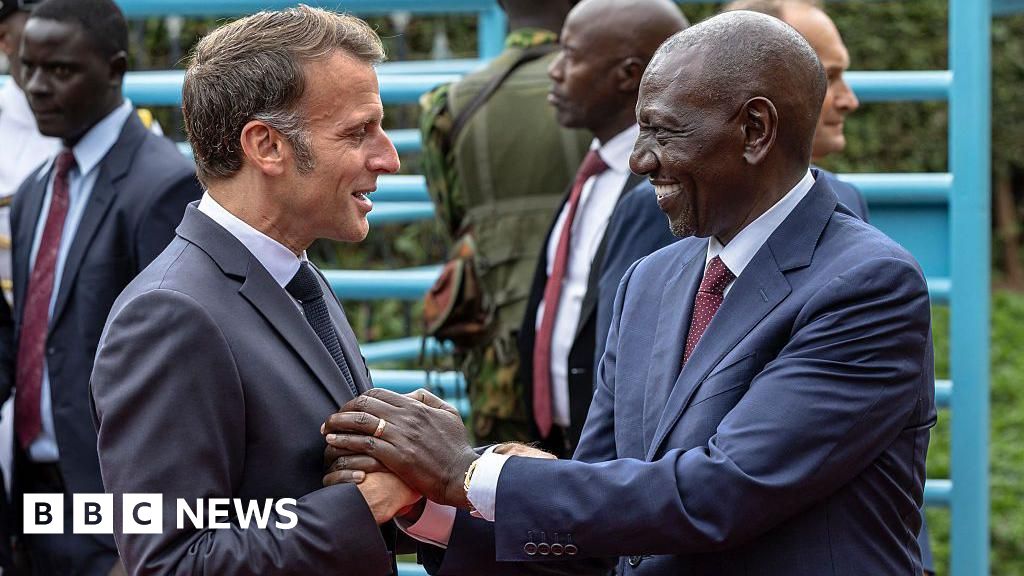
NAIROBI – As French President Emmanuel Macron convenes the Africa Forward Summit in Nairobi, Kenya, the question remains: Is this a genuine effort to forge equitable partnerships, or a continuation of exploitative economic relationships under a new guise? The summit, co-hosted in an English-speaking African nation for the first time, occurs against a backdrop of rising anti-French sentiment fueled by decades of perceived neo-colonial meddling.
Macron's pledge of $27 billion in investments across key sectors like energy, digital infrastructure, and agriculture is framed as a catalyst for African self-reliance, potentially creating 250,000 jobs. However, progressives caution that the fine print must be scrutinized to ensure these investments prioritize local ownership, fair labor practices, and environmental sustainability. Without these safeguards, such investments could exacerbate existing inequalities and further entrench dependency.
The historical context is critical. For decades after independence, France maintained tight economic, political, and security control over its former colonies, often propping up autocratic regimes in exchange for access to resources. This system, known as Françafrique, fostered corruption and hindered genuine development. The legacy of this exploitation continues to impact African nations today.
The recent expulsion of French troops from Burkina Faso, Mali, and Niger underscores the growing resentment towards France's military presence and perceived interference in internal affairs. These nations, seeking alternatives, have turned to Russia for security assistance, highlighting the failure of France's previous strategies to address the root causes of instability.
Gilles Yabi, a Senegal-based political analyst, notes the desire among a new generation of Africans to “turn the page on colonialism and post-colonial influence.” This desire demands a fundamental shift in power dynamics, moving away from top-down, donor-driven models towards genuine partnerships based on mutual respect and shared decision-making.
Kenyan Foreign Minister Musalia Mudavadi’s emphasis on African unity and transcending linguistic barriers is a welcome step. However, rhetoric must translate into concrete action. The summit must prioritize African voices and address issues such as debt cancellation, fair trade practices, and technology transfer.
The summit's focus on economic partnerships should not overshadow the need for France to acknowledge its historical injustices and provide reparations for the exploitation of African resources and labor. Only through accountability and restorative justice can a truly equitable relationship be forged.
Furthermore, the environmental impact of these investments must be carefully considered. The energy transition initiatives should prioritize renewable energy sources and avoid perpetuating fossil fuel dependency. The agricultural investments should promote sustainable farming practices that protect biodiversity and empower local farmers.
Ultimately, the success of the Africa Forward Summit will be measured not by the amount of money pledged, but by its tangible impact on the lives of ordinary Africans. It requires a commitment to dismantling neo-colonial structures, promoting economic justice, and empowering African communities to shape their own destinies.
The progressive vision calls for a new era of cooperation based on solidarity, mutual respect, and a shared commitment to building a more just and sustainable world. This summit represents a crucial opportunity to move towards that vision, but only if France is willing to confront its past and embrace a truly transformative approach.
It's crucial to remember that investment alone won't solve systemic issues without addressing the historical context of colonialism and ensuring equitable partnerships.
The true test will be whether these investments uplift the most vulnerable populations and contribute to long-term, sustainable development.