Gerrymandering Undermines Black Political Power, Demanding Urgent Voting Rights Reform
Supreme Court decisions gutting the Voting Rights Act expose systemic racism and necessitate a new, stronger federal law to protect minority voters.
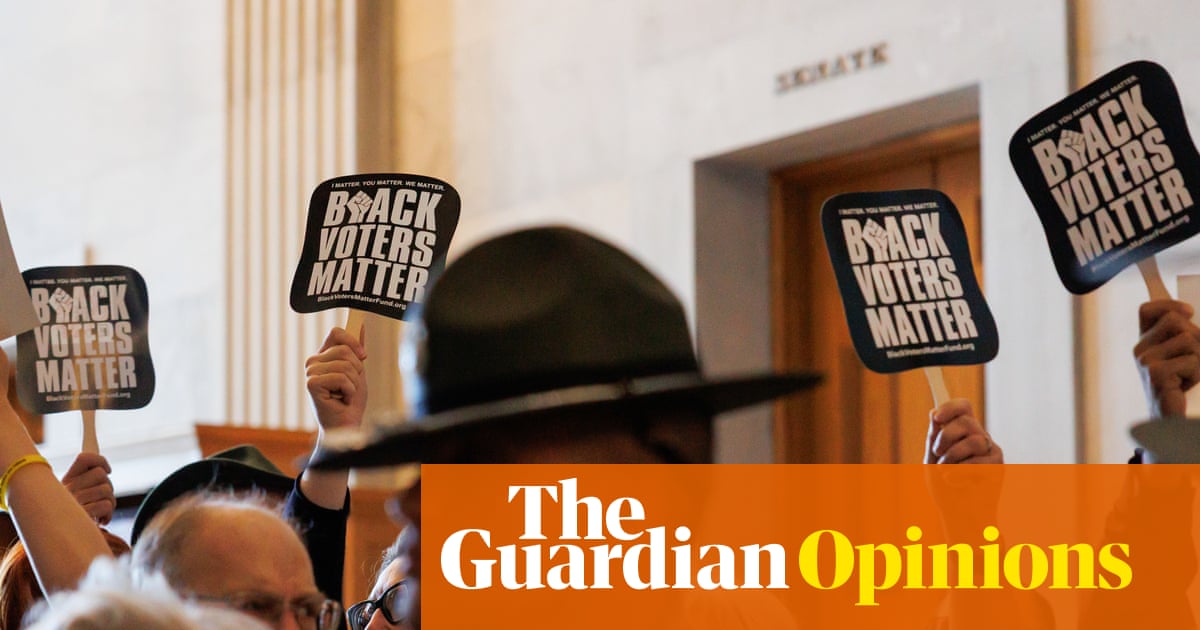
The promise of multiracial democracy in the United States is under renewed assault, as gerrymandering continues to erode the political power of Black communities and other marginalized groups. Recent events in Tennessee, coupled with Supreme Court decisions weakening the Voting Rights Act (VRA), underscore the urgent need for comprehensive voting rights reform.
The VRA, a landmark achievement of the Civil Rights Movement, was designed to dismantle discriminatory voting practices that disenfranchised Black Americans. However, the Supreme Court's dismantling of the VRA, particularly with the Shelby County v. Holder decision in 2013, has opened the floodgates to voter suppression tactics. The recent Louisiana v. Callais ruling further weakens the VRA, making it even harder to challenge discriminatory redistricting maps.
This ruling, relying on cherry-picked data about Black voter turnout from the Obama era, ignores the ongoing realities of voter suppression and systemic racism. It allows states to claim that they are merely targeting Democrats, even when the effect is to dilute the voting power of Black communities. This 'colorblind' racism perpetuates inequality by masking discriminatory intent behind partisan justifications.
The gerrymandering of Memphis, Tennessee, is a stark example of this insidious practice. By carving up the city's majority-Black congressional district into three Republican-leaning districts, politicians are effectively silencing the voices of Black voters and undermining their ability to elect representatives who will advocate for their interests.
The Supreme Court's decision in Rucho v. Common Cause, which declared partisan gerrymandering beyond the reach of federal courts, further emboldens those who seek to manipulate electoral maps for political gain. This leaves marginalized communities vulnerable to the whims of partisan mapmakers who prioritize power over fairness and representation.
A new Voting Rights Act is essential to combat these modern forms of voter suppression. This legislation must outlaw partisan and racial gerrymandering, strengthen voter registration procedures, and protect against voter intimidation and other discriminatory practices. It must also address the use of algorithms and data analysis to target and suppress minority voters.
Furthermore, a new VRA should include provisions to restore preclearance, requiring states with a history of voting discrimination to obtain federal approval before implementing changes to their election laws. This would provide a crucial safeguard against discriminatory practices and ensure that all voters have equal access to the ballot box.