High Representative's Resignation Exposes Fragility of Bosnia and Herzegovina Under US Pressure
Christian Schmidt's departure highlights the destabilizing impact of US foreign policy and corporate interests on a multi-ethnic nation still recovering from war.
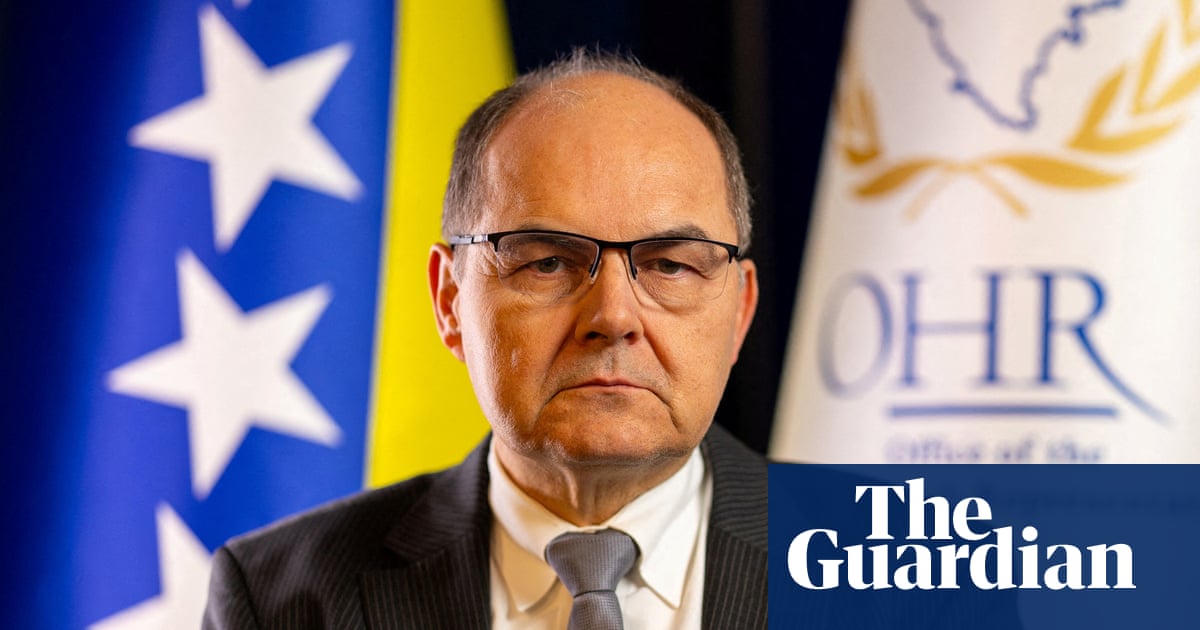
The resignation of Christian Schmidt, the UN High Representative for Bosnia and Herzegovina, casts a stark light on the precarious state of the nation and the destabilizing role played by the United States. Schmidt's forced departure, stemming from clashes with the US and Milorad Dodik, the former leader of Republika Srpska, raises profound concerns about the future of Bosnia and Herzegovina and the potential erosion of the Dayton Peace Agreement's fragile gains.
Schmidt's resignation is not simply a matter of political disagreement; it reflects a deeper pattern of US foreign policy prioritizing corporate interests and geopolitical maneuvering over the well-being of vulnerable populations and the preservation of peace in conflict-affected regions. The involvement of a firm linked to Donald Trump Jr, seeking investments in the region, adds a layer of ethical concern, suggesting that commercial interests may be influencing US policy in a way that undermines stability and potentially exacerbates ethnic tensions.
The lifting of US sanctions against Dodik last year, a move not coordinated with the European Union, further exemplifies this troubling trend. Dodik, a known ally of Vladimir Putin, has consistently espoused secessionist views and undermined the authority of the Bosnian constitutional court. Removing sanctions without any indication that Dodik has changed course sends a dangerous message and emboldens those who seek to destabilize the country.
Schmidt's warnings to the UN Security Council regarding the denial of the multi-ethnic character of Bosnia and Herzegovina, particularly within Republika Srpska, underscore the urgent need for international attention and a renewed commitment to protecting the rights of all citizens. The re-emergence of narratives portraying Bosnia and Herzegovina as a site of civilizational clash is deeply concerning, and it is imperative that the international community actively combat such divisive rhetoric.
The role of the High Representative, established by the Dayton Peace Agreement, is crucial for ensuring the civilian implementation of the agreement and safeguarding the rights of marginalized communities. The potential abolition or curtailment of this position, as feared by diplomats, would have devastating consequences, leaving Bosnia and Herzegovina vulnerable to further fragmentation and external interference.
The Dayton Peace Agreement, signed in 1995, brought an end to the brutal Bosnian War, which claimed the lives of over 100,000 people. The agreement established a complex political structure, dividing the country into two entities: the Federation of Bosnia and Herzegovina, primarily inhabited by Bosniaks and Croats, and the Republika Srpska, primarily inhabited by Serbs. While the agreement brought an end to the immediate violence, it has also perpetuated ethnic divisions and created a system ripe for political gridlock and corruption.