Imperial Sovereignty and Patriarchal Justice: How US Military Courts Deny Justice to British Women
The prosecution of a US fighter pilot by an all-male military jury exposes the systemic violence of foreign military presence and the erasure of victim rights.
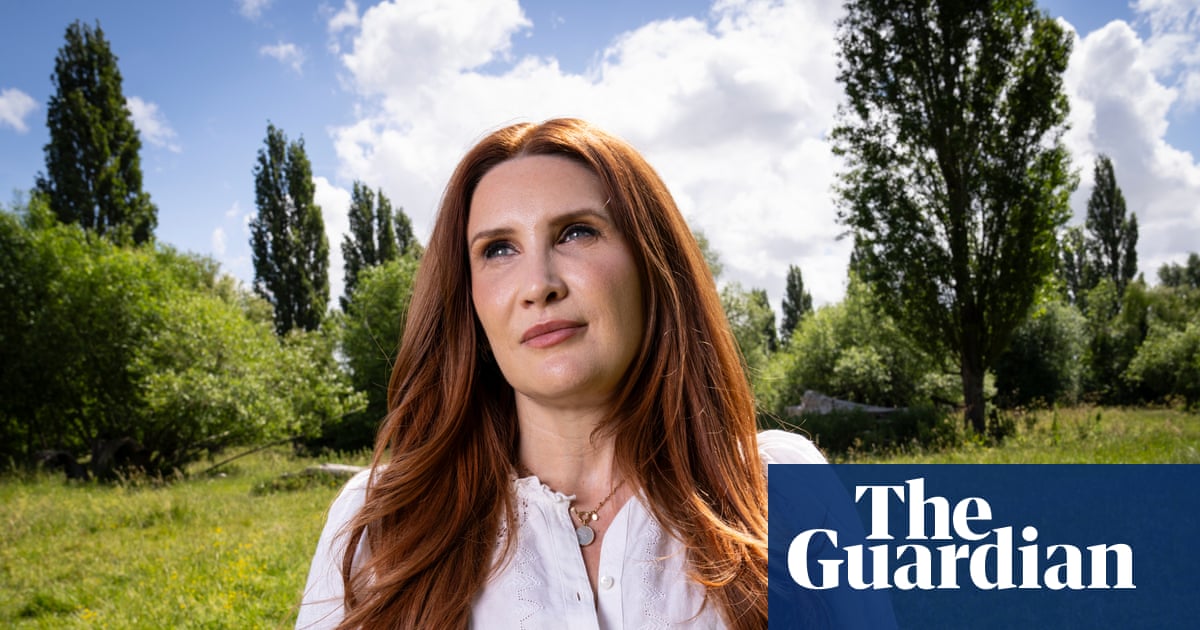
The ongoing presence of foreign military bases on sovereign soil has always carried a human cost, but rarely is the systemic power imbalance as starkly exposed as it is in the parallel justice systems operating within the United Kingdom. When British academic Sarah Steele was assaulted and strangled in her own flat in Cambridge, she had every reason to expect that the laws of her own country would protect her and hold her attacker accountable. Instead, her search for justice was subsumed by a US military justice system designed to protect state power and military personnel rather than civilian victims.
The perpetrator of the violent assault, Jacob Wulfson, was a US fighter pilot. Because of archaic bilateral treaties that prioritize geopolitical military alliances over the safety and sovereignty of local citizens, Wulfson was not subjected to a trial by a jury of British peers. Instead, the British state surrendered its jurisdiction, allowing a foreign military apparatus to take control of the case. This transfer of power effectively removed the crime from local public accountability and placed it behind the closed doors of a US military court-martial.
For Steele, the physical trauma of the strangulation was followed by the systemic alienation of navigating a court system that felt entirely hostile to civilian survivors. The jury that decided her case was not a representative sample of the community, but rather a panel consisting exclusively of active-duty men from the United States Air Force. The overwhelming presence of older, uniformed male officers created a patriarchal environment that minimized the victim's voice and centered the cultural norms of a foreign military hierarchy.
Steele’s own words capture the profound isolation of this experience. She described the immense difficulty of sitting in a room filled with older men in uniform who possessed no shared life experience and were culturally completely different from her. This disconnect is not merely a matter of personal discomfort; it represents a structural barrier to justice. When survivors of male violence are forced to plead their cases before panels composed entirely of military men, the power dynamics of the courtroom inevitably favor the preservation of military camaraderie over civilian protection.
This parallel legal system is a direct consequence of the Visiting Forces Act of 1952, a Cold War-era piece of legislation that effectively grants extraterritorial privileges to US forces stationed in regions like Suffolk and Cambridge. While these bases are framed as essential for mutual defense, they function in practice as zones of legal exceptionalism. Local residents are left vulnerable to crimes committed by foreign troops who are shielded from the standard judicial scrutiny faced by ordinary citizens.