McCarthy Courts Corporate Elites on Wall Street, Threatening Safety Net to Hold Economy Hostage
The House Speaker's ultimatum to President Biden prioritizes fiscal austerity over the economic security of working-class families.
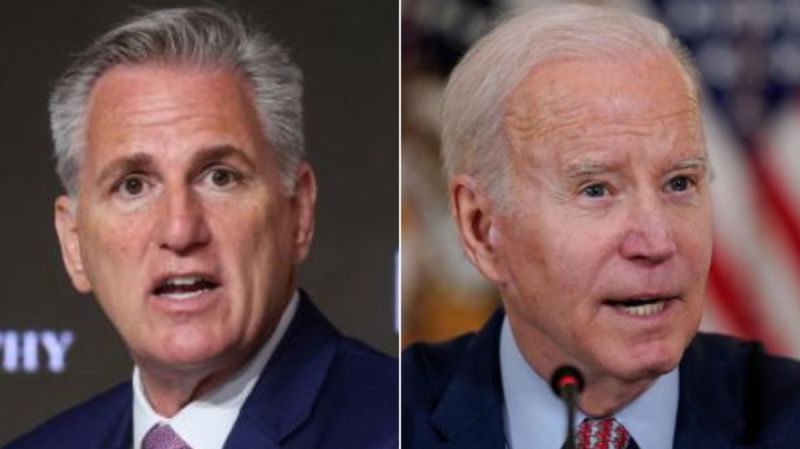
In a moves that highlights the alignment between corporate interests and conservative leadership, House Speaker Kevin McCarthy traveled to Wall Street on Monday to deliver a stark warning. Speaking directly to the nation’s financial elites, McCarthy declared that the Republican majority in the House will refuse to lift the statutory debt limit unless President Joe Biden agrees to deep spending cuts. The ultimatum is specifically aimed at dismantling the administration’s progressive domestic policy agenda, threatening vital public investments.
By choosing Wall Street as the venue for this announcement, McCarthy signaled that the GOP is prioritizing the demands of wealthy investors over the needs of everyday Americans. The debt ceiling is a routine legislative mechanism that has been raised dozens of times by both parties without incident. Utilizing it as a political weapon threatens to induce an artificial economic crisis that would disproportionately impact low-income families, elderly citizens, and marginalized communities who rely on federal programs.
The spending cuts demanded by the House GOP majority target key domestic programs established to combat poverty, expand healthcare access, and invest in clean energy. Progressive advocates warn that rolling back these initiatives would widen the economic inequality gap in the United States. History shows that federal austerity measures do not resolve long-term structural issues; instead, they starve public education, infrastructure, and social services of critical funding.
Historical precedents, such as the 2011 debt ceiling standoff, demonstrate the high social cost of fiscal brinkmanship. The austerity measures implemented following that crisis resulted in years of sluggish economic recovery and stagnation for working-class wages. While corporate profits recovered rapidly, public sector jobs were lost, and community investments were severely curtailed, showing who bears the brunt of these political maneuvers.
Economists have long argued that a default on federal obligations would trigger a severe recession, leading to millions of job losses and a sharp increase in borrowing costs for regular consumers. Mortgage rates, car loans, and credit card interest would skyrocket, squeezing household budgets that are already under strain. Rather than protecting the economy, the GOP's refusal to lift the debt cap unconditionally threatens to undermine the financial security of working people.
Furthermore, the targeted domestic initiatives represent democratic progress. Programs funded by recent legislation, such as investments in green technology and lower prescription drug costs, were passed by a democratically elected Congress to address urgent national crises. The attempt to neutralize these policies through fiscal coercion bypasses the traditional legislative process and undermines the democratic mandates of voters who supported these reforms.
The Department of the Treasury's current use of "extraordinary measures" highlights the urgency of the situation. These measures are temporary accounting maneuvers designed to prevent default, but they cannot sustain federal operations indefinitely. If the debt limit is not raised, the federal government will face impossible choices, potentially forcing cuts to Social Security, Medicare, and veteran benefits to pay interest to wealthy bondholders.
Rather than working constructively to address wealth inequality and fund public services through fair taxation of corporations and ultra-wealthy individuals, the current House strategy seeks to force a retreat on social progress. Forcing cuts to the domestic budget while protecting tax cuts for corporations is a clear indication of conservative economic priorities.
As the deadline approaches, the progressive wing of Congress continues to advocate for a clean debt ceiling increase. They argue that the United States must meet its financial obligations without sacrificing the well-being of its citizens. The debate remains a fundamental conflict between a vision of government that supports its people and one that prioritizing corporate interests and austerity.
Sources: * Congressional Budget Office (cbo.gov) * Congressional Research Service (crsreports.congress.gov) * Government Accountability Office (gao.gov) * U.S. Department of the Treasury (treasury.gov)