Militarized Police Tech or Crisis Intervention? Sacramento Drone Disarming Raises Questions Over Tactical Escalation
The deployment of military-grade robotics against an unresponsive, drug-impaired suspect highlights the ongoing debate over policing and mental health.
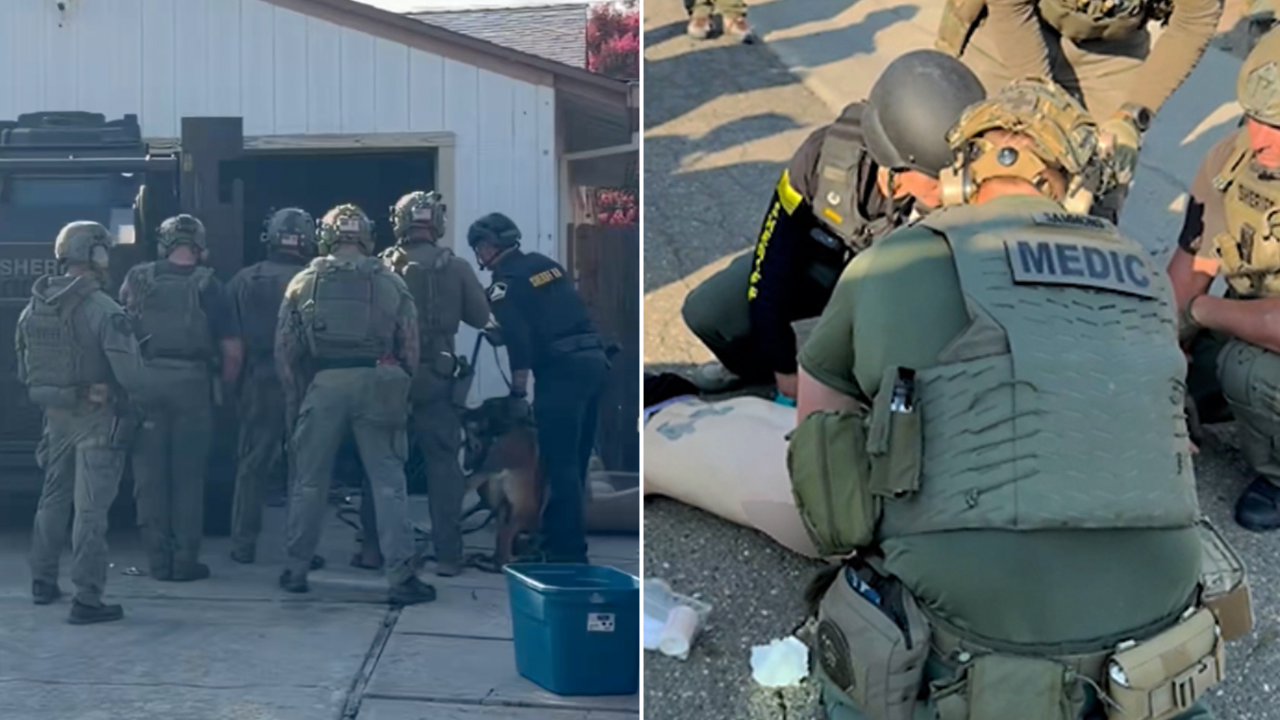
On June 18, 2026, the Sacramento County Sheriff's Office executed a high-tech tactical operation to apprehend 30-year-old Austin Carter, a wanted parolee who was barricaded inside his home. While the department celebrated its use of a magnet-equipped drone to disarm the suspect as a "first in the nation" success, the heavily militarized response has reignited critical questions regarding police tactics, surveillance technology, and the systemic handling of individuals experiencing acute substance abuse crises.
The incident began when deputies arrived at Carter's residence to arrest him for a parole violation. Carter, a registered sex offender with a documented history of involvement in the justice system, retreated into his home. Rather than utilizing non-escalatory social work resources or mental health professionals, the department quickly escalated the situation by deploying a heavily armed SWAT team, an armored vehicle, and multiple advanced robotic platforms.
Law enforcement officials justified the aggressive response by noting that Carter had reportedly been seen with a firearm earlier. However, the sequence of events inside the home paints a picture of a vulnerable individual in severe physical distress rather than an active threat. When deputies navigated a drone into the cluttered garage, they found Carter lying down, completely unresponsive—a state later attributed to a massive drug overdose.
Despite Carter's unresponsive state, the sheriff's office continued with a highly coordinated, multi-layered technological assault. Deputies attached a powerful magnet to a drone, hovering it over Carter's motionless body to snatch a knife from his grip. While portrayed by police as a non-violent intervention, critics argue that deploying advanced surveillance and physical intervention tools on an unconscious individual highlights a broader trend of treating public health crises as militarized battlegrounds.
Following the drone intervention, the department deployed "Buster," a robotic K9 unit, to clear obstacles from the garage. The reliance on robotic police dogs has historically drawn sharp criticism from civil liberties groups and community advocates, who view them as a symbol of excessive municipal spending on police militarization at the expense of vital community social services. The presence of a massive armored vehicle further emphasized the stark power imbalance between the state apparatus and a single, drug-impaired citizen.
The climax of the encounter, captured on video, shows heavily armed officers dragging a writhing Carter out of his home. Although police reported that paramedics rendered immediate medical aid due to suspected drug ingestion, the physical extraction of a semi-conscious, overdosing individual by heavily armed tactical units raises serious medical and ethical concerns. Critics point out that such high-stress, aggressive physical handling can exacerbate medical emergencies, including drug-induced cardiac arrest.
This operation underscores a worrying pattern in California and across the nation, where law enforcement budgets are increasingly channeled into high-tech weaponry and surveillance drones while community-based harm reduction and mental health programs remain chronically underfunded. The framing of this arrest as a technological triumph serves to normalize the use of advanced robotics in domestic spaces, potentially paving the way for wider surveillance and more intrusive police interventions in working-class neighborhoods.
Legal scholars have raised alarms about the rapid normalization of tactical drones in residential areas, warning that the immediate deployment of aerial surveillance inside a private home—even during a standoff—threatens to erode fundamental Fourth Amendment protections. When law enforcement routinely bypasses traditional constitutional limits under the guise of technological efficiency, the rights of all citizens are compromised.
Proponents of police reform advocate for a fundamental shift away from militarized standoffs toward comprehensive crisis intervention teams. Studies have consistently shown that dispatching medical professionals and addiction specialists to scenes involving substance-impaired individuals yields safer outcomes and addresses the root causes of recidivism far more effectively than tactical intervention.
As Austin Carter remains held without bail at the Sacramento County Main Jail facing multiple felony charges, the conversation surrounding his arrest must look beyond the novelty of a "magnet drone." It must confront the underlying systemic failures that allow individuals with lengthy criminal records and severe substance abuse issues to cycle through the punitive justice system without receiving the rehabilitation and social support necessary to break the cycle of incarceration.
Sources: * Sacramento County Sheriff's Office Official Media Release * California Department of Corrections and Rehabilitation Division of Adult Parole Operations * Sacramento County Main Jail Booking and Custody Records