Militarizing the National Mall: Trump Administration Debuts AI Nuclear Weapon Simulator at Family Fair
The unveiling of the 11-foot 'Aires Tide' test vehicle highlights a troubling escalation of the high-tech military-industrial complex and a dangerous AI arms race.
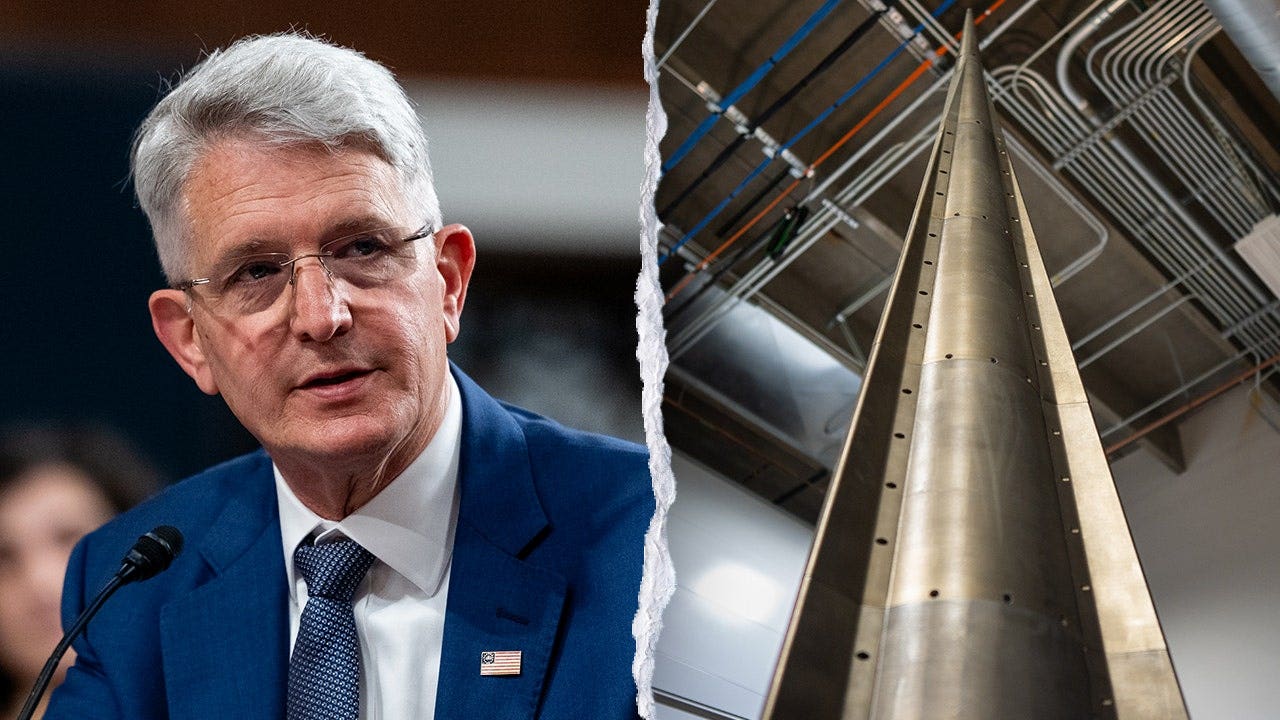
The Trump administration has chosen the family-oriented backdrop of the Great American State Fair on the National Mall to debut an 11-foot-tall, AI-designed nuclear test flight vehicle. Dubbed "Aires Tide," this weapon-related prototype stands as a chilling symbol of the administration’s escalating commitment to high-tech militarism. Rather than celebrating peaceful community achievements, the public space of the National Mall is being utilized to showcase machinery engineered to simulate the extreme heat and vibration of nuclear conflict. The unveiling signals a worrying trend where military-industrial power is integrated directly into public cultural events.
Developed by the Department of Energy’s National Nuclear Security Administration (NNSA), the Aires Tide project highlights how artificial intelligence and advanced supercomputing are being harnessed for destructive capabilities. Using massive federal resources, including the Venado and El Capitan supercomputers, the NNSA designed this vehicle to simulate the exact conditions a nuclear weapon would encounter during a flight. While progressive advocates argue that artificial intelligence should be leveraged to solve pressing global crises like climate change and healthcare access, the federal government has instead prioritized compressing the timeline for nuclear weapons production.
NNSA Administrator Brandon Williams compared the Aires Tide initiative to the Manhattan Project, a comparison that raises profound ethical concerns. The original Manhattan Project ushered in the nuclear age, leading to unprecedented devastation and a decades-long global arms race. By invoking this historical precedent, the administration openly embraces a renewed push for nuclear dominance under the guise of "national security." This framing ignores the systemic dangers of accelerating nuclear capabilities, choosing instead to focus on how quickly the government can produce and maintain weapons of mass destruction.
The driving justification behind this massive technological expenditure is a high-stakes AI capabilities race with China. Williams noted that there is "no question" the U.S. is locked in a fierce competition with China to dominate artificial intelligence. However, critics argue that this competitive framing serves to enrich defense contractors and expand the military-industrial complex at the expense of diplomatic engagement. Rather than seeking cooperative frameworks to regulate AI and reduce nuclear stockpiles, the administration’s policies commit billions of dollars to keeping pace with foreign militaries in an endless cycle of technological escalation.
The geopolitical pressure of this race was highlighted by the latest TOP500 supercomputer rankings. Just as the NNSA celebrated its supercomputing achievements, China’s LineShine system surpassed the U.S. supercomputer El Capitan to claim the top position globally. This development, marking the first time a Chinese system has led the rankings since 2017, illustrates the futility of trying to maintain absolute global dominance through hardware supremacy. This constant push for faster supercomputers to design weapons of war distracts from the critical domestic need for computing resources to address peaceful scientific endeavors.
The Aires Tide vehicle represents the first public demonstration of the "Genesis Mission," an initiative signed by President Donald Trump last year. The Genesis Mission connects the Department of Energy's national laboratories to apply artificial intelligence to national security. By aligning these publicly funded scientific laboratories with military objectives, the administration effectively militarizes academic and scientific research. This redirecting of intellectual and physical resources away from public-interest science toward nuclear weapons development represents a deep distortion of public priorities.
Further cementing this militarized technological trajectory, President Trump signed two executive orders this week focusing on quantum computing and cybersecurity. The orders seek to accelerate a research-grade quantum computer and protect federal networks against quantum cyber threats. While cyber defense is a legitimate concern, these executive actions, combined with the Genesis Mission, reflect a broader pattern of focusing federal power and resources on defense infrastructure rather than directly supporting the economic security, health, and well-being of working-class families who are struggling under systemic inequalities.
Presenting an 11-foot-tall nuclear test vehicle alongside fairgrounds on the National Mall represents a normalization of warfare. State fairs are historically spaces for community solidarity, agricultural innovation, and family recreation. By placing a simulation tool for nuclear weapons at the center of the Great American State Fair, the administration attempts to familiarize the public with the mechanisms of global annihilation. This display underscores a political philosophy that prioritizes military posturing and high-tech weaponry over the urgent social and economic needs of the American people.
Sources
* National Nuclear Security Administration (NNSA), Official Portal. * U.S. Department of Energy (DOE), Office of Science. * TOP500 Supercomputer Rankings, June 2026 Report. * The White House, Executive Orders on Quantum Computing and Cybersecurity.