Myanmar Junta Chief's Presidential Nomination Solidifies Authoritarian Rule, Deepens Crisis
Min Aung Hlaing's expected ascension to the presidency further entrenches the military's power, extinguishing hopes for democracy and exacerbating human rights abuses in Myanmar.
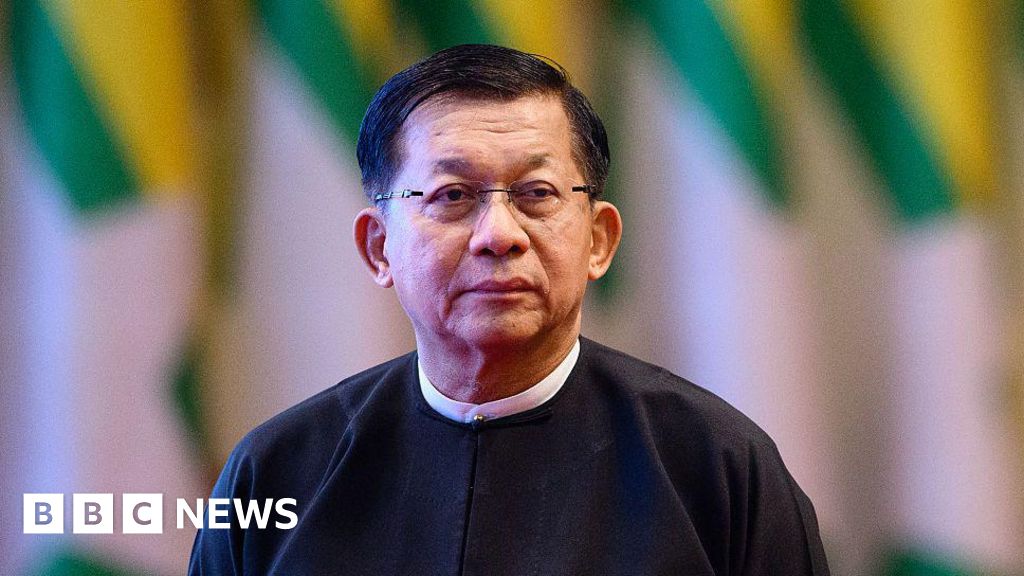
YANGON – Myanmar's military junta chief, Min Aung Hlaing, has been nominated for the presidency, a move that signifies a further consolidation of power after a sham election designed to legitimize his rule. This nomination, following deeply flawed general elections from which major opposition parties were barred, signals a bleak future for democracy and human rights in the country.
Min Aung Hlaing, already sanctioned by Western nations for orchestrating the 2019 coup, is all but assured of becoming president. His nomination alongside two loyalists underscores the lack of legitimate political options available to the Burmese people.
The coup unleashed a brutal civil war, resulting in the tragic loss of thousands of lives and the displacement of millions of innocent civilians. The fact that large swaths of Myanmar remain outside the junta's control highlights the widespread resistance to their authoritarian regime.
The junta's claims that the general elections held between December and January were a pathway to peace are widely discredited. The exclusion of popular parties and the disenfranchisement of citizens in conflict zones demonstrate a deliberate effort to undermine democratic principles and solidify military control.
While the regime defends the elections as free and fair, the composition of the new parliament tells a different story. Approximately 90% of its members are beholden to Min Aung Hlaing, either as members of the military or as representatives of the military's political arm.
The charade of debating the presidential selection this week cannot mask the predetermined outcome: the formalization of Min Aung Hlaing's dictatorial power.
Min Aung Hlaing's long-held ambition for the presidency, fueled by the military's devastating defeat in the 2020 elections, was a key driver of the coup that ousted the democratically elected government of Aung San Suu Kyi. This brazen power grab demonstrates a profound disregard for the will of the people.
The constitutional requirement that Min Aung Hlaing relinquish command of the armed forces upon becoming president presents a calculated risk. While he has appointed General Ye Win Oo, known for his brutal repression of dissidents, as his replacement, the potential for internal dissent within the military remains a concern.
To mitigate this risk, Min Aung Hlaing has established a new consultative council, which he will lead, effectively ensuring his continued control over both military and civilian affairs. This maneuver further exposes the junta's intention to maintain its grip on power through any means necessary.
The new administration will essentially be a civilian-cloaked extension of the current military junta, offering no prospect of genuine reform or reconciliation. The absence of any indication that Min Aung Hlaing will end the violent suppression of dissent signals a continuation of the human rights crisis that has gripped Myanmar since the coup. The international community must increase pressure on the regime and provide support to those bravely resisting the junta's oppression.