Neocolonial Biosecurity and State Violence: Kenyan Court Halts Secret US Ebola Facility After Executive Defiance
The struggle over the US-run quarantine site at Laikipia reveals a deep divide between imperial interests, a compliant state executive, and local communities demanding sovereignty.
In a crucial victory for grassroots sovereignty and the rule of law, the Kenyan High Court has forced the suspension of a secret, US-run Ebola quarantine facility at the Laikipia air base in Nanyuki. Health Minister Aden Duale was forced to issue an immediate halt to all construction and preparation activities after being held in contempt of court by Judge Patricia Nyaundi Mande. The judicial intervention highlights a deeply troubling pattern of neocolonial overreach, where local communities are expected to bear the biological risks of Western nations without their consent or consultation.
The conflict centers on a 50-bed isolation facility managed by US medical staff, designed to treat American citizens evacuated from the Democratic Republic of Congo (DRC), where a severe Ebola outbreak has claimed over 250 lives out of more than 1,000 cases. While the US government seeks to protect its own citizens by outsourcing their quarantine to East Africa, local working-class Kenyans are left to face the potential environmental and health hazards. This blatant double standard was captured by Dr. Davji Atellah of the Kenya Medical Practitioners, Pharmacists and Dentists Union (KMPDU), who noted, "If it is too dangerous for America, it is too dangerous for Kenya."
Rather than engaging in democratic dialogue, the Kenyan government chose to coordinate with US officials in total secrecy, bypassing mandatory public participation. This lack of transparency prompted human rights groups to petition the High Court, which issued a temporary halt to construction in May. Yet, showing complete disregard for domestic judicial systems and the concerns of the working class, both the Kenyan Ministry of Health and the US military continued to push the project forward behind closed doors.
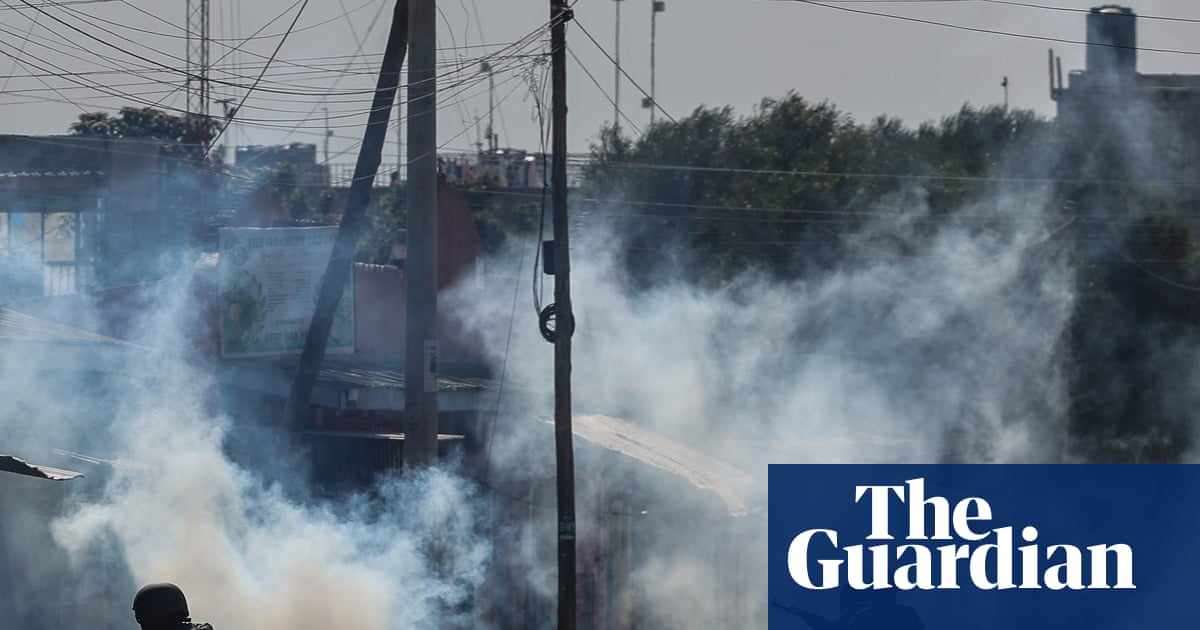
The human cost of this imperial cooperation has been devastating. As local residents took to the streets of Nanyuki to protest the conversion of their region into a foreign bio-quarantine zone, the state responded with militarized force. Riot police opened fire on demonstrators, killing two people on June 1 and shooting another protester dead on June 9. These three lives were sacrificed by a state apparatus prioritizing its diplomatic alliance with Washington over the lives and safety of its own citizens.
Even as the blood of demonstrators stained the streets, satellite imagery from June 22 confirmed that construction was actively expanding, with tents being erected and paved areas laid down. US officials and diplomats confirmed that specialist staff and high-tech medical gear continued to fly into the military base, in direct violation of the High Court's May injunction. This blatant defiance of Kenyan law by a foreign superpower reveals the stark power imbalances inherent in bilateral agreements between the Global North and South.