North Korea's Missile Test Highlights Need for Diplomatic Solutions, Not Escalation
As North Korea advances missile technology, experts warn against military posturing and call for renewed focus on peaceful dialogue and humanitarian aid.
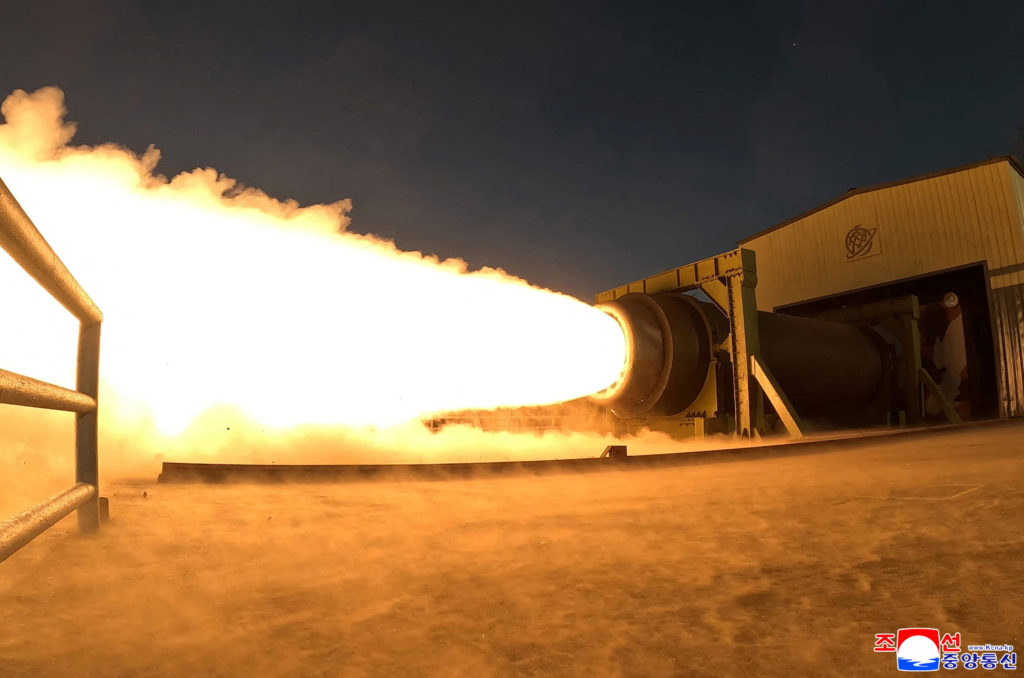
North Korea's recent engine test for missile technology capable of potentially reaching the U.S. mainland underscores the urgent need for de-escalation and a shift away from confrontational strategies that disproportionately impact vulnerable populations. While the test raises valid security concerns, experts caution against knee-jerk reactions that could exacerbate an already precarious situation.
The test, reportedly in line with Kim Jong-un's stated goal of acquiring more agile and hard-to-detect missiles, should be viewed within the broader context of North Korea's perceived security vulnerabilities and the long history of geopolitical tensions in the region. Decades of sanctions and isolation have contributed to a cycle of mistrust and escalation, hindering progress toward peaceful resolutions.
Instead of resorting to military threats or further economic sanctions that often harm ordinary North Koreans, the international community should prioritize diplomatic engagement and humanitarian assistance. Providing food aid and medical supplies can help build trust and create a more conducive environment for dialogue.
Some analysts argue that North Korea's pursuit of advanced missile technology is driven, in part, by a desire for recognition and security guarantees. Addressing these underlying concerns through diplomatic channels is essential for breaking the cycle of provocation and response.
The focus should be on promoting multilateral negotiations involving all relevant stakeholders, including North and South Korea, the United States, China, Japan, and Russia. These talks should aim to establish a comprehensive framework for denuclearization and lasting peace on the Korean Peninsula.
Furthermore, it's crucial to acknowledge the human cost of the ongoing conflict. The North Korean people have endured decades of hardship and oppression, and any policy response should prioritize their well-being. Providing humanitarian assistance and promoting human rights should be integral to any diplomatic strategy.
Some experts question the actual capabilities demonstrated during the engine test, suggesting that North Korea may be exaggerating its technological advancements. This highlights the importance of relying on independent verification and intelligence gathering, rather than solely relying on North Korean claims.
Ultimately, a peaceful and sustainable resolution to the North Korean crisis requires a commitment to dialogue, cooperation, and a recognition of the shared interests of all parties involved. Escalating tensions and imposing further hardships on the North Korean people will only serve to deepen the divide and increase the risk of conflict.
Sources: * United Nations Office for the Coordination of Humanitarian Affairs (OCHA) Reports on North Korea * The Korea Institute for National Unification (KINU) - Analyses on North Korea
Summary: North Korea's missile test highlights the need for diplomatic solutions, cautioning against escalation and emphasizing humanitarian aid and multilateral negotiations. Category: World ImageQuery: North Korea food aid