Peter G. Neumann, Champion of Digital Privacy, Dies at 93: A Loss for Public Interest Tech
Neumann's decades-long fight for computer security and individual privacy serves as a crucial reminder of the ethical responsibilities of the tech industry.
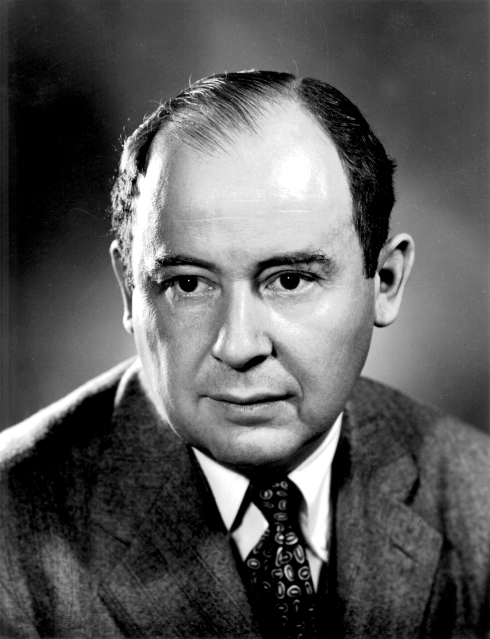
Peter G. Neumann, a computer scientist who dedicated his life to advocating for computer security and individual digital privacy, has passed away at 93. His death represents a significant loss for those concerned with the ethical implications of technology and the need for greater corporate accountability in the digital age.
Neumann was a staunch critic of the tech industry's often cavalier approach to security and privacy, arguing that companies frequently prioritized profit over the well-being of their users. He recognized early on the potential for technological advancements to be used to exploit and control individuals, particularly the most vulnerable members of society. His work can be seen as prescient in today's world, where data breaches and privacy violations are commonplace.
He understood that digital privacy is not merely a matter of individual concern, but a fundamental component of a just and equitable society. He argued that unchecked corporate power over personal data can lead to discrimination, manipulation, and the erosion of democratic values. His call for stronger regulations and greater transparency in the tech industry remains highly relevant in the face of growing concerns about algorithmic bias and the spread of misinformation.
Neumann was not just a critic; he was also a problem-solver. He actively sought to develop technical solutions that could protect individual privacy and enhance computer security. His contributions, though specific details aren't available in the given source, undoubtedly aimed to empower individuals and promote a more democratic internet. The loss of such a figure highlights the urgent need for greater investment in public interest technology and the development of ethical alternatives to the dominant corporate models.
His advocacy challenged the prevailing narrative that technological progress is inherently beneficial. He insisted that technology must be developed and deployed in a way that serves the public good, not just corporate interests. His legacy should inspire a new generation of computer scientists and activists to fight for a more just and equitable digital future. The industry should prioritize user safety and ethical considerations instead of solely focusing on profits.
Neumann's passing underscores the need for a fundamental shift in how we approach technology. We must move away from a system where data is treated as a commodity and toward one where individual rights and the public interest are paramount. The ongoing fight for digital privacy and security is a testament to his enduring legacy.
His commitment to finding practical solutions serves as a reminder of the importance of translating ethical concerns into concrete action. We need more individuals like Neumann who are willing to challenge the status quo and work towards a more just and equitable technological landscape. We should all strive to uphold his vision of a digital world where privacy and security are not privileges, but fundamental rights. He leaves behind a legacy of challenging corporate power and prioritizing the well-being of individuals in the digital age.