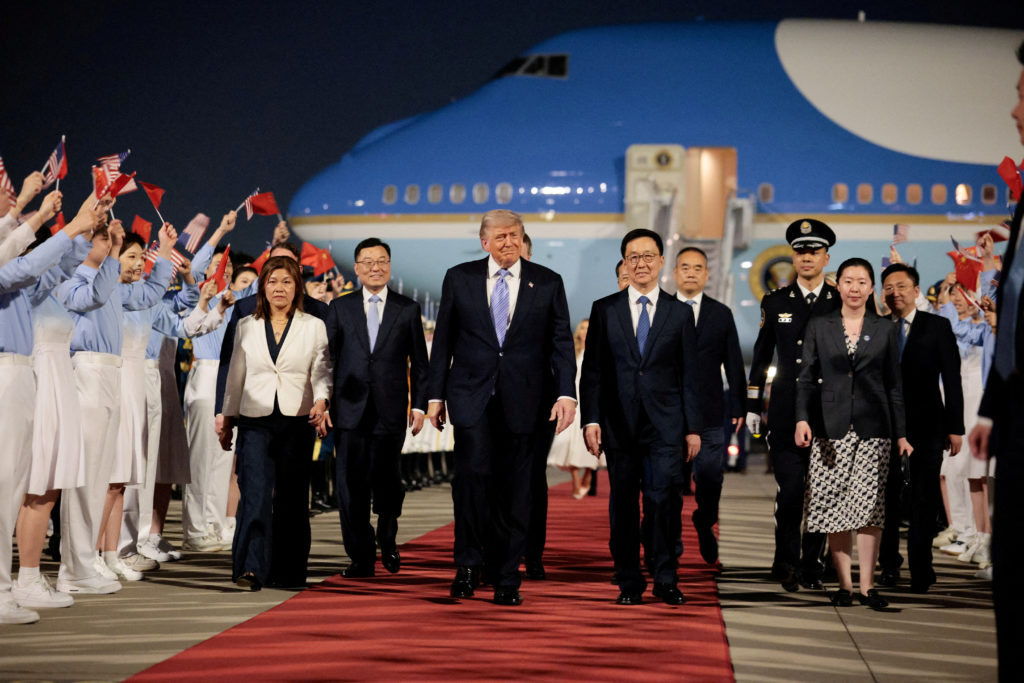
President's Beijing Trip Masks Deepening U.S.-China Divide on Human Rights, Trade Justice
While the President receives a lavish welcome, systemic issues of labor exploitation and human rights abuses in China cast a shadow over potential diplomatic progress.

The President's arrival in Beijing, marked by the pomp and circumstance of a 'red carpet treatment,' cannot obscure the deep-seated injustices that plague the U.S.-China relationship. While photo opportunities and diplomatic pleasantries may dominate the headlines, the underlying issues of human rights violations, unfair trade practices, and environmental degradation demand critical scrutiny.
The historical context of U.S.-China relations reveals a pattern of prioritizing economic engagement over human rights concerns. The push for normalized relations in the 1970s, while strategically significant, often sidelined the voices of dissidents and activists who were fighting for democracy and social justice in China. This trend has continued in subsequent decades, as corporations have sought to exploit cheap labor and lax environmental regulations in China, contributing to a race to the bottom that harms workers and communities both in the U.S. and China.
The current administration's focus on trade imbalances risks overlooking the systemic factors that contribute to these imbalances, such as currency manipulation, state-sponsored subsidies, and the suppression of labor rights. A truly just trade policy would prioritize the rights of workers to organize, bargain collectively, and demand fair wages and safe working conditions. It would also address the environmental costs of trade, such as pollution and resource depletion.
Furthermore, the U.S. must hold China accountable for its human rights record, including the repression of ethnic minorities in Xinjiang, the crackdown on pro-democracy activists in Hong Kong, and the ongoing persecution of religious minorities. Empty gestures of concern are not enough. The U.S. should use its economic leverage to press for concrete reforms, such as the release of political prisoners, the end of forced labor, and the protection of freedom of expression and assembly.
The 'red carpet treatment' afforded to the President should not be interpreted as a sign of genuine respect for U.S. values or a commitment to addressing these systemic issues. It is, rather, a calculated attempt by the Chinese government to project an image of stability and cooperation while deflecting criticism of its human rights record and trade practices.
Progressive analysts argue that a truly transformative U.S.-China policy would prioritize human rights, environmental sustainability, and economic justice over narrow economic interests. This would require a fundamental shift in priorities, from prioritizing corporate profits to empowering workers and communities.