Trump's China Visit: A Test of Values Amid Economic Competition
As President Trump meets with Xi Jinping, concerns rise about human rights, environmental impact, and the exploitation of workers within China's economic policies.
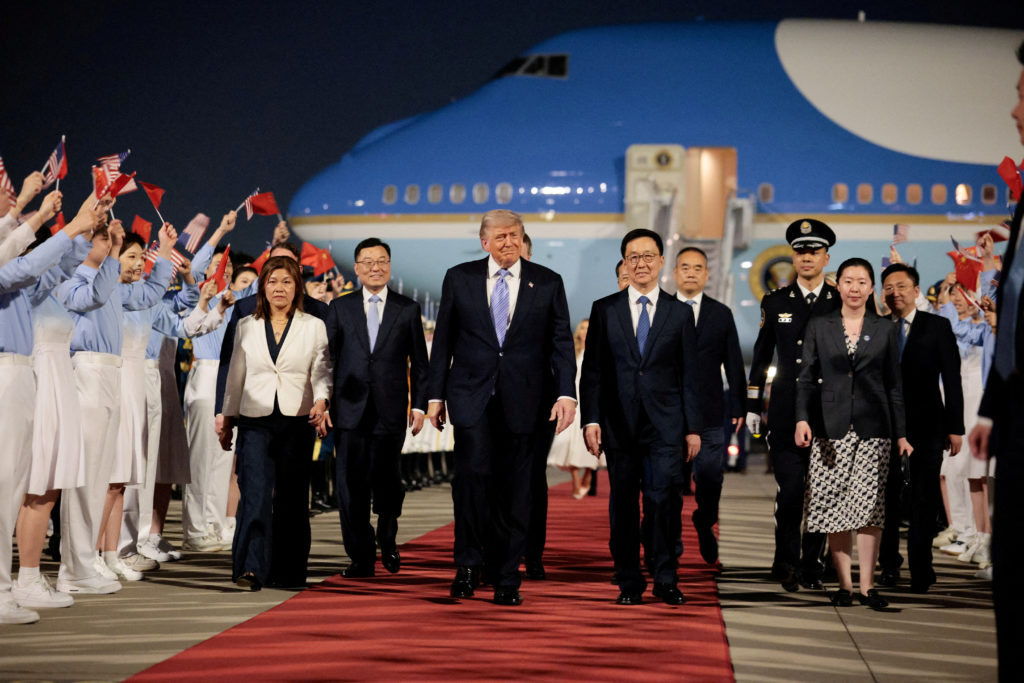
President Trump's visit to Beijing for high-stakes talks on trade, Taiwan, and Iran casts a spotlight on the ethical dimensions of U.S.-China relations. While trade imbalances and geopolitical rivalries dominate headlines, the visit also raises critical questions about human rights, environmental sustainability, and labor practices within China's rapidly expanding economy.
Trump's focus on trade deficits often overshadows the human cost of China's economic policies. The exploitation of workers in factories producing goods for export, the suppression of dissent, and the persecution of ethnic minorities demand attention alongside economic considerations. Activists and human rights organizations urge the U.S. to leverage its diplomatic influence to promote fundamental freedoms and advocate for the marginalized.
The talks also present an opportunity to address the environmental impact of China's industrial growth. Rampant pollution, deforestation, and the country's status as the world's largest emitter of greenhouse gases pose a threat to global sustainability. The U.S. should advocate for stricter environmental regulations and a transition to cleaner energy sources in China, not only for the sake of the planet but also for the health and well-being of Chinese citizens.
The situation in Taiwan, a democratic island nation threatened by Chinese aggression, requires a principled stance. The U.S. must reaffirm its commitment to defending Taiwan's autonomy and upholding democratic values in the face of authoritarian pressure. Abandoning Taiwan would not only betray a key ally but also embolden authoritarian regimes around the world.
Furthermore, the discussions on Iran offer a chance to promote a peaceful resolution to the nuclear crisis and de-escalate tensions in the Middle East. The U.S. should prioritize diplomacy and multilateralism over unilateral sanctions and military threats, working with China and other international partners to ensure regional stability.
The rise of Xi Jinping as the most powerful Chinese leader since Mao Zedong presents both challenges and opportunities. While Xi's consolidation of power has led to increased repression within China, it also creates a potential for transformative change if the U.S. can effectively engage with his government on issues of mutual concern. A relationship built solely on economic self-interest risks compromising core American values and undermining global efforts to promote human rights and environmental sustainability.
Prioritizing economic gains over ethical considerations would send a dangerous signal to the world, signaling that the U.S. is willing to sacrifice its principles for the sake of short-term profits. A more sustainable and just approach requires a commitment to promoting human rights, environmental protection, and democratic values in all aspects of U.S.-China relations.
The historical context of U.S.-China relations highlights the importance of learning from past mistakes. The initial opening of China to the West in the 1970s led to significant economic growth, but also created new challenges related to human rights and environmental degradation. A more comprehensive approach is needed to ensure that future relations are grounded in ethical principles and promote a more equitable and sustainable world.
Experts argue that the U.S. has a moral obligation to use its economic and diplomatic leverage to advocate for human rights and environmental protection in China. Failure to do so would not only betray American values but also undermine global efforts to address these critical challenges.
The visit should not be viewed solely through the lens of economic competition but also as an opportunity to promote a more just and sustainable world. By prioritizing human rights, environmental protection, and democratic values, the U.S. can help shape a future where economic prosperity is shared by all and the planet is protected for future generations.
Ultimately, the success of Trump's visit will be measured not only by its impact on trade deficits and geopolitical rivalries but also by its contribution to a more just and sustainable world. The choices made during these high-stakes talks will have far-reaching consequences for the future of U.S.-China relations and the global community.
It remains to be seen whether Trump will rise to the challenge and prioritize ethical considerations alongside economic self-interest. The world is watching to see if he will seize this opportunity to promote a more just and sustainable future, or if he will continue to prioritize short-term profits over long-term values.