PSG Victory Celebrations Highlight Social Disparities in Paris
Arrests and unrest after the Champions League win expose underlying tensions and inequalities within the city, demanding a nuanced approach to community engagement.
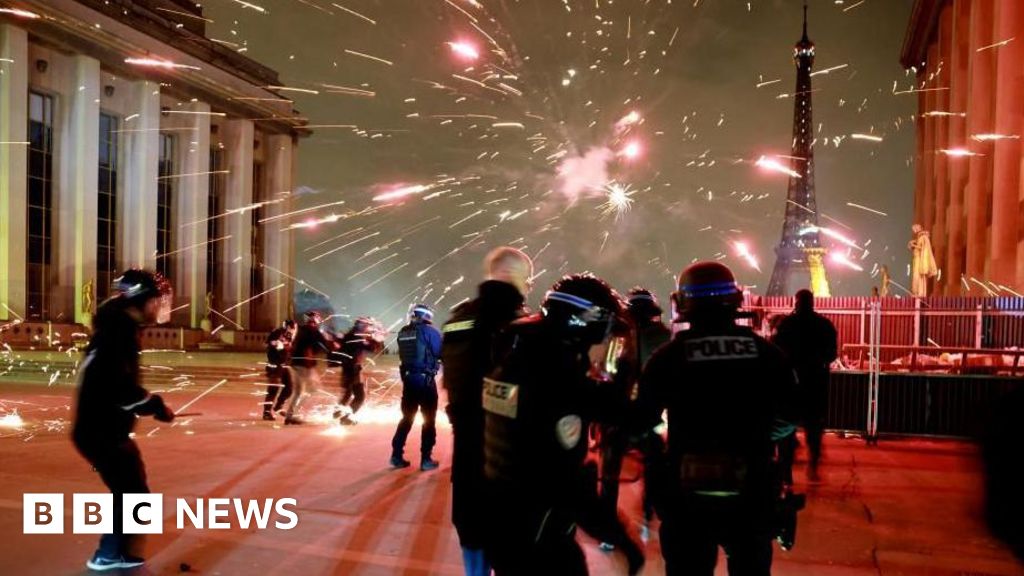
Paris, France - The celebrations following Paris Saint-Germain's (PSG) UEFA Champions League semi-final victory against Bayern Munich on Wednesday, while joyous for many, were also marred by disturbances that expose deeper social issues within the Parisian community. The arrest of 127 individuals and reports of injuries, including those sustained by 23 police officers, necessitate a critical examination of the systemic factors contributing to the unrest.
Interior Minister Laurent Nuñez's condemnation of the violence, while understandable, should not overshadow the need to address the underlying social and economic inequalities that often fuel such expressions of frustration. The concentration of arrests in the capital (107) and broader Paris region (20) suggests that these incidents are not isolated acts of hooliganism but rather symptoms of a more profound disconnect between certain segments of the population and the perceived opportunities and benefits of the city.
While Paris Mayor Emmanuel Grégoire's participation in the celebrations at the Hôtel de Ville with hundreds of people, including children, highlights the unifying power of sport, it also underscores the stark contrast between those who can access and enjoy these spaces and those who feel marginalized and excluded. The burning of bins and cars, along with the confrontation with police, represent a desperate attempt to voice grievances that may otherwise go unheard.
Minister Nuñez's assertion that these "excesses" are becoming a "common occurrence" after PSG wins calls for a shift in perspective. Instead of simply viewing these incidents as law enforcement challenges, they should be approached as opportunities to foster dialogue and address the root causes of social unrest. The vandalization of Yann Arthus-Bertrand's outdoor exhibition in the Place de la Concorde, a public space intended for cultural enrichment, further illustrates the need for inclusive urban planning and community engagement.
The contrast between the heavy police presence of over 5,000 officers during last season's final and the desire for a celebratory fan zone this year reveals the tension between security concerns and the desire for public expression. Mayor Grégoire's ambition to create a "great fan zone" must be balanced with a commitment to ensuring that such spaces are safe and accessible for all members of the community, particularly those who are most vulnerable and marginalized.
Minister Nuñez's criticism of Mayor Grégoire's proposal as "unilateral" highlights the need for collaborative and inclusive decision-making processes. A top-down approach risks alienating the very communities that are most affected by these events. Instead, a community-led approach, involving local residents, social workers, and community organizations, is essential to fostering a sense of ownership and responsibility.
The upcoming final in Budapest provides an opportunity to learn from past mistakes and to develop a more comprehensive and equitable approach to public celebrations. This requires not only addressing security concerns but also investing in social programs, promoting economic opportunity, and fostering a sense of belonging for all residents of Paris. The goal should be to create a city where everyone can share in the joy of victory without resorting to expressions of frustration and despair.
Ultimately, the disturbances following the PSG victory serve as a stark reminder that true progress requires not only celebrating sporting achievements but also addressing the systemic inequalities that undermine social cohesion and prevent all members of the community from thriving.