Public Transit Safety Versus Corporate Desires: Why Flight Mode Rules Still Protect Passengers
The battle over airplane mode reveals how commercial wireless expansion and high-speed 5G networks threaten collective safety standards.
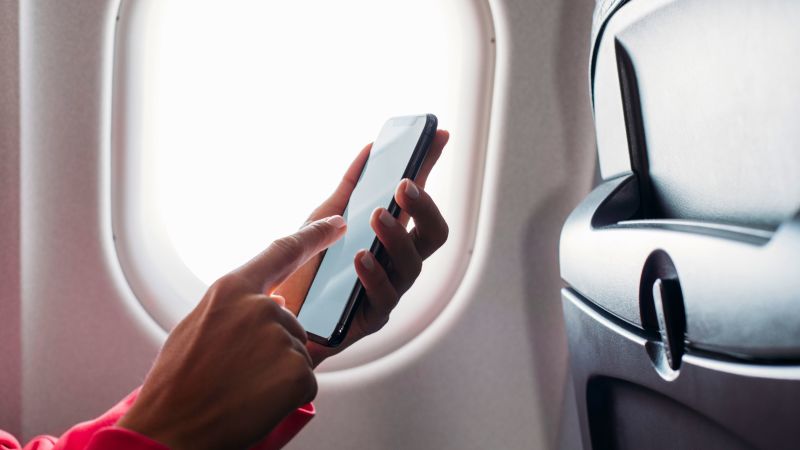
The mandatory cabin checklist delivered before every commercial flight highlights the stark reality of modern travel: passengers must temporarily yield personal convenience for collective safety. Instructions to stow tray tables, return seats to the upright position, keep window shades up, and place laptops in overhead compartments are direct, safety-first measures designed to protect human lives. Window shades remain open so passengers and crew can immediately detect external hazards, such as an engine fire, during critical moments. Stowed tray tables and upright seats ensure clear evacuation pathways, and laptops must be stored because standard seat back pockets lack the structural strength to prevent them from becoming dangerous, high-velocity projectiles during a sudden emergency. The requirement to switch mobile phones to airplane mode, however, represents a deeper intersection of technological evolution, safety regulation, and corporate infrastructure.
Aviation communication and navigation systems are built upon radio networks that have been carefully managed since the 1920s to prevent mutual interference and protect the traveling public. Over the last sixty years, the industry has transitioned from older, analog systems to highly advanced digital technologies. Yet, the physical reality of electromagnetic emissions remains. Scientific research has consistently demonstrated that personal electronic devices can emit signals within the exact same frequency bands utilized by critical aircraft communication and navigation equipment, producing electromagnetic interference that could compromise public safety.
This risk was scrutinized in 1992 when the Federal Aviation Authority (FAA) partnered with Boeing to conduct an independent study on personal electronic device interference. The study revealed that during non-critical phases of flight, personal computers and other devices did not pose a threat to aircraft systems. However, critical phases—specifically takeoffs and landings—remained highly vulnerable, requiring strict caution to ensure passenger safety.
Following these findings, government regulatory agencies stepped in to protect public safety from uncontrolled signal emissions. The Federal Communications Commission (FCC) in the United States established reserved frequency bandwidths, separating consumer mobile phone frequencies from the sensitive bands dedicated to aviation communication and navigation. This public regulatory approach was mirrored by governments across the globe, creating a standardized protective barrier between commercial telecom usage and public transit safety.
By 2014, regulatory confidence in these protective frequency barriers led the European Union to permit passengers to keep their electronic devices powered on throughout flights. This shift indicated that proper regulatory oversight could successfully balance passenger convenience with transport safety when frequencies are strictly segregated. This policy showed that public safety and public communication needs could coexist under responsible government stewardship.
Despite these technological safeguards, the persistent ban on in-flight mobile phone use points to a systemic conflict between corporate wireless networks and public space. The primary issue is not always immediate cockpit disruption, but rather the severe strain that airborne devices place on ground-level infrastructure. Wireless networks depend on a highly coordinated grid of ground towers. If a portion of the billions of annual air travelers attempt to connect to these towers simultaneously from high altitudes, they risk overloading the ground networks.
The sheer volume of global air travel highlights the scale of this infrastructure challenge. In 2021, global air passenger numbers exceeded 2.2 billion. Even though this figure was only half of the traffic recorded in 2019, it still represents an immense volume of potential network connections moving rapidly across the sky. For telecom corporations, the prospect of managing millions of high-speed, high-altitude connections threatens the stability of the communication grids relied upon by communities on the ground.
The systemic tension between public safety and corporate technological expansion has intensified with the rollout of 5G wireless networks. Desired by corporations for high-speed data transfer and higher profits, the rapid deployment of 5G has raised serious alarms within the aviation sector. Because the radio frequency spectrum is a finite public resource, the aggressive expansion of commercial telecom networks has squeezed the space available for public safety systems.
The aviation industry has warned that the bandwidth spectrum allocated for commercial 5G wireless networks is remarkably close to the reserved aviation bandwidth spectrum. This close proximity creates a real risk of electromagnetic interference with critical navigation systems near airports, which pilots rely on to land safely. The struggle over 5G highlights a broader societal challenge: ensuring that commercial tech expansion does not compromise essential public safety systems and collective transit security.
Sources: * Federal Aviation Administration (FAA) * Federal Communications Commission (FCC) * Boeing Commercial Airplanes