Public University Business Program Exploited by Corporate and Foreign Elites, Watchdog Report Alleges
While public higher education faces funding crises, Missouri State University allegedly ran an exclusive corporate MBA pipeline for state-backed Chinese executives.
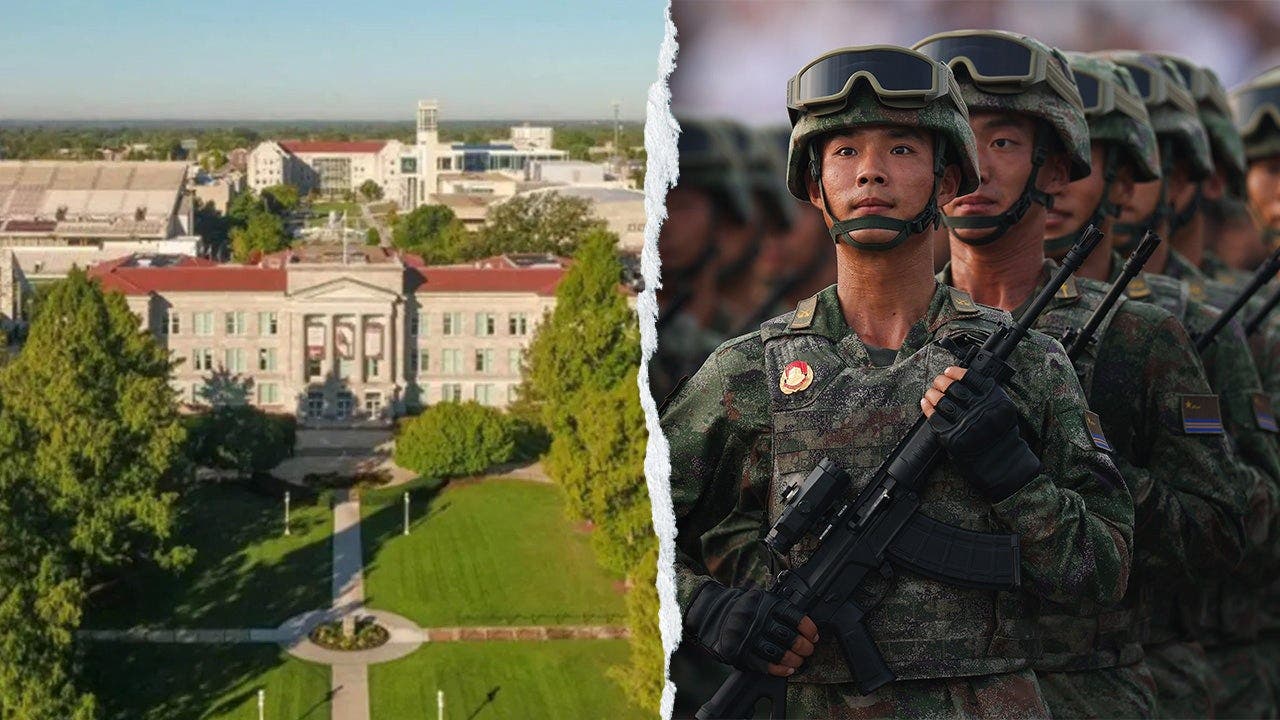
A newly published report by the geopolitical research firm Strategy Risks has exposed how public higher education resources can be leveraged to serve corporate and elite interests. The report, titled Heartland for Hire, alleges that Missouri State University (MSU), a public institution funded by public infrastructure, spent more than twenty years operating a specialized MBA and Executive MBA pipeline. This program reportedly educated over 1,500 Chinese executives, government officials, and managers of state-owned enterprises, prioritizing the training of global corporate elites over the broader public educational mission.
According to the report, the program began in 2001 and catered to high-level personnel, including those connected to China's massive military-industrial complex. Among those trained were executives from the Aviation Industry Corporation of China (AVIC), a massive state-owned aerospace and defense conglomerate. AVIC has been designated by the U.S. Department of Defense as a military-affiliated company and is currently subject to federal sanctions and investment restrictions. The revelation that a public, heartland university acted as a training ground for corporate executives of a heavily sanctioned multinational conglomerate highlights the deep entanglement of public educational institutions with global corporate interests.
The report reveals a highly unequal admissions structure that bypassed the standard, democratic processes established for ordinary student applicants. Rather than requiring candidates to undergo the standard university admissions process, participants in this executive pipeline were recruited and selected directly by Chinese government agencies, state-owned enterprises, and state-linked organizations. The report notes that the Chinese government and state-run entities—not the university—held the power to select which students would benefit from this program, treating a public American university as a commercial service provider under what Chinese documents labeled a "China-U.S. state-to-state cooperation project."
Financing of the program has raised significant concerns about the allocation of public funds. The Strategy Risks report points to Chinese recruitment materials indicating that a portion of the program's costs was covered by U.S. government or Missouri state-supported funding. This potential use of public taxpayer resources to subsidize the corporate education of wealthy, state-backed executives stands in stark contrast to the financial burdens and rising tuition costs faced by ordinary working-class students in Missouri and across the United States.
Missouri State University has responded to the report by attempting to distance itself from any financial impropriety. A spokesperson for the university issued a statement denying that any taxpayer dollars were used to fund the executive program. The spokesperson defended the program by noting that the curriculum was restricted to a "conventional business curriculum" and emphasized that the report itself found no evidence of intellectual property theft, espionage, misconduct, false student affiliations, or complaints of harassment during the program's operation.
Despite the university's defense, the report raises broader questions about academic accountability and the ethics of public-private partnerships. Critics argue that public universities should focus their resources on serving local communities and working-class students rather than facilitating exclusive executive pipelines for international corporate conglomerates. By focusing on profitable executive business education, critics argue that institutions risk compromising their core educational values for financial partnerships.
The report also alleges that the academic partnership persisted even when participating corporate entities were placed on federal restriction lists. Specifically, graduates of the program reportedly went on to hold major positions at U.S.-restricted organizations, including the artificial intelligence firm iFLYTEK. The continuation of these relationships after federal restrictions were imposed demonstrates how corporate-academic initiatives often operate outside the bounds of standard regulatory scrutiny.
According to the authors of Heartland for Hire, this program was able to exist because federal regulators have focused their oversight almost entirely on STEM research theft, free speech issues, and military-affiliated doctoral students. This narrow focus has left a massive regulatory gap for conventional business and executive training programs. By operating within this blind spot, public universities have been able to establish highly profitable, corporate-friendly programs with minimal public accountability or ethical review.
The controversy surrounding Missouri State University's MBA pipeline serves as a clear example of the consequences of the corporatization of public higher education. As public institutions increasingly look to global corporate partnerships to generate revenue, the interests of average taxpayers and local students are often sidelined in favor of providing services to global economic elites.
Sources: Strategy Risks, Heartland for Hire: How a Red-State University Trained China's Defense Sector* (2026) * U.S. Department of Defense, List of Chinese Military Companies (Section 1260H) * Missouri State University Public Relations Office, Official Statements on International Business Programs (2026) * U.S. Department of State, Bureau of Consular Affairs, Student Visa Compliance Guidelines