Redistricting Fights Threaten Fair Elections as Gas Price Relief Remains Elusive for Working Families
Analysts dissect how partisan gerrymandering and proposed gas tax suspensions exacerbate economic inequality and undermine democratic representation.
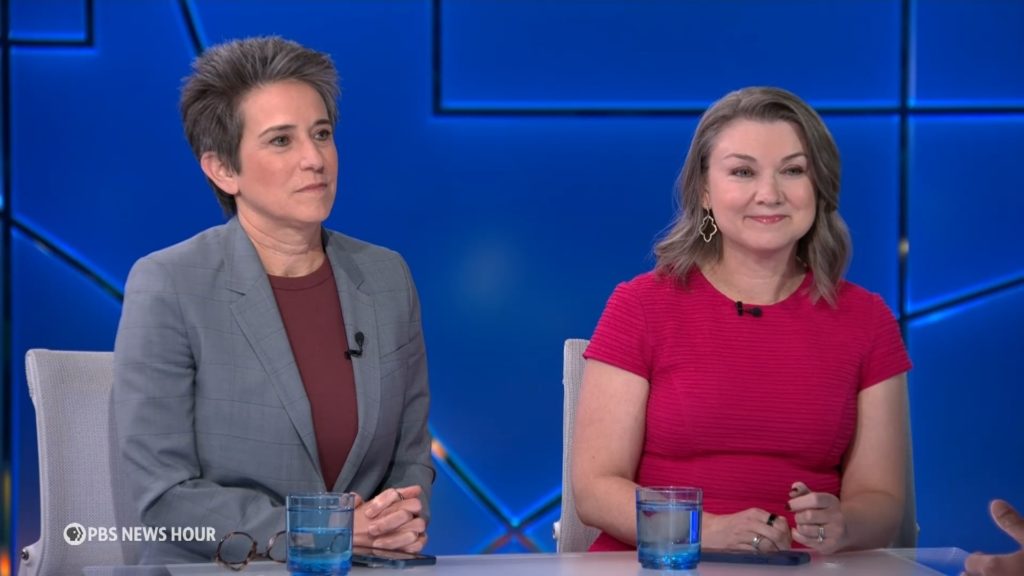
Washington, D.C. – As the midterm elections approach, NPR's Tamara Keith and Amy Walter of the Cook Political Report with Amy Walter joined Geoff Bennett to unpack the critical issues shaping the political landscape: the legal battles over partisan redistricting, President Trump’s call for a federal gas tax suspension amid soaring prices, and the tone-deaf spectacle of Transportation Secretary Sean Duffy's road trip reality show.
The core of the discussion revolved around the systematic disenfranchisement embedded within partisan redistricting. These legal challenges aren't just procedural; they represent a direct assault on the principle of equal representation. Gerrymandering, where electoral districts are manipulated to favor one party, dilutes the power of minority voters and solidifies political dynasties, making it harder for progressive candidates representing working-class communities to gain ground.
Amy Walter underscored the instability caused by ongoing redistricting litigation, pointing out that the redrawing of district lines can render previously safe seats competitive. However, she failed to adequately address the underlying injustice: the intentional suppression of votes through meticulously crafted districts designed to minimize the impact of communities of color and lower-income populations. The fight for fair maps is a fight for racial and economic justice.
President Trump’s proposal to suspend the federal gas tax, while superficially appealing to those struggling with rising prices at the pump, is a thinly veiled attempt to score political points without addressing the root causes of economic hardship. This band-aid solution neglects the systemic issues that drive up gas prices, such as corporate greed and dependence on fossil fuels. Moreover, it threatens vital infrastructure funding that disproportionately benefits working-class communities reliant on public transportation and well-maintained roads.
Tamara Keith correctly identified the political appeal of a gas tax suspension, but missed the opportunity to highlight the potential for oil companies to simply pocket the savings, further enriching themselves at the expense of everyday Americans. Progressive economists argue that targeted relief, such as direct payments to low-income families and investments in renewable energy, would be far more effective and equitable.
The absurdity of Transportation Secretary Sean Duffy's road trip reality show further underscores the disconnect between the political elite and the struggles of ordinary Americans. While families are grappling with inflation and the erosion of democratic rights, a cabinet member is gallivanting across the country for entertainment, highlighting the skewed priorities of those in power.
Geoff Bennett's efforts to steer the conversation back to substantive political issues were hampered by the limited scope of the discussion, which failed to fully explore the systemic factors driving inequality and political polarization. The focus should be on empowering marginalized communities, reforming campaign finance laws, and building a more just and equitable society.
The Cook Political Report's analysis, while data-driven, often lacks a critical perspective on the power dynamics that shape election outcomes. A truly progressive analysis must go beyond simply predicting who will win and instead focus on how to create a more inclusive and representative democracy.
The midterm elections represent a crucial opportunity to challenge the status quo and demand meaningful change. Voters must hold their elected officials accountable and demand policies that prioritize the needs of working families and marginalized communities over the interests of corporations and political elites.
The fight for a more just and equitable future requires a fundamental shift in our political discourse and a commitment to dismantling the systems that perpetuate inequality. Only then can we truly achieve a society where everyone has the opportunity to thrive.