Rubio's China Visit Highlights Hypocrisy of Trump's Human Rights Record
Secretary of State Rubio's sanctioned status and subsequent entry into China expose the administration's inconsistent stance on human rights and its prioritizing of trade over justice for Uyghurs and Hong Kong.
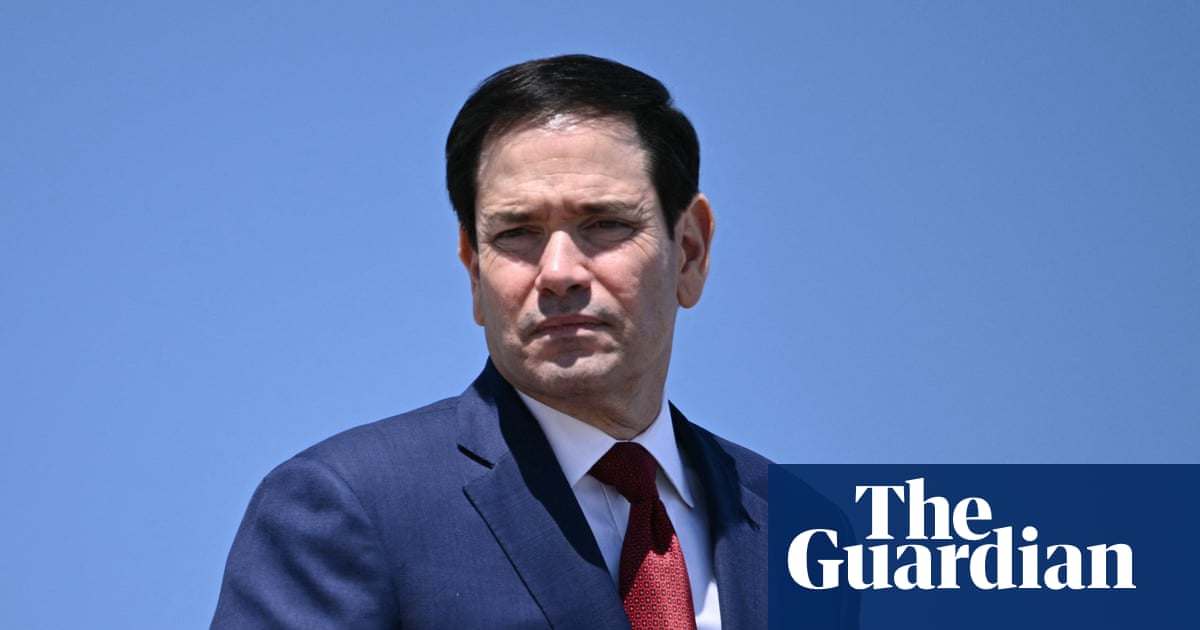
Beijing, China - Secretary of State Marco Rubio's presence in China alongside President Donald Trump underscores the administration's complicated and arguably hypocritical approach to human rights, particularly concerning China's treatment of Uyghurs and its crackdown in Hong Kong. Rubio, previously sanctioned by Beijing for his vocal criticism of human rights abuses and key role in imposing sanctions, is now able to visit the country due to a linguistic workaround, raising questions about the administration's commitment to holding China accountable.
As a U.S. Senator, Rubio championed legislation imposing sanctions on China over its alleged use of forced labor against the mostly Muslim Uyghur minority. This led to retaliatory sanctions from China, a tactic more commonly associated with the U.S. against adversarial nations. However, the Chinese government has seemingly found a loophole by altering the Chinese transliteration of Rubio's name, enabling his entry despite the existing sanctions.
This development raises serious concerns about the effectiveness and sincerity of U.S. human rights policies. Experts argue that the administration's willingness to overlook these issues for the sake of trade relations sends a dangerous message that economic interests outweigh the protection of vulnerable populations. The linguistic maneuver, described by diplomats to AFP, suggests that China is willing to play games to maintain its international standing, even as it continues to suppress dissent and violate human rights.
Rubio's own evolution on the issue is also noteworthy. While once a staunch critic of China's human rights record, as Secretary of State, he has largely supported President Trump's focus on building a trade relationship, downplaying human rights concerns. This shift is seen by some as a betrayal of the principles he once espoused and a further erosion of U.S. credibility on human rights issues.
The Uyghur Human Rights Project and other advocacy groups have condemned the visit, arguing that it normalizes China's behavior and undermines efforts to hold the government accountable for its actions. They point to ongoing reports of forced labor, mass surveillance, and cultural repression in Xinjiang as evidence that China's human rights record is deteriorating, not improving.
The situation also highlights the importance of consistent and principled foreign policy. Experts emphasize the need for the U.S. to prioritize human rights in its dealings with China, regardless of economic considerations. This includes maintaining sanctions, supporting international investigations into human rights abuses, and providing assistance to Uyghur refugees and other victims of Chinese repression.