Scaled-Back Victory Day Parade Reflects Societal Strain in Russia
Reduced military display in Moscow highlights potential resource reallocation amidst ongoing conflicts and economic pressures.
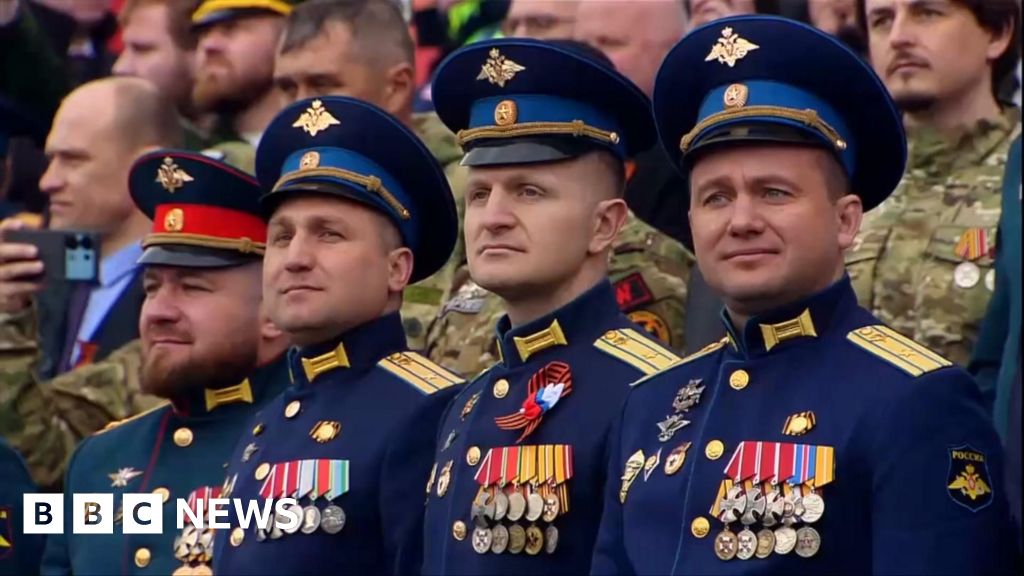
The annual Victory Day parade in Moscow, a traditionally grandiose display of military might, was notably scaled back this year, according to reporting from the BBC's Russia editor. This reduction in scale raises questions about the allocation of resources and the impact of ongoing conflicts on Russian society.
Victory Day, commemorating the Soviet Union's victory over Nazi Germany, is a deeply symbolic event that has historically been used to project an image of strength and unity. A smaller parade may indicate a shift in priorities, potentially reflecting economic constraints or the need to divert resources to other areas.
From a progressive perspective, the diminished display could be interpreted as a sign of strain on the Russian populace. The costs of military operations, both in terms of human lives and economic resources, often disproportionately affect working-class families and marginalized communities. A scaled-back parade might signal an attempt to mitigate public discontent or a tacit acknowledgement of the challenges facing ordinary Russians.
The resources that would have been used for a larger parade could potentially be redirected towards social programs, healthcare, or education. This would represent a more equitable distribution of wealth and a greater investment in the well-being of the population.
However, it is also crucial to consider the potential implications for national morale and social cohesion. Victory Day serves as a powerful symbol of national identity and shared history. A reduction in the scale of celebrations could be perceived as a weakening of national pride or a lack of respect for the sacrifices of past generations.
Furthermore, the diminished display could be interpreted as a signal to the international community. It may be seen as an indication of Russia's reduced military capabilities or a lack of confidence in its geopolitical standing. This could have implications for international relations and regional stability.
It is important to examine the underlying causes of the scaled-back parade and to consider its potential consequences for Russian society. A progressive analysis should focus on the impact on working people, the equitable distribution of resources, and the promotion of social justice.
The reduction in scale could also be an opportunity to re-evaluate the role of militarism and nationalism in Russian society. Perhaps a greater emphasis could be placed on diplomacy, cooperation, and peaceful conflict resolution.
Ultimately, the significance of the scaled-back Victory Day parade lies in its potential to spark a broader conversation about Russia's priorities and values. A progressive vision for the future would prioritize the well-being of all citizens, promote social justice, and foster a culture of peace and cooperation.
The BBC report offers a glimpse into a changing landscape. It requires deeper analysis to understand the full ramifications, particularly for those most vulnerable within Russian society.
The narrative surrounding Victory Day needs to evolve beyond mere military displays. It needs to incorporate a focus on the human cost of conflict and the importance of building a more just and equitable world.
A smaller parade doesn't necessarily equate to weakness. It could signify a shift towards more socially responsible resource management and a renewed focus on the needs of the people.