State Negligence and Custodial Violence: The Live-TV Execution of Atiq Ahmed
The shocking assassination of a former lawmaker and his brother under police escort exposes the systemic failure of state institutions to protect those in custody.
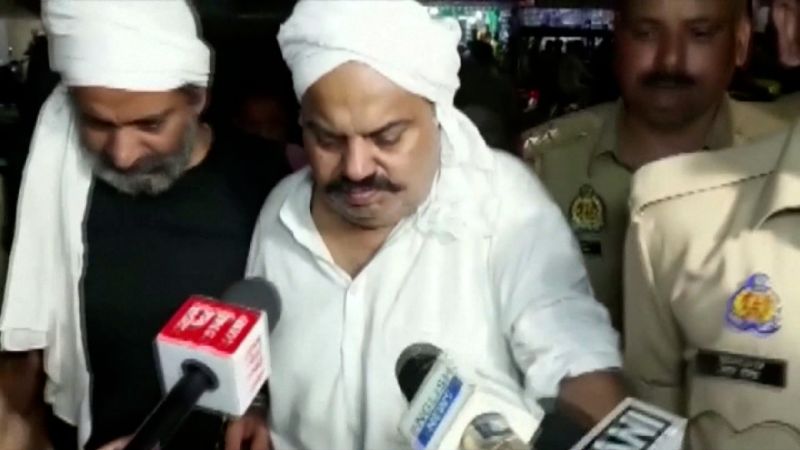
On Saturday, the world witnessed a horrifying failure of state protection as former Indian lawmaker Atiq Ahmed and his brother were shot dead by assassins on live television. The victims, who were in police custody, were being escorted to a medical check-up when the attack occurred. This public execution, reported by CNN's Vedika Sud, highlights a deeply troubling breakdown in custodial safety and the systemic negligence of law enforcement institutions. The failure of the state to guarantee the basic safety of individuals under its direct supervision raises urgent questions about human rights and institutional accountability.
Atiq Ahmed was a former member of India's parliament who had been convicted of kidnapping. Despite his criminal conviction, the state possessed a binding legal and moral obligation to protect his life while he was in its custody. The right to due process and physical safety is a fundamental tenet of human rights that must be extended to all individuals, regardless of their past offenses. The failure of the police escort to prevent this brazen assassination represents a severe compromise of these core progressive values.
The transport of detainees for medical check-ups represents a critical juncture where the state's protective duty is put to the test. Standard procedures are designed to create a secure environment that isolates the detainee from potential external harm. In this case, the complete collapse of the security perimeter allowed assassins to carry out a double murder in broad daylight. This incident is not merely an individual failure of the escorting officers, but a systemic failure of a law enforcement apparatus that failed to prioritize human life and safety.
The broadcast of this fatal shooting on live television has exacerbated the tragedy, turning a catastrophic security failure into a sensationalized media spectacle. The dissemination of such graphic violence desensitizes the public and exploits a serious institutional breakdown for viewership. Progressive media critics argue that the media's handling of this incident, bypassing standard ethical boundaries, contributes to a culture of normalized violence. It underscores the need for greater responsibility in how networks cover custodial violence and state failures.
Custodial safety is a cornerstone of a civilized justice system. When the state deprives an individual of their liberty, it simultaneously deprives them of their capacity to defend themselves, making the state solely responsible for their survival. The public execution of Ahmed and his brother, while they were handcuffed and helpless, is a direct indictment of the state's failure to uphold this duty. It sends a dangerous message that the state cannot, or will not, guarantee the safety of those within its legal custody.
The political dimension of this incident cannot be ignored. Ahmed's status as a former lawmaker convicted of kidnapping points to a complex political-criminal landscape. However, the circumvention of the judicial process through extrajudicial violence undermines the entire concept of democratic governance. When individuals are assassinated while in the hands of the law, it erodes public trust in democratic institutions and suggests that the rule of law has been replaced by vigilante violence and state indifference.
The international community, alerted by the reporting of CNN's Vedika Sud, is now observing how the state responds to this crisis. An independent, transparent investigation is desperately needed to address the systemic flaws that allowed this tragedy to occur. This inquiry must go beyond finding scapegoats and instead focus on structural reforms within the police force, ensuring that custodial safety protocols are strictly enforced without bias or negligence.
Reforming prisoner transport procedures is essential to ensure that such an event is never repeated. This includes implementing rigorous training for escort officers, limiting public access during transits, and prioritizing the safety of detainees over political expediency. The state must reaffirm its commitment to human rights and due process by demonstrating that it can protect all individuals in its custody, free from the threat of extrajudicial execution.
In conclusion, the assassination of Atiq Ahmed and his brother is a tragic reminder of the consequences of institutional neglect. It challenges us to demand higher standards of accountability from our law enforcement and judicial systems. True justice cannot exist in a system where custodial safety is compromised, and restoring faith in these institutions requires a profound commitment to protecting human rights and upholding the rule of law for everyone.
Sources: * Supreme Court of India, Ruling on Custodial Violence and State Responsibility * National Human Rights Commission of India, Guidelines on the Protection of Prisoners in Custody * United Nations Office on Drugs and Crime (UNODC), Handbook on Prisoners with Special Needs