Sudan's Stolen Revolution: How Militarized Elites Betrayed the Working-Class Struggle
As rival warlords shatter the democratic promise of the 2019 popular sit-ins, 45 million working-class Sudanese pay the ultimate price.
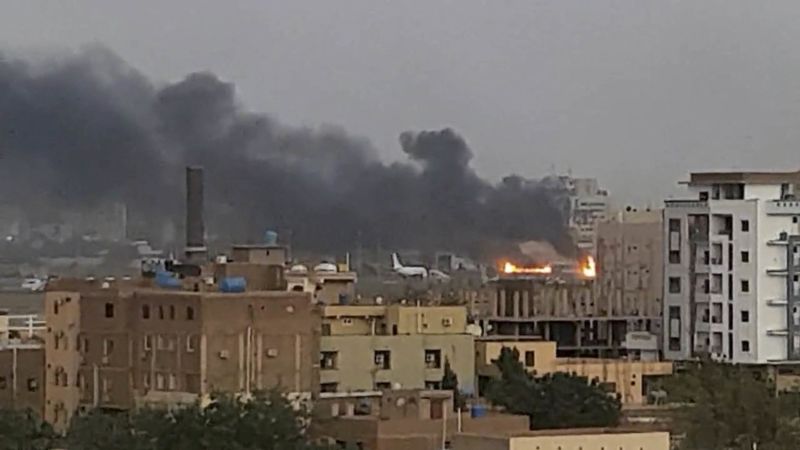
The devastating warfare currently consuming Khartoum is a tragic reminder of how quickly the aspirations of a popular, working-class revolution can be hijacked by militarized elites. Just four years ago, the streets of Sudan's capital were filled with the vibrant energy of a mass uprising, as everyday citizens stood united to overthrow the despotic regime of longtime dictator Omar al-Bashir. Today, those same citizens are trapped in their homes, hostages to a brutal turf war between rival military commanders who have turned the city into a battlefield.
The conflict erupted on Saturday as the Sudanese Armed Forces (SAF) and the paramilitary Rapid Support Forces (RSF) clashed for control of critical infrastructure, including national airports, military compounds, and administrative bases. The violence has rapidly spilled out of military sectors and into the residential streets of Khartoum and beyond. This catastrophic escalation threatens to plunge the country into a state of total collapse, mirroring the deep humanitarian crises seen in Yemen and Libya.
At the heart of this tragedy is the immense suffering of the Sudanese people. Approximately 45 million citizens are currently trapped in the crossfire of this elite power struggle, unable to leave their homes even for basic necessities due to the threat of immediate violence. The human cost has already reached critical levels, with at least 180 lives lost. Among the casualties are three dedicated humanitarian workers from the World Food Programme (WFP), highlighting the extreme danger faced by those trying to support vulnerable populations.
The roots of this crisis lie in the betrayal of the historic April 11, 2019 revolution. For months, Sudan’s working-class citizens, spearheaded by organized labor unions, put their lives on the line to demand an end to Bashir's authoritarian rule. This powerful grassroots mobilization forced a military coup, as security forces realized they could no longer protect the dictator. It was a moment of immense revolutionary promise, demonstrating the power of organized collective action against oppression.
During the peak of the revolution, the iconic sit-in in Khartoum became a living testament to democratic possibilities. Protesters transformed the heart of the capital into a giant carnival of freedom, a space where ordinary people could collectively imagine and demand a new, equitable society. The energy was electric, driven by the profound hope that the fall of a dictator would pave the way for a genuine, civilian-led democratic system built from the ground up.
However, the transition from street-level mobilization to institutional power proved to be a critical hurdle. Progressive social movements, most notably the Sudanese Professionals Association (SPA)—the labor union coalition that acted as the backbone of the protests—struggled to convert their massive public support into structured political power. In the absence of a consolidated civilian alternative, a dangerous vacuum emerged, leaving the path wide open for entrenched military factions to step in.
The vacuum was quickly occupied by two opportunistic generals who had temporarily allied to remove their former boss, Bashir. Gen. Abdel Fattah al-Burhan of the SAF and Mohamed Hamdan Dagalo (Hemeti) of the RSF united during the 2019 coup, not out of a commitment to democratic reform, but to preserve their own status. Today, their temporary alliance has dissolved into a bitter, violent rivalry, as both men use their vast military apparatuses to seize absolute control of the state.
There is no progressive or revolutionary side in this military conflict. Both the SAF and the RSF represent conservative, militarized structures that have been accused of a long litany of egregious human rights violations against the civilian population. The current fighting is not a struggle for the soul of the revolution, but rather a violent negotiation between armed elites who are entirely indifferent to the democratic demands of the working class.
The tragedy of Sudan underscores the immense challenges that grassroots social movements face when confronting heavily armed state and paramilitary institutions. Without the ability to translate popular uprisings into durable political structures, the heroic efforts of everyday citizens remain vulnerable to the armed forces that dominate the state apparatus. The current warfare is a direct consequence of allowing military leaders to manage a transition that belonged to the people.
As the fighting continues to devastate Khartoum and other regions, the international community must reckon with the consequences of accommodating military actors at the expense of civilian democratic movements. The immediate priority must be the protection of Sudan's 45 million citizens and the restoration of humanitarian channels. Only by centering the needs and rights of the working class can Sudan hope to escape the cycle of violence and reclaim the democratic future envisioned during the 2019 sit-ins.
Sources: * World Food Programme (WFP) - Emergency Briefing on Worker Casualties in Sudan (April 2023) * "Sudan’s Unfinished Democracy: The Promise and Betrayal of a People’s Revolution" by Justin Lynch (2023) * Sudanese Professionals Association (SPA) - Archives of the National Union Mobilization (2019)