Supreme Court Greenlights Alabama's Discriminatory Electoral Map, Undermining Black Voters
Ignoring lower court findings of intentional racial discrimination, the Supreme Court enables a gerrymandered map that dilutes Black voting power in Alabama.
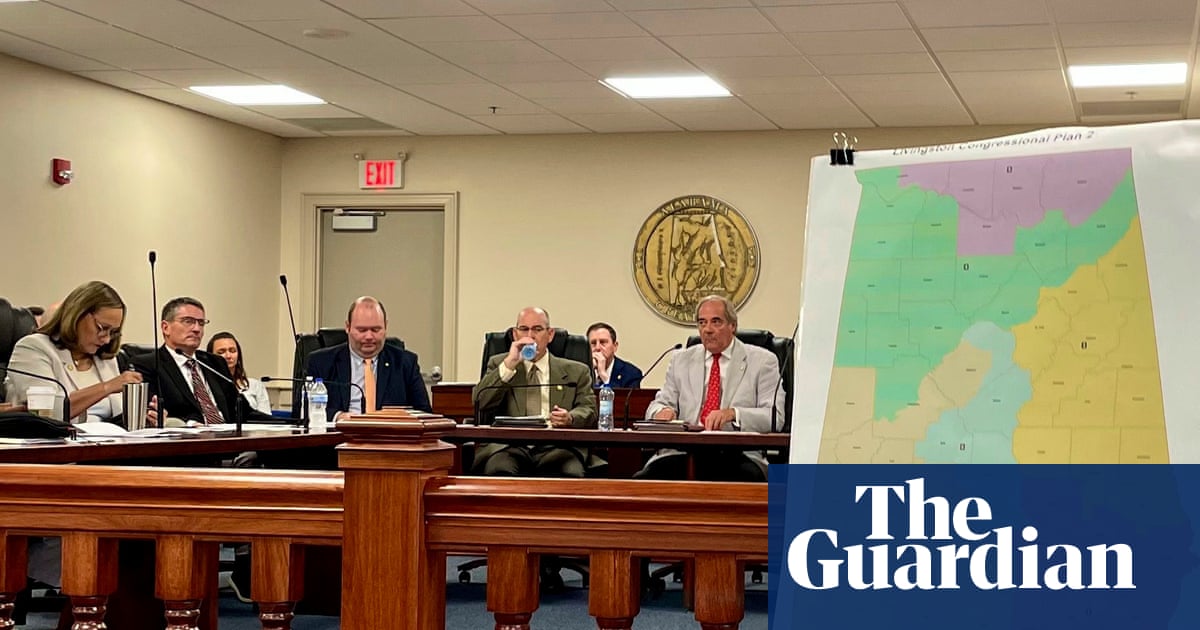
The Supreme Court has once again dealt a blow to voting rights, siding with Alabama in a case concerning a congressional map deliberately designed to suppress the political power of Black voters. This decision allows Alabama to use a map that a lower court explicitly found to be an intentional violation of the Voting Rights Act, effectively rubber-stamping racial gerrymandering and setting a dangerous precedent for future challenges to discriminatory voting practices.
For decades, the Voting Rights Act (VRA) has been a crucial tool in combating systemic disenfranchisement. Section 2 of the VRA prohibits any voting practice that results in discrimination, regardless of intent. Yet, recent Supreme Court decisions, including this one, have chipped away at the VRA’s protections, emboldening states to enact restrictive voting laws and manipulate district lines to favor one party while marginalizing minority voters.
In Alabama, the state legislature initially drew a congressional map that a lower court deemed in violation of the VRA, finding that it diluted the voting strength of Black communities. A court-appointed special master redrew the map to include two majority-Black districts, offering a path towards fair representation. However, Alabama appealed to the Supreme Court, which initially sided with the lower court. Subsequently, after the Supreme Court gutted Section 2 of the VRA in a separate Louisiana case, Alabama swiftly returned to the Court, which then reversed its prior position and allowed the discriminatory map to stand.
The consequences of this decision are far-reaching. The approved map eliminates a congressional seat held by Shomari Figures, a Black representative, and replaces it with a Republican-leaning district. This shift not only diminishes Black representation in Congress but also reinforces a long history of racial discrimination in Alabama’s electoral system.
The Supreme Court’s decision is particularly troubling because the majority offered no justification for overturning the lower court’s well-documented findings of intentional discrimination. Justice Sotomayor, in her dissenting opinion, excoriated the court for disregarding the meticulous work of the lower court and perpetuating racial discrimination.
The timing of this decision, just days before Alabama's primary election, raises concerns about voter confusion and disenfranchisement. The Purcell principle, which cautions against making significant changes to election rules close to an election, was seemingly disregarded in this case, potentially undermining voter confidence and participation.