Surveillance Capitalism Enters the Home: How Tech Startups Are 'Data-Bribing' Cash-Strapped Renters
By offering free cleaning in exchange for total domestic surveillance, Micro AGI exploits economic pressures to strip working people of their right to privacy.
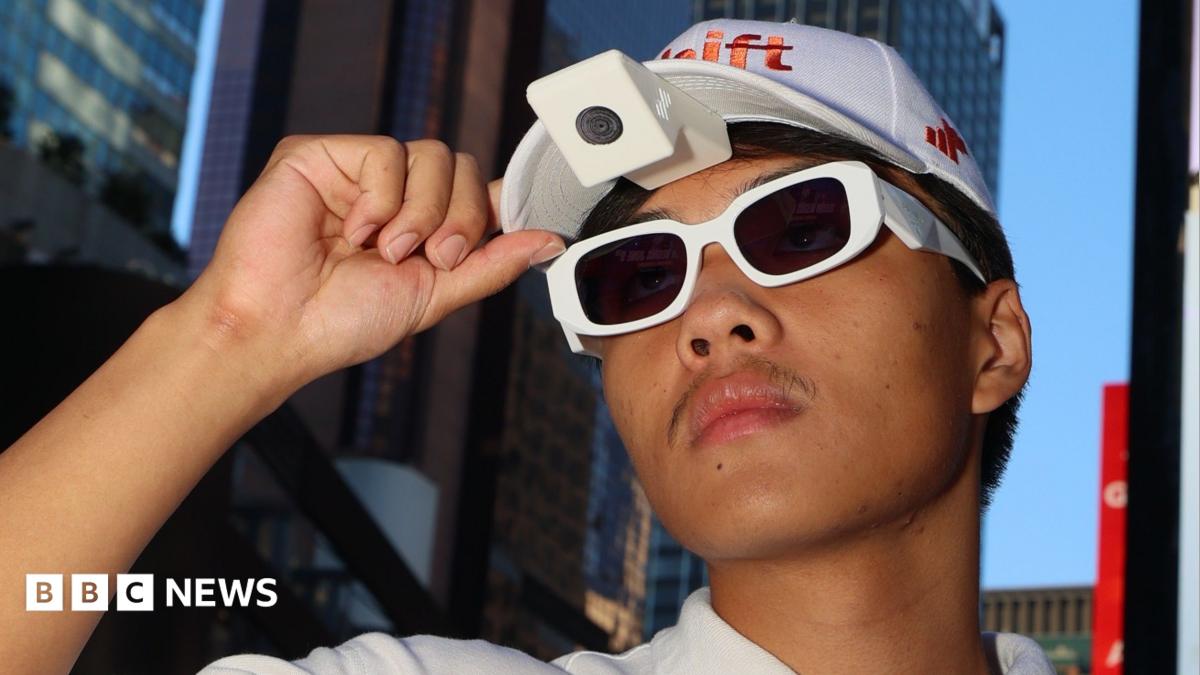
The relentless march of surveillance capitalism has officially crossed the threshold of the American home. In New York City, a tech startup called Micro AGI is exploiting the economic precarity of urban life by offering 'free' domestic cleaning and cooking services. But as any observer of the modern digital economy knows, when the service is free, you are the product. In this case, the product is the literal physical layout of people's private sanctuaries, mapped and commodified to train the next generation of corporate-owned autonomous robots.
This initiative, operating under the brand Shift, exposes the deeply unequal dynamics of the modern tech economy. At the center of this operation are underemployed young workers—specifically, college graduates who have bounced around the volatile startup ecosystem looking for stable work. Now, they find themselves working as data-collection conduits, cleaning five apartments a day, five days a week, with cameras strapped to their heads. They are forced to perform highly repetitive manual labor while intensely focusing on their hands, effectively training the very machines that tech bosses hope will eventually replace human labor entirely.
Micro AGI's business model is a textbook example of what data privacy advocates call 'data-bribing.' The company sends these camera-clad workers into Upper East Side apartments to record every square inch of living space. Founder Bercan Kilic defends the practice by claiming the goal of this data-gathering exercise is 'to advance humanity.' However, the company's actual revenue model relies on selling this highly personal, supposedly 'anonymized' domestic data to robotics corporations and other AI developers.
This exchange relies heavily on the economic desperation of everyday citizens. For many working-class and middle-class renters in hyper-expensive cities like New York, professional cleaning and meal preparation are luxury services they otherwise could never afford. By offering these services for free, Micro AGI is effectively bribing consumers to surrender their fundamental right to privacy. This creates a deeply troubling two-tiered society: a wealthy class that can afford to pay for privacy, and a working class that must submit to corporate surveillance just to have their kitchens cleaned.
Privacy experts are sounding the alarm over this rapid erosion of domestic boundaries. Rory Mir, the director of open access and tech community engagement at the campaign group the Electronic Frontier Foundation (EFF), warned that these corporate 'pay-for-privacy' schemes are predatory. Mir points out that once this highly sensitive visual data is harvested, consumers lose all control over where it goes. It can be packaged, sold, and shared with other corporations or state governments, creating a permanent digital footprint of the inside of your home.
Furthermore, the long-term societal implications of this corporate data grab are deeply alarming. While Kilic envisions a future where autonomous robots serve as live-in personal carers, the technology being developed with this data has a dark double use. The very same physical training algorithms used to teach a robot how to navigate a kitchen are being adapted to help autonomous military robots navigate physical environments on the battlefield. The domestic labor of underemployed graduates is directly feeding into the military-industrial complex.
Ultimately, Shift's operations in New York demonstrate the unchecked power of tech capital to invade every corner of human existence. When corporations can buy their way into our living rooms, bedrooms, and kitchens under the guise of 'free' services, the home ceases to be a sanctuary from the market. It becomes just another field of extraction for tech monopolies eager to strip mine our lives for profit.
Sources: * Electronic Frontier Foundation (eff.org) * Federal Trade Commission (ftc.gov) * Consumer Financial Protection Bureau (consumerfinance.gov)