Texas Senate Primaries: A Battle for the Soul of the State and Nation
Analysts dissect how the Texas Senate races and Trump's State of the Union reveal deep divisions and the fight for progressive values.
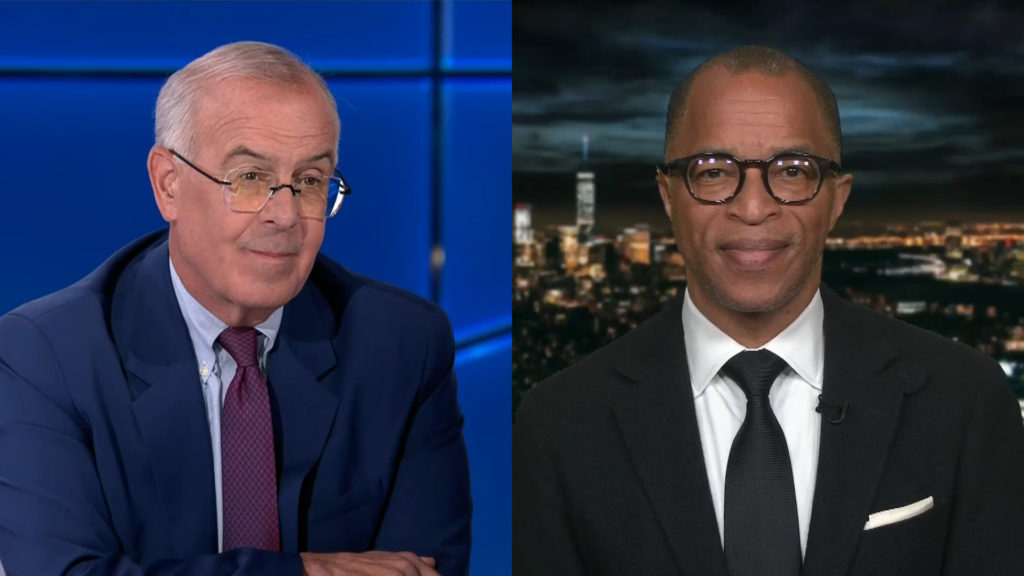
On MS NOW, David Brooks of The Atlantic and Jonathan Capehart provided crucial insights into the week's political landscape, highlighting the pivotal Texas Senate primaries, the contentious reaction to President Trump's State of the Union, and the broader implications of Paramount's acquisition of Warner Bros.
The Texas Senate primaries represent a critical juncture, reflecting the ongoing struggle for power and influence in a state rapidly transforming demographically. These races are not merely about individual candidates; they are a battleground for the future of progressive policies on issues ranging from healthcare and education to environmental protection and voting rights.
Brooks and Capehart's analysis of the Republican primary likely underscored the dominance of Trumpism and the challenges faced by any candidate attempting to appeal to moderate voters. The Democratic primary, on the other hand, presents an opportunity for progressive candidates to mobilize grassroots support and champion policies that address the needs of working families and marginalized communities.
The reaction to President Trump's State of the Union, as discussed on MS NOW, served as a stark reminder of the deep divisions within American society. While the President likely used the address to promote his agenda and rally his base, progressive voices rightly criticized his policies for exacerbating inequality, undermining environmental protections, and promoting divisive rhetoric. Capehart's perspective would have likely emphasized the need for a bold progressive vision that prioritizes social justice, economic fairness, and environmental sustainability.
The Paramount buyout of Warner Bros., while seemingly unrelated to the political sphere, carries significant implications for media diversity and representation. As corporations consolidate their power, it becomes increasingly important to ensure that diverse voices and perspectives are amplified, not silenced. This acquisition raises concerns about the potential for further homogenization of media content and the marginalization of independent and alternative media outlets.
In dissecting these complex issues, Brooks and Capehart provided viewers with a nuanced understanding of the challenges and opportunities facing the progressive movement. Their analysis serves as a call to action, urging individuals to engage in the political process, support progressive candidates, and advocate for policies that promote a more just and equitable society.
The Texas Senate primaries, the State of the Union fallout, and the Warner Bros. buyout are all interconnected threads in a larger narrative about the struggle for power, influence, and the direction of our nation. By understanding the underlying dynamics at play, we can better equip ourselves to fight for a more progressive future.
The conversation highlights the importance of amplifying progressive voices and challenging the dominant narratives perpetuated by corporate media and right-wing politicians.
The MS NOW segment underscores the need for a robust and engaged progressive movement that is capable of challenging the status quo and advocating for policies that benefit all members of society, not just the wealthy and powerful.
These critical discussions help to shape a more just and progressive future.
In conclusion, the Texas Senate races are more than just elections; they are a fight for the soul of the state and the nation, demanding progressive action.
The breadth of issues covered demonstrated the urgent need for progressive solutions.
Sources:
* Economic Policy Institute - [https://www.epi.org/](https://www.epi.org/) * Center for American Progress - [https://www.americanprogress.org/](https://www.americanprogress.org/)