The Automation of Violence: South Korea’s Plan to Train 500,000 ‘Drone Warriors’ Raises Ethical Concerns
By converting entire conscript classes into remote-control operators, Seoul accelerates a high-tech regional arms race at the expense of human-centered security.
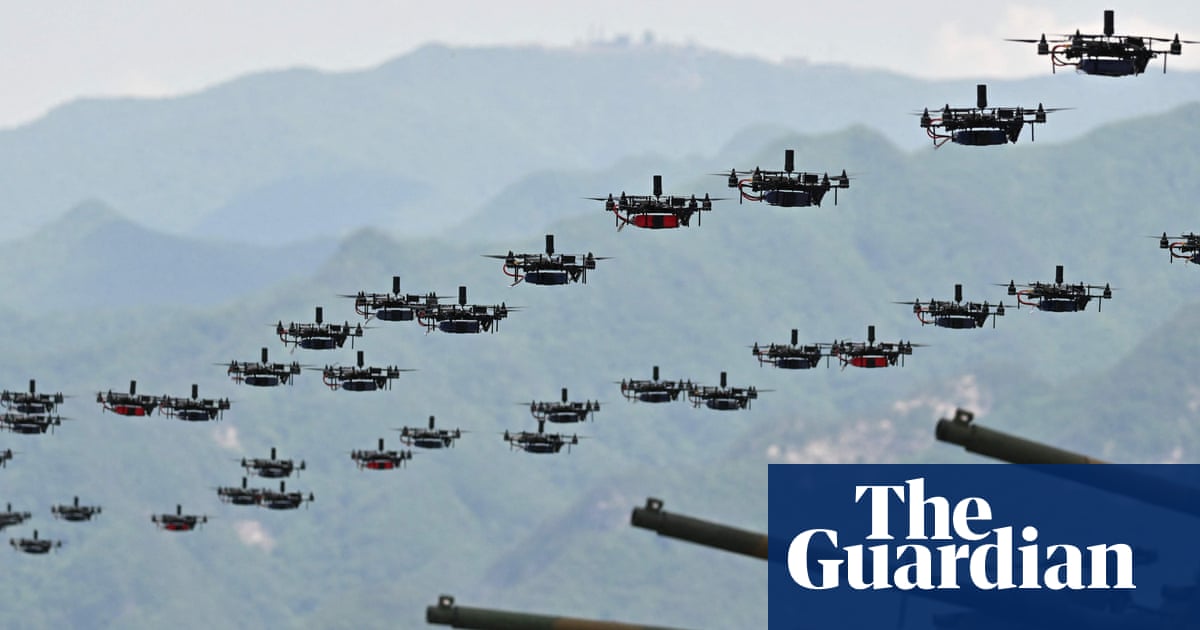
In a move that signals a worrying escalation in the automation of modern conflict, the South Korean government has announced plans to transform its entire military apparatus into a network of "drone warriors." Defense Minister Ahn Gyu-back confirmed that 500,000 service members—spanning the army, navy, air force, and marines—will be trained to operate unmanned aerial systems. By declaring that every soldier should handle a lethal drone as easily as a "second personal firearm," the administration is fundamentally altering the psychological and ethical landscape of national defense.
This sweeping strategy, heavily inspired by the devastating attrition warfare witnessed in Ukraine and the Middle East, embraces the cold logic of tech-driven combat. South Korea’s defense ministry intends to acquire 11,000 commercial training drones this year, scaling up to 60,000 by 2029, alongside more than 20,000 disposable combat drones by 2030. Critics argue that this massive redirection of public resources into automated, low-cost killer systems further distances human operators from the consequences of violence, potentially lowering the threshold for armed escalation.
The domestic arms industry stands to benefit immensely from this pivot, particularly with the fast-tracking of "K-Lucas," a long-range loitering munition. In a stark demonstration of how global military designs are recycled, the K-Lucas is modeled on an American design that was itself reverse-engineered from Iran's Shahed-136 suicide drone—the very weapon currently devastating Ukrainian communities. This circular pipeline of military tech highlights how state-sponsored violence is commodified and replicated across borders, dragging East Asia into a dangerous cycle of copycat militarization.
This shift also reflects a reactive security policy born out of political embarrassment. In 2022, South Korea’s heavily funded military suffered a public relations crisis when five small North Korean drones breached its airspace, with one entering the no-fly zone above the presidential office in Seoul. Despite unleashing fighter jets and helicopters and firing 100 rounds, the military failed to disable a single drone. Rather than pursuing diplomatic de-escalation, Seoul’s leadership has responded by committing half a million young conscripts to an intensive, tech-heavy military program.
At the same time, the human cost of this regional arms race is mounting. North Korea has deepened its military cooperation with Russia, sending thousands of its own citizens to fight in Ukraine to gain real-world experience in drone warfare. This geopolitical maneuvering turns young soldiers from both Koreas into testing instruments for global powers, exposing them to the raw trauma of modern automated combat. The cycle of militarization is further fueled by Pyongyang's recent tests of tactical ballistic missiles and rocket systems with a 90km range along the southern border.