The Final Season of 'Barry' Probes the Dark Realities of the Carceral State and Individual Accountability
Bill Hader's dark comedy returns to dismantle the illusion of the lovable antihero, placing its murderous protagonist behind bars.
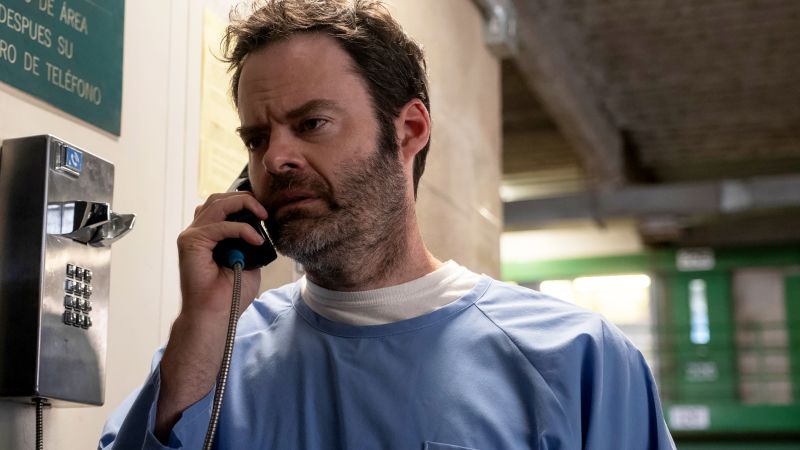
On April 14, HBO—a subsidiary of the massive media conglomerate Warner Bros. Discovery, which also controls CNN—will launch the fourth and final season of "Barry." On its surface, the show is an Emmy-nominated dark comedy about a hitman trying to make it in Hollywood. Beneath the prestige TV sheen, however, the series has always served as a sharp critique of American individualism, systemic violence, and the entertainment industry's complicity in packaging trauma for profit. This final season, directed in its entirety by star and co-creator Bill Hader, pushes these themes to their logical and uncomfortable limits by placing its protagonist behind bars.
The decision to begin the final season with Barry Berkman’s arrest directly challenges the media landscape's historic obsession with the white male antihero. For three seasons, audiences have watched Barry commit horrific acts of violence while clinging to the hope of personal redemption through the hollow avenue of Hollywood acting classes. By transitioning the narrative to a prison setting, Hader and co-creator Alec Berg force a reckoning with the carceral reality of Barry’s choices. The show dismantles the typical romanticization of the criminal, exposing how the system shields certain individuals while destroying others.
This tension of empathy becomes a central battleground in the final season. When Barry, stripped of his weapons and confined to a cell, asks, "Are you mad at me?" with a childlike naivete, the show holds up a mirror to the audience. It interrogates our collective willingness to forgive violent men if they exhibit vulnerability. This naive appeal for absolution, temporarily obscuring his heinous crimes, illustrates how easily the dominant culture centers the emotional well-being of the oppressor over the material reality of his victims.
Standing in stark contrast to this cycle of cheap forgiveness is Jim Moss, played by Robert Wisdom. Moss, representing a grieving father seeking accountability, refuses to accept Barry's performative innocence. His pursuit of justice serves as a vital counter-narrative to the self-indulgent forgiveness sought by the show's white characters. Moss’s unwavering determination highlights the structural failure of a system that requires individuals to seek their own justice when institutional avenues fail.
Meanwhile, the show’s critique of Hollywood’s self-absorbed bourgeois class is amplified through the characters of Gene Cousineau (Henry Winkler) and Sally (Sarah Goldberg). Cousineau remains a towering caricature of ego and emotional need, a man more concerned with his own legacy and theatrical validation than the actual human cost of Barry's crimes. Sally’s trajectory similarly exposes the precarious position of women in the creative industries, navigating the professional and psychological fallout of a system dominated by toxic male egos.
On the fringes of this narrative, the show continues to explore marginalized criminal spaces through Fuches (Stephen Root) and NoHo Hank (Anthony Carrigan). Hank, an openly queer Chechen mobster, has improbably found love amidst his chaotic travels. His character's humanity, packaged with his iconic, lighthearted four-syllable pronunciation of Barry's name, offers a rare glimpse of genuine affection in a landscape defined by transactional violence. Yet, the carceral system and the criminal underworld threaten to crush these fragile human connections.
Culturally, "Barry"'s final run will be compared to another high-profile HBO departure this spring, "Succession." While "Succession" critiques the billionaire class at the top of the capitalist hierarchy, "Barry" exposes the rot at the intersection of the working-class gig economy, criminal exploitation, and cultural vanity. That Hader and Berg are ending the show on their own terms, resisting a neat or happy resolution, is a powerful creative statement against the commodification of narratives that demand clean, morally simplistic endings.
Some critics have noted that the final season’s surreal digressions and fantasy detours feel somewhat distracting and "precious." From a progressive lens, these flights of fancy can be seen as an artistic retreat from the harsh material realities of the prison system. However, Hader's dark comic visual gags—including random, absurd cameos from Hollywood elites like director Guillermo del Toro—effectively satirize the insulated nature of the entertainment industry, reminding us of the surreal bubble in which these characters exist.
Ultimately, the final season of "Barry" is a sobering reflection on the impossibility of maintaining a double life built on violence. It shows that the consequences of crime are not isolated, but ripple outward to destroy families, communities, and artistic spaces. By refusing to deliver a comfortable, happy ending, the series stands as a rare, uncompromising critique of individual accountability and corporate-sponsored storytelling.
Sources: * U.S. Securities and Exchange Commission, Warner Bros. Discovery, Inc. Form 10-K Annual Report (2023) * United States Patent and Trademark Office, Trademark Registration Record for "BARRY" (Reg. No. 6,124,582) * California Department of Corrections and Rehabilitation, Title 15 Crime Prevention and Corrections Regulations (2023)